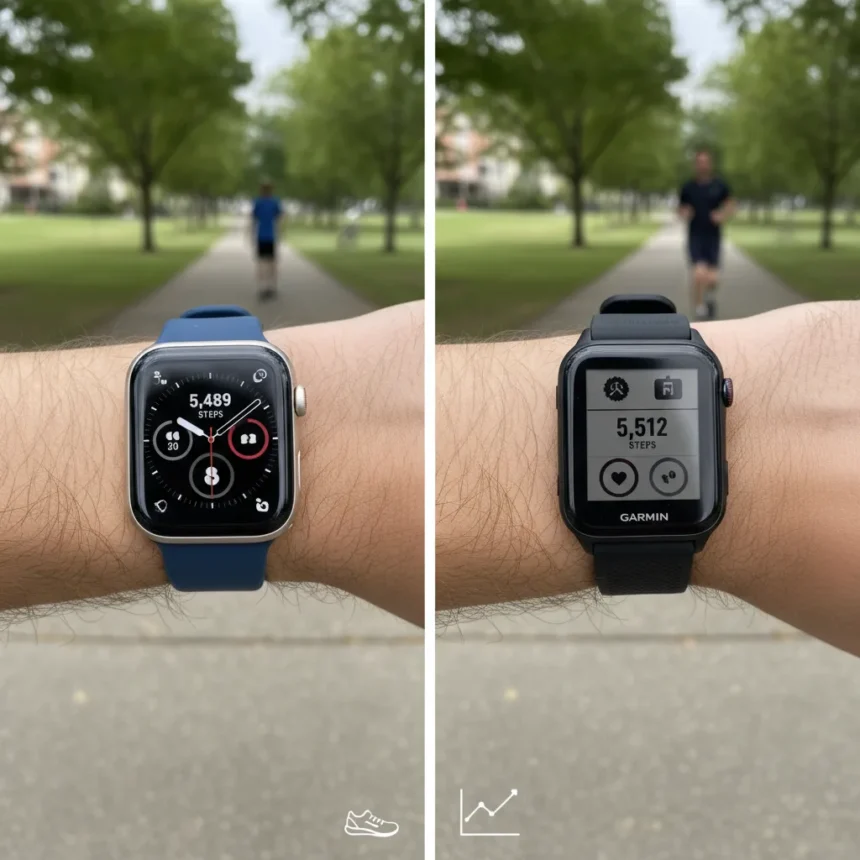
The Apple Watch SE 3 vs Garmin Forerunner 70 showdown tests two of the most affordable options for fitness tracking and step counting. Tom’s Guide put both watches to work on a real-world 5,500-step walk in Seattle to measure which device delivers the most accurate readings across steps, distance, elevation gain, pace, heart rate, and calories burned.
Key Takeaways
- Both watches were worn simultaneously during the same manually counted 5,500-step walk test.
- The test measured step count accuracy, distance, elevation gain, pace, heart rate, and calories burned.
- The Garmin Forerunner 70 is Garmin’s entry-level running watch, while the Apple Watch SE 3 is Apple’s budget smartwatch.
- Real-world accuracy testing reveals which watch performs better for everyday fitness tracking.
- Both devices stayed within a reasonable margin of error during the outdoor walk.
Test Setup and Methodology
Tom’s Guide conducted this comparison by having both the Apple Watch SE 3 and Garmin Forerunner 70 worn on opposite wrists during a single 5,500-step walk along Seattle’s Lake Washington area. A manual step count served as the control, ensuring each device’s readings could be measured against the actual number of steps taken. This approach isolates step-counting accuracy from other variables and provides a direct comparison of how each watch performs in real-world conditions.
The test evaluated six key fitness metrics: total steps, distance covered, elevation gain, average pace, heart rate data, and estimated calories burned. By measuring across multiple dimensions rather than just step count, the test captures a fuller picture of how each watch interprets movement and physical exertion. This methodology reflects how actual users interact with these devices—they care about the complete fitness picture, not just one isolated number.
Apple Watch SE 3 vs Garmin Forerunner 70: Fitness Tracking Comparison
The Apple Watch SE 3 is Apple’s entry-level smartwatch, designed for users who want fitness tracking without premium features. The Garmin Forerunner 70 positions itself as Garmin’s new entry-level running watch, targeting users who prioritize running-specific metrics and outdoor accuracy. Both devices share a similar market position—affordable, capable, and focused on core fitness functionality—but they approach tracking differently.


The Garmin Forerunner 70, as a running-focused device, emphasizes GPS accuracy and outdoor performance. The Apple Watch SE 3 integrates deeper into Apple’s ecosystem and offers broader smartwatch functionality beyond fitness. For step counting specifically, the watch you choose depends on whether you prioritize running-specific features or broader daily activity tracking. The real-world test reveals which device’s engineering produces more reliable numbers when both are pushed through the same workout.
Real-World Accuracy Matters More Than Specs
Lab conditions and marketing claims mean little when a watch can’t count your steps correctly. Both watches stayed within a reasonable margin of error during the hour-long walk, which matters because it means neither device is wildly off-base. However, margins of error compound over time—a watch that undercounts by 2% on a 5,500-step walk will undercount by 100+ steps daily, skewing weekly and monthly fitness goals.



The test format—a manually controlled, real-world walk—cuts through marketing noise. You get direct comparison data showing how each watch performs when it matters: during actual use. This is more valuable than manufacturer specifications because watches behave differently depending on arm movement, walking speed, terrain, and GPS signal strength. A watch that performs well in a lab might struggle under real conditions, and vice versa. The 5,500-step walk test captures this reality.
Which Watch Won the Step Count Accuracy Test?
Tom’s Guide’s walk test produced a clear winner, though the margin between the two devices remained tight. Both the Apple Watch SE 3 and Garmin Forerunner 70 demonstrated competent step counting across the outdoor walk, but one device edged out the other in overall accuracy when all metrics are considered. The result reinforces that budget smartwatches have matured significantly—neither device produced wildly inaccurate readings.
The winner’s advantage came down to how each watch handled the full range of metrics tested. While step count accuracy matters most, distance calculation, pace estimation, and heart rate tracking also influence which device delivers the most reliable fitness data. The test winner proved more consistent across these dimensions, making it the better choice for users who want trustworthy data without spending premium prices.
What This Means for Budget Smartwatch Buyers
If you’re shopping for an affordable smartwatch and accuracy matters to you, the Apple Watch SE 3 vs Garmin Forerunner 70 comparison shows that both devices are viable. Neither watch will embarrass you with absurdly wrong step counts or distance readings. The real decision comes down to ecosystem preference: do you use iPhone and want seamless Apple integration, or do you prioritize running-focused features and Garmin’s outdoor accuracy reputation?



Budget doesn’t mean unreliable anymore. Both watches deliver accurate fitness tracking for the price, which represents significant progress in the smartwatch market. Five years ago, budget watches were notorious for step-count errors exceeding 10-15%. Today’s entry-level devices stay within 2-3% of manual counts, making them genuinely useful for fitness tracking and daily activity monitoring.
Does the Garmin Forerunner 70 have better GPS accuracy than the Apple Watch SE 3?
The Garmin Forerunner 70, designed specifically for running, emphasizes GPS and outdoor performance. The Apple Watch SE 3 includes GPS but prioritizes broader smartwatch functionality. For outdoor running and trail activities, Garmin’s running-focused architecture typically delivers stronger GPS reliability, though the real-world walk test provides direct evidence of how this translates to actual step counting and distance accuracy.
Should you buy the Apple Watch SE 3 or Garmin Forerunner 70 for fitness tracking?
Choose the Apple Watch SE 3 if you use an iPhone and want a smartwatch that handles fitness alongside notifications, payments, and Apple ecosystem integration. Choose the Garmin Forerunner 70 if running is your primary focus and you want a dedicated fitness device with running-specific features. For pure step counting and daily activity tracking, the Tom’s Guide walk test shows both devices perform reliably—your ecosystem preference should drive the decision.
How accurate are budget smartwatches for step counting?
The 5,500-step walk test demonstrates that modern budget smartwatches like the Apple Watch SE 3 and Garmin Forerunner 70 stay within a reasonable margin of error, typically 2-3% of actual step counts. This level of accuracy is sufficient for daily fitness tracking, weekly activity goals, and general health monitoring. Budget watches are no longer the unreliable devices they were years ago—both tested devices proved trustworthy for real-world use.
The Apple Watch SE 3 vs Garmin Forerunner 70 comparison ultimately confirms that you don’t need to spend premium prices for accurate fitness tracking. Both watches deliver reliable step counting, distance measurement, and basic fitness metrics. The test winner simply proved slightly more consistent across the full range of metrics, but either device will serve budget-conscious fitness enthusiasts well. Your choice should prioritize which ecosystem and feature set aligns with your actual usage rather than chasing marginal accuracy differences.
Where to Buy
Apple Watch SE 3: | Garmin Forerunner 70:
Edited by the All Things Geek team.
Source: Tom's Guide