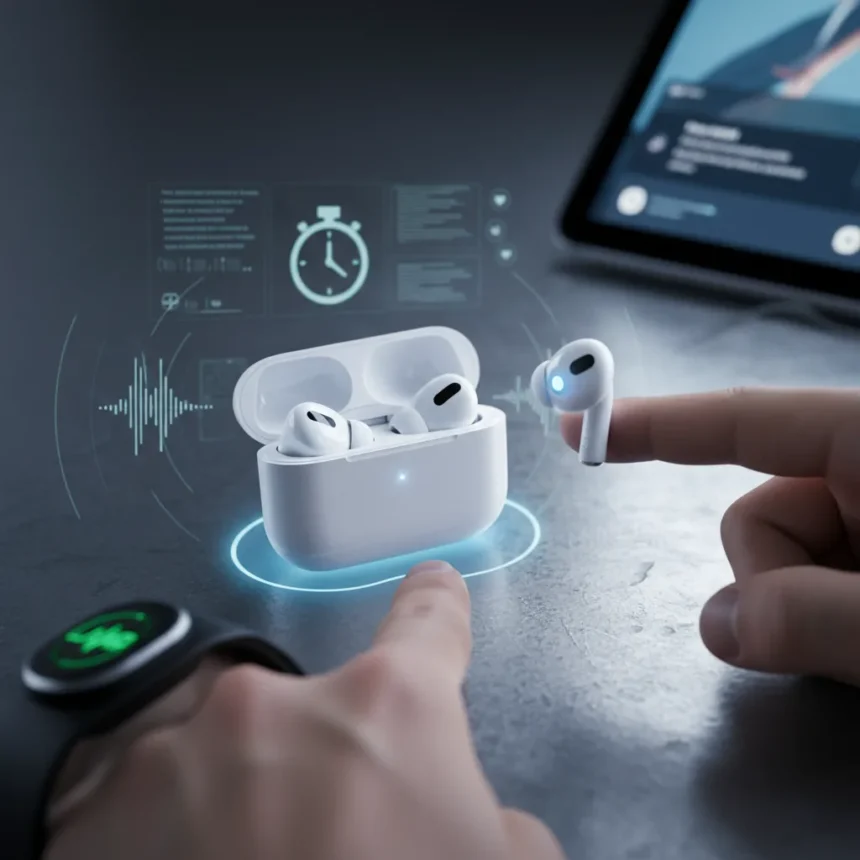
Apple AirPods Pro 3 represent a meaningful refinement of Apple’s premium earbud line, combining stronger noise cancellation, longer battery endurance, and a health-tracking feature that shifts the value proposition away from pure audio toward everyday fitness monitoring. Available now at 249 USD (219 GBP, A$429), these earbuds are not a radical redesign—they are a strategic incremental upgrade that addresses three specific pain points from their predecessor.
Key Takeaways
- Battery life jumps to 8 hours with ANC enabled, a 33% improvement over AirPods Pro 2.
- Built-in heart rate sensor enables workout tracking without requiring an Apple Watch.
- IP57 dust and water resistance is a durability upgrade from the prior IPX4 rating.
- New multiport acoustic architecture improves bass response and vocal clarity.
- Redesigned ear tips and fit address a common complaint about in-ear stability.
Why Apple AirPods Pro 3 Matter Right Now
The timing of Apple AirPods Pro 3 reflects a shift in how premium earbuds are positioned. Rather than chasing marginal audio improvements, Apple has bundled fitness features directly into the earbuds themselves. The built-in heart rate sensor means users can monitor workout intensity during runs, gym sessions, and cardio training without strapping on an additional wearable. This is a pragmatic design choice that reduces friction for casual athletes who already own AirPods but may not justify the cost of an Apple Watch.
The battery life jump is equally significant. At 8 hours of continuous listening with active noise cancellation enabled—up from 6 hours on AirPods Pro 2—the Apple AirPods Pro 3 can now handle a full workday without requiring a case charge. In Transparency mode with Hearing Aid enabled, battery life stretches to 10 hours, representing a 67% improvement over the previous generation. For frequent travelers and commuters, this removes a genuine pain point.
Sound Quality and Noise Cancellation in Apple AirPods Pro 3
Apple claims the new multiport acoustic architecture provides more precise control of airflow into the ear, transforming bass response, expanding soundstage, and adding vocal clarity. The H2 chip carries over from AirPods Pro 2, but improved microphones and tuning make the noise cancellation and transparency modes sound more natural. Apple markets the ANC as twice as strong as the previous generation, though this is a manufacturer claim rather than an independently verified benchmark.



The acoustic redesign is where Apple AirPods Pro 3 diverge most noticeably from their predecessor. Where AirPods Pro 2 prioritized a flat, neutral sound signature, the new generation emphasizes bass extension and instrumental separation. This makes them more engaging for music listening while maintaining the clarity required for podcast and voice content. The transparency mode improvements matter for safety-conscious users who need ambient awareness during outdoor activities.
Design, Fit, and Durability of Apple AirPods Pro 3
A redesigned ear-tip angle and foam-based tips address one of the most persistent complaints about AirPods: fit stability. Users with smaller ear canals or active lifestyles have historically struggled to keep AirPods Pro seated during workouts. The new geometry appears to resolve this without compromising comfort during extended wear. The earbuds retain Apple’s premium in-ear aesthetic but with a subtle profile refinement that makes them less visually intrusive.



The IP57 dust and water resistance rating is a meaningful durability upgrade from the IPX4 rating on AirPods Pro 2. This makes the earbuds suitable for gym environments with sweat and dust exposure, as well as light rain during outdoor training. The improvement signals that Apple is taking the fitness positioning seriously, not just adding a heart rate sensor as an afterthought.
Health and Fitness Features in Apple AirPods Pro 3
The integrated heart rate sensor is the headline feature that differentiates Apple AirPods Pro 3 from competitors like Beats Powerbeats Pro 2. Users can start workouts directly in the Fitness app and view real-time heart rate data without switching to a separate app or device. The earbuds support more than 50 workout types, making them versatile enough for running, cycling, swimming, strength training, and yoga. This ecosystem integration is where Apple’s advantage over standalone earbud makers becomes apparent—the data flows smoothly into the iPhone Fitness app without manual export or third-party synchronization.
For users without an Apple Watch, this feature eliminates a barrier to fitness tracking. The heart rate sensor is not a replacement for dedicated sports watches, but it removes the need for one if your primary goal is to monitor workout intensity and recovery during casual training sessions.
How Apple AirPods Pro 3 Compare to Predecessors and Rivals
The jump from AirPods Pro 2 to Apple AirPods Pro 3 is more substantial than the previous generation-to-generation upgrade. Battery life, ANC strength, fit stability, and health tracking all represent genuine improvements rather than cosmetic tweaks. Compared to Beats Powerbeats Pro 2, which also offer heart rate sensing, the Apple AirPods Pro 3 integrate more tightly with Apple’s ecosystem and deliver better noise cancellation for travel and commuting use cases. For users invested in iPhone and Apple Watch, the AirPods Pro 3 become the natural choice. For Android users or those outside the Apple ecosystem, the value proposition weakens considerably since the health features rely on Apple’s Fitness app.



Should You Buy Apple AirPods Pro 3?
If you own AirPods Pro 2 and are satisfied with fit and battery life, the upgrade is optional. The sound quality improvements are incremental, and the ANC gain, while measurable, is not transformative. However, if you have struggled with fit stability, need longer battery life, or want integrated heart rate tracking without purchasing an Apple Watch, the Apple AirPods Pro 3 justify the 249 USD price. For new buyers entering the premium earbud market, these are the strongest all-around option available from Apple, combining fitness utility with everyday noise cancellation and audio quality.
Do Apple AirPods Pro 3 have better battery life than AirPods Pro 2?
Yes. Apple AirPods Pro 3 deliver 8 hours of listening time with ANC enabled, compared to 6 hours on AirPods Pro 2. In Transparency mode with Hearing Aid enabled, the new model reaches 10 hours, a 67% improvement. The case adds additional charges, extending total playback time significantly.
Can you track workouts with Apple AirPods Pro 3 without an Apple Watch?
Yes. The built-in heart rate sensor enables workout tracking directly through the Fitness app on iPhone. You can monitor heart rate during exercise and view data in Apple’s Fitness ecosystem without requiring a separate wearable device.
Are Apple AirPods Pro 3 water-resistant?
Apple AirPods Pro 3 have an IP57 rating for dust and water resistance, an upgrade from the IPX4 rating on AirPods Pro 2. This makes them suitable for gym use, light rain, and sweat exposure, though they are not designed for submersion or competitive water sports.
The Apple AirPods Pro 3 are a confident refinement that acknowledges where premium earbuds are headed: toward integrated health tracking, longer endurance, and better everyday durability. If you are an iPhone user who values fitness monitoring and extended battery life, they are worth the investment. If you are primarily seeking audio fidelity, the gains are real but incremental.
Where to Buy
Edited by the All Things Geek team.
Source: T3