





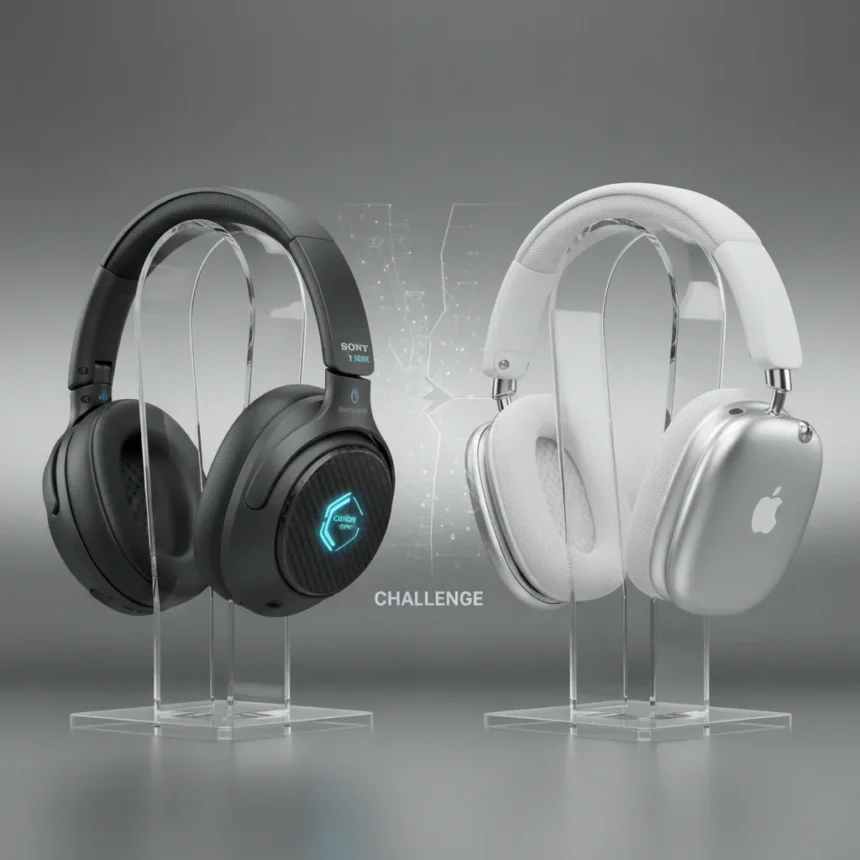
Sony 1000X The ColleXion is a premium remix of the WH-1000XM6, priced at $649 (£550 / AU$999), positioned as a 10-year anniversary edition for the XM series. The headphones compete directly with Apple AirPods Max 2 at $549 (£499), sitting in a narrow luxury segment between Apple’s flagship and the Bowers & Wilkins Px8 at $799 (£629). Testing reveals the ColleXion brings real hardware upgrades—Bluetooth 6.0, carbon driver improvements, and DSEE Ultimate audio upscaling—but sacrifices battery endurance in the process. The question is whether Sony’s design-forward premium positioning justifies the higher price tag.
Key Takeaways
- Sony 1000X The ColleXion costs $100 more than Apple AirPods Max 2 in the US and UK markets.
- The ColleXion features a rigid 30mm carbon driver and Bluetooth 6.0, upgrades over the standard XM6.
- Battery life drops to 24 hours with ANC enabled, compared to 30 hours on the XM6.
- Noise cancellation mutes low-frequency noise effectively, including studio AC units and NYC traffic.
- In Australia, both headphones are priced identically at AU$999, erasing the price advantage.
Sony 1000X The ColleXion Hardware: Where the Upgrades Matter
Sony 1000X The ColleXion introduces tangible engineering changes that distinguish it from the standard WH-1000XM6. The new rigid 30mm unidirectional carbon driver replaces the previous design, with internal circuit boards featuring copper foil layers 1.5 times thicker than the XM6. These aren’t marketing flourishes—they’re measurable component upgrades aimed at reducing distortion and improving clarity at higher volumes. Bluetooth 6.0 support enables faster pairing and multi-point connectivity, a practical leap from the XM6’s Bluetooth 5.3. The ColleXion also includes a USB-C charging port and a 3.5mm wired jack, maintaining the flexibility that premium headphone buyers expect.
The design philosophy behind The ColleXion treats the headphones as a fashion statement, targeting style-conscious buyers who view audio gear as an extension of their wardrobe. This positioning explains the price premium—Sony is asking for $100 more than Apple’s AirPods Max 2 in the US and UK, though Australian pricing eliminates that gap entirely at AU$999 for both models. Whether the carbon driver and Bluetooth 6.0 justify the cost difference depends on how much you value wireless codec support and wired fallback options over Apple’s ecosystem integration.
Noise Cancellation and Call Quality: No Improvement Over XM6
Sony 1000X The ColleXion retains the same noise cancellation architecture as the WH-1000XM6, using 12 beamforming microphones—six per earcup—and the Adaptive NC Optimizer. In testing, the headphones muted low-frequency noise effectively, including a loud studio AC unit and New York City traffic. Call quality is described as excellent, matching the microphone system’s performance on the standard XM6. The absence of ANC improvements is the ColleXion’s biggest missed opportunity. Sony invested in driver upgrades and Bluetooth enhancements but left noise cancellation untouched, a decision that undermines the premium positioning when Apple’s AirPods Max 2 offer comparable passive isolation at a lower price.



Battery Life and Audio Features: Trade-Offs That Sting
The ColleXion delivers 24 hours of battery life with noise cancelling enabled, dropping to 32 hours with ANC off. Compare that to the standard XM6’s 30 hours with ANC and 40 hours without, and the ColleXion’s battery endurance becomes a real weakness. Sony’s decision to prioritize driver and circuit board upgrades over battery capacity suggests the ColleXion targets listeners who prioritize sound quality over all-day listening marathons. This trade-off matters most for frequent travelers and commuters who rely on extended playback between charges.
Where Sony compensates is audio upscaling. The ColleXion includes DSEE Ultimate, which uses AI to restore lost detail in compressed music files by upscaling sampling rate and bit depth. Combined with Hi-Res wireless and LDAC audio codecs, the ColleXion supports three 360 Upmix modes for stereo music, cinema, and gaming, designed to create a more immersive listening experience. These features appeal to audiophiles and content creators, but casual listeners may find the battery trade-off frustrating. Apple AirPods Max 2 don’t match the ColleXion’s codec support, but they don’t require the same power draw either.



Pricing Strategy: A Niche Play That Works in Some Markets
Sony 1000X The ColleXion occupies a narrow pricing corridor that makes sense only in specific regions. In the US and UK, the $100 premium over Apple AirPods Max 2 positions it as a luxury alternative for buyers who value Bluetooth 6.0, carbon drivers, and wired connectivity. The Bowers & Wilkins Px8 sits $150 above the ColleXion, creating a three-tier premium headphone market. However, in Australia, both the ColleXion and AirPods Max 2 are priced at AU$999, erasing Sony’s price advantage and forcing the decision entirely on features and ecosystem fit. This regional pricing inconsistency suggests Sony is testing market demand rather than committing to a global premium positioning.
Should You Buy Sony 1000X The ColleXion or Apple AirPods Max 2?
Sony 1000X The ColleXion wins if you prioritize wired fallback options, codec flexibility, and audio upscaling technology. The carbon driver and Bluetooth 6.0 are real upgrades, and DSEE Ultimate appeals to anyone regularly streaming compressed music. You’ll accept the battery trade-off because you value sound quality and the ability to connect to non-Apple devices. Apple AirPods Max 2 wins if you live in Apple’s ecosystem, value battery endurance, and don’t need wired connectivity. The AirPods Max 2 are lighter on power and offer seamless integration with iPhone, iPad, and Mac. Neither headphone dramatically outperforms the other—the choice hinges on ecosystem loyalty and whether you care about Bluetooth 6.0 and DSEE Ultimate enough to justify the price difference.
Is the Sony 1000X The ColleXion worth the price premium over the standard XM6?
The ColleXion’s carbon driver, Bluetooth 6.0, and DSEE Ultimate justify the premium for audiophiles and multi-device users, but the shorter battery life is a real drawback. If you already own an XM6, the upgrades don’t warrant replacing it. For new buyers choosing between the ColleXion and XM6, the decision depends on whether you value wired connectivity and audio upscaling—if you do, the ColleXion is worth the extra cost.
How does the ColleXion compare to Apple AirPods Max 2 for gaming and cinema?
The ColleXion’s 360 Upmix modes for cinema and gaming provide spatial audio processing that AirPods Max 2 don’t match through native processing. However, AirPods Max 2 leverage Apple’s spatial audio ecosystem across Apple TV+ and gaming apps, which may deliver a more immersive experience if you’re locked into Apple’s platform. The ColleXion wins on raw processing capability; AirPods Max 2 win on ecosystem integration.



Sony 1000X The ColleXion is a bold premium play that doesn’t quite overthrow Apple AirPods Max 2—it just offers a different value proposition. The carbon driver and Bluetooth 6.0 are real upgrades, but shorter battery life and identical pricing in some markets blunt the appeal. Buy the ColleXion if you value audio quality, wired flexibility, and multi-device compatibility over ecosystem loyalty. Buy the AirPods Max 2 if you’re all-in on Apple and need batteries that last longer between charges. Neither is a clear winner—they’re competitors for different listeners.
Where to Buy
Check Amazon | $649.99 at Amazon | $649.99 at Amazon | $649.99 at Amazon | $549
Edited by the All Things Geek team.
Source: Tom's Guide




