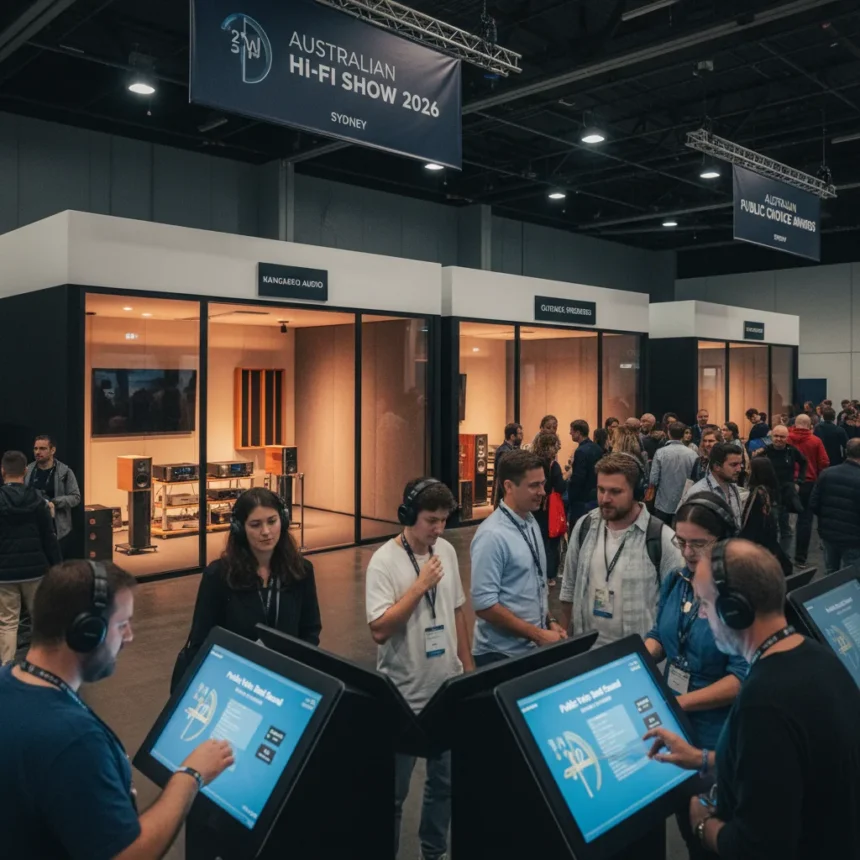
The Australian Hi-Fi Show 2026 in Sydney delivered its verdict on the year’s finest audio demonstrations through an unusual mechanism: direct attendee voting rather than editorial decree. Held at a venue near Central Station in the heart of Sydney, the show featured multiple demonstration rooms where exhibitors showcased audio equipment across a range of price points and technologies. What Hi-Fi? staff acknowledged that opinions on sound quality varied among the team, but noted definite common ground across the event’s offerings.
Key Takeaways
- The Australian Hi-Fi Show 2026 used public voting to determine Best Sound of the Show, not critic selection.
- Attendees received competition cards to vote on their preferred demonstration rooms throughout the event.
- What Hi-Fi? staff observed that nearly every room delivered strong performance this year.
- The Sydney venue featured multiple floors of audio demonstrations near Central Station.
- Vote counting was scheduled to begin shortly after the show concluded.
Why Public Voting Matters for Audio Shows
Audio equipment evaluation has traditionally rested in the hands of professional reviewers and editorial teams. The Australian Hi-Fi Show 2026 shifted that authority to the attendees themselves, who walked through each room and cast votes based on their own ears and preferences. This approach reflects a fundamental truth about audio: sound quality is subjective. What resonates with one listener may not impress another, and no reviewer’s opinion can substitute for direct experience.
By distributing competition cards throughout the venue, the show organizers created a democratic process that valued visitor experience above critical consensus. Attendees voted on rooms they heard firsthand, eliminating the distance between evaluation and personal preference. This method also generates engagement—visitors become invested in the outcome when their vote shapes the result.
The Australian Hi-Fi Show 2026 Delivered Consistent Quality
One of the most telling observations from What Hi-Fi? was that the show achieved a high baseline of sound quality across its demonstration spaces. Rather than a few standout rooms surrounded by mediocre setups, the event featured strong performance throughout. This consistency suggests that exhibitors brought their best equipment and tuning expertise to Sydney, creating an environment where multiple rooms could legitimately compete for the top award.



The venue’s multi-floor layout allowed for diverse demonstrations—from intimate listening rooms to larger group spaces. Each floor contributed rooms to the voting pool, ensuring that visitors encountered a range of audio philosophies and equipment configurations. The breadth of options meant that the Best Sound award would reflect genuine audience preference across different tastes and listening priorities.
How the Australian Hi-Fi Show 2026 Compares to Other Audio Events
The Australian Hi-Fi Show 2026 joins a calendar of major audio events worldwide, including the High End Munich show and Bristol Hi-Fi Show, which also showcase premium audio equipment. What distinguishes the Australian event is its emphasis on public voting and its Sydney location, which draws the Asia-Pacific region’s audio enthusiasts. While other shows rely on critic panels or editorial selections, the Australian Hi-Fi Show 2026’s approach empowers attendees to shape recognition of excellence.



The show’s timing and venue near Central Station made it accessible to Sydney’s broad audio community. Unlike some international events that cater primarily to industry professionals, this show welcomed general enthusiasts and casual visitors, reflected in its democratic voting mechanism. That openness to public participation sets a different tone than invitation-only or critic-driven awards.
What Happens Next: Vote Counting and Results
At the time of the show report, vote counting had not yet been completed. What Hi-Fi? indicated that results would be announced soon, with the publication monitoring the outcome. The delay between voting and result announcement builds anticipation and allows organizers to verify the count. Once tallied, the winning room will be revealed, providing attendees and the broader audio community with a clear consensus on which demonstrator earned the most support.
The voting process itself becomes part of the show’s narrative. Attendees who cast votes now await confirmation of their collective choice, creating a sense of ownership in the outcome. When results arrive, they will carry weight precisely because they reflect genuine listener preference rather than expert decree.
Did the Australian Hi-Fi Show 2026 live up to expectations?
Yes, according to What Hi-Fi?’s assessment, the show delivered strong performance across nearly every demonstration room, with no obvious weak links. While staff disagreed on which rooms sounded best—a natural outcome in audio evaluation—they found common ground on the overall quality level. This consistency made the public voting process meaningful, as attendees genuinely had multiple excellent options to choose from.



How does public voting change audio show awards?
Public voting shifts authority from critics to listeners, acknowledging that audio preference is subjective rather than objective. It also increases attendee engagement by making visitors part of the decision-making process rather than passive observers. This approach may inspire other shows to consider similar mechanisms, recognizing that the audience’s ear is as valid as the reviewer’s.
When will the Australian Hi-Fi Show 2026 Best Sound winner be announced?
The research brief indicates vote counting was scheduled to begin shortly after the show, with results forthcoming. What Hi-Fi? committed to publishing the winner once tallying was complete. Readers should check the publication’s event coverage for the official announcement.
The Australian Hi-Fi Show 2026 proved that audio excellence thrives when exhibitors bring their best work and audiences get a voice in recognizing it. The public voting mechanism transforms a traditional awards process into a collective verdict, where every attendee who cast a card contributed to crowning the year’s best sound. That democratic spirit, combined with the event’s high baseline of quality, makes the eventual winner’s announcement genuinely meaningful—a reflection of what thousands of listeners actually preferred, not what a handful of critics decided.
Edited by the All Things Geek team.
Source: What Hi-Fi?