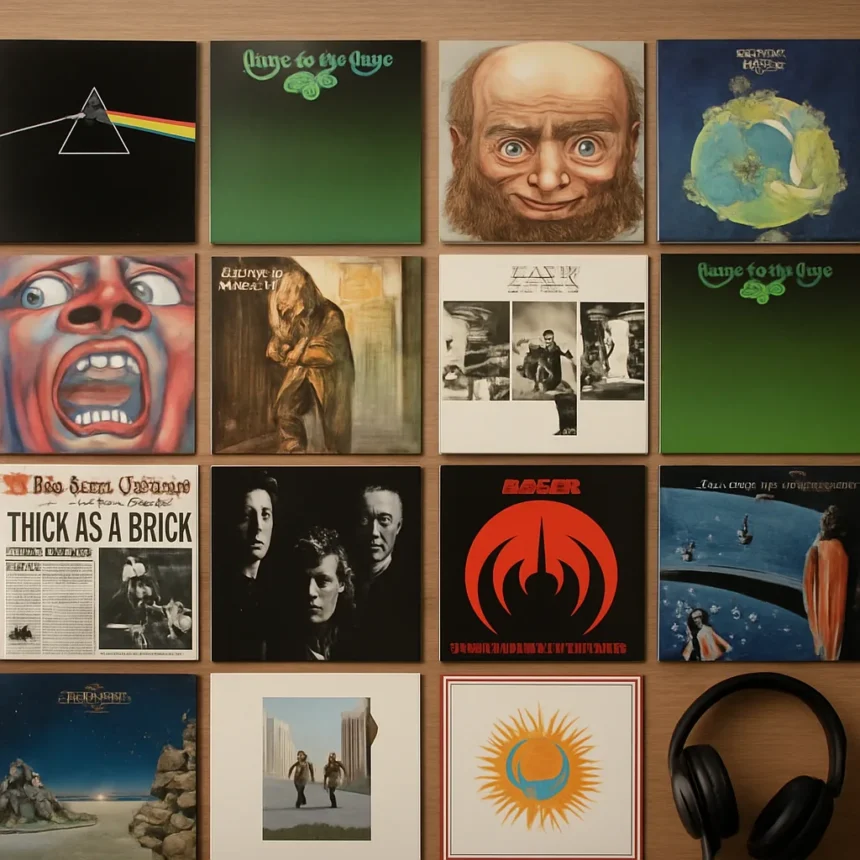
Prog rock albums offer the dynamic range, spatial complexity, and tonal variety that separate a mediocre audio system from a truly revealing one. What Hi-Fi? has curated 16 essential progressive rock records selected by hi-fi experts specifically for their ability to test speaker imaging, bass depth, treble extension, and soundstaging while expanding your musical horizons beyond the mainstream.
Key Takeaways
- Progressive rock’s complex arrangements expose weaknesses in bass response, clarity, and spatial separation that standard test tracks might miss.
- Classic prog albums from the 1970s remain the gold standard for hi-fi testing due to their dynamic range and instrumentation variety.
- Modern prog like Porcupine Tree demonstrates how contemporary production techniques challenge hi-fi systems differently than vintage recordings.
- Prog rock doubles as both diagnostic tool and genuine artistic discovery, making it ideal for serious listeners who want substance alongside technical rigor.
- The 16-album list spans King Crimson to Hawkwind, covering multiple prog subgenres and recording eras.
Why Prog Rock Reveals What Your Hi-Fi System Actually Does
Progressive rock was engineered for complexity. Unlike pop or rock radio staples, prog tracks layer multiple instruments—synthesizers, mellotrons, saxophones, flutes, complex drum patterns—across stereo fields that demand precise imaging and separation from your speakers. A system that sounds fine playing compressed streaming audio will expose its limitations instantly when you spin a prog album. The genre’s dynamic swings from whisper-quiet passages to thunderous crescendos test amplifier headroom and speaker control in ways that flat, normalized modern production cannot.
What Hi-Fi? experts selected these 16 albums because they function as both artistic statements and technical benchmarks. King Crimson’s In the Court of the Crimson King tests dynamic range and mellotron textures across its entire frequency spectrum. Pink Floyd’s Dark Side of the Moon remains iconic for stereo imaging and layered effects. Genesis’s Foxtrot challenges resolution through dense instrumentation. These records were mastered when engineers prioritized clarity and separation—qualities that have become rare in contemporary mixing.
The 16 Essential Prog Rock Albums for Hi-Fi Testing
The curated list spans the full spectrum of progressive rock’s evolution. Early-1970s classics dominate: King Crimson’s In the Court of the Crimson King (1969), Yes’s Close to the Edge (1972), Pink Floyd’s Dark Side of the Moon (1973), Genesis’s Foxtrot (1972), Emerson, Lake & Palmer’s Tarkus (1971), Jethro Tull’s Thick as a Brick (1972), and Gentle Giant’s Octopus (1972) establish the foundation. These albums share meticulous production, dynamic range that punishes weak amplification, and instrumental separation that demands quality speakers.



The list expands into deeper prog territory with Caravan’s In the Land of Grey and Pink (1971), which tests mellotron flutes and the warmth of the Canterbury scene sound. Van der Graaf Generator’s Pawn Hearts (1971) challenges your system’s ability to handle saxophone attack and intensity. Camel’s The Snow Goose (1975) brings orchestral prog arrangements that test emotional depth and midrange clarity. Renaissance’s Prologue (1972) leans classical, stressing your system’s midrange accuracy. Egg (1970) applies jazz fusion rhythms to prog, demanding rhythmic precision from your playback chain. Matching Mole (1972) showcases Robert Wyatt’s soft, dynamic vocals—a test of clarity at low volumes. Gong’s You (1974) introduces space rock effects that stretch treble extension. Hawkwind’s Space Ritual (1973) captures live cosmic energy, testing bass control and dynamic range simultaneously. Finally, Porcupine Tree’s In Absentia (2002) represents modern prog, demonstrating how contemporary production and heavy riffs challenge hi-fi systems differently than vintage recordings.
How Prog Rock Differs From Standard Hi-Fi Test Records
Traditional audiophile test records like the Opus 3 series prioritize depth, timbre, and dynamics through sparse arrangements and carefully controlled studio conditions. Prog rock takes the opposite approach: it stacks complexity upon complexity, forcing your system to untangle layers of sound without collapsing into mud or harshness. Where a test record isolates a single piano or voice, a prog album throws a mellotron, Moog synthesizer, bass, drums, and vocals at your speakers simultaneously and demands you hear each element distinctly.



This makes prog albums superior to clinical test records for real-world listening assessment. A system that passes a sparse test record might still fail when asked to reproduce the spatial separation in Yes’s Close to the Edge or the bass depth in Emerson, Lake & Palmer’s Tarkus. Prog reveals not just technical capability but musicality—whether your system can convey emotion and nuance alongside raw specification.
Choosing Your Starting Point
If you are new to prog rock, begin with Pink Floyd’s Dark Side of the Moon or Yes’s Close to the Edge. Both are accessible entry points that do not sacrifice technical challenge. If you want immediate bass and dynamic testing, jump to Emerson, Lake & Palmer’s Tarkus or Hawkwind’s Space Ritual. For vintage warmth and mellotron textures, Caravan’s In the Land of Grey and Pink rewards repeated listening. Modern listeners skeptical of 1970s production should start with Porcupine Tree’s In Absentia, which applies contemporary clarity to heavy prog arrangements.
What Hi-Fi’s Recommendation Reflects Broader Vinyl Revival
The focus on vinyl-suitable prog albums aligns with the ongoing resurgence of analog audio among serious listeners. Prog rock’s original vinyl mastering was designed for turntable playback, with dynamic range and tonal balance optimized for the medium. Reissues of these albums on 180-gram vinyl have become collector’s items precisely because prog’s complexity rewards the warmth and organic character that vinyl reproduction offers. This curated list taps into that momentum—positioning prog not as nostalgia but as the most demanding, rewarding music for testing what your system can truly deliver.
Is prog rock really better for testing hi-fi than standard test records?
Prog rock is not inherently better, but it serves a different purpose. Test records isolate variables; prog albums test your system’s ability to handle real musical complexity. If you want precise measurements of specific frequencies or imaging, use test records. If you want to know whether your system sounds good with actual music, prog is superior because it demands clarity, separation, and dynamic control simultaneously across dense arrangements.



Can I use streaming versions of these albums to test my hi-fi system?
Streaming versions are compressed and normalized, which defeats the purpose of hi-fi testing. Vinyl or lossless digital formats preserve the dynamic range and tonal detail that make these albums valuable for system assessment. If you are serious about hi-fi, vinyl reissues of these classic prog albums are the standard choice among audiophiles.
Which of these 16 albums should I buy first?
Start with Pink Floyd’s Dark Side of the Moon or Genesis’s Foxtrot. Both are musically rewarding and technically demanding without overwhelming beginners. Once you are comfortable with classic prog, branch into deeper catalog entries like Gentle Giant’s Octopus or Van der Graaf Generator’s Pawn Hearts. Modern listeners should consider Porcupine Tree’s In Absentia as a bridge between contemporary production values and progressive complexity.
Progressive rock albums remain unmatched for revealing what your audio system can do. The 16 records curated by What Hi-Fi? experts span decades and subgenres, but they share a commitment to dynamic range, instrumental separation, and spatial clarity that separates genuine hi-fi testing from casual listening. Whether you are upgrading speakers, evaluating a new amplifier, or simply want music that demands and rewards serious attention, these prog albums deliver on both fronts.
Where to Buy
Buy The Moody Blues, Days of Future Passed (1967) on Amazon | Buy King Crimson, In The Court Of The Crimson King (1969) on Amazon | Buy Yes, Close To The Edge (1972) on Amazon | Buy Emerson, Lake & Palmer, Brain Salad Surgery (1973) on Amazon | Buy Genesis, Selling England By The Pound (1973) on Amazon
Edited by the All Things Geek team.
Source: What Hi-Fi?