Building a home studio under $200 for music and podcasting sounds impossible until you factor in one critical variable: existing devices you already own. A modern smartphone or computer becomes your recording engine, and strategic shopping during sales events makes the remaining gear affordable enough to work within a tight budget.
Key Takeaways
- A complete home studio under $200 requires leveraging existing smartphones or computers as recording devices.
- Sales events like Amazon Spring Sales dramatically reduce microphone and audio interface costs.
- Budget setups work best for podcasting and beginner music production, not professional mastering.
- Comparing to a $92 vlogging setup shows how multi-purpose budget gear can serve different creators.
- Assumptions about device capability matter—1080p-capable phones or computers are prerequisites.
What Makes a Home Studio Under $200 Realistic
The home studio under $200 challenge works because it reframes what a recording setup actually requires. You are not building a professional mastering suite. You are assembling functional tools for capturing decent audio and editing it on equipment you likely already possess. This distinction matters. A smartphone with a decent microphone input and a budget audio interface can record podcasts that sound professional enough for distribution on Spotify or Apple Podcasts. A laptop running free software like Audacity or GarageBand becomes your mixing desk.
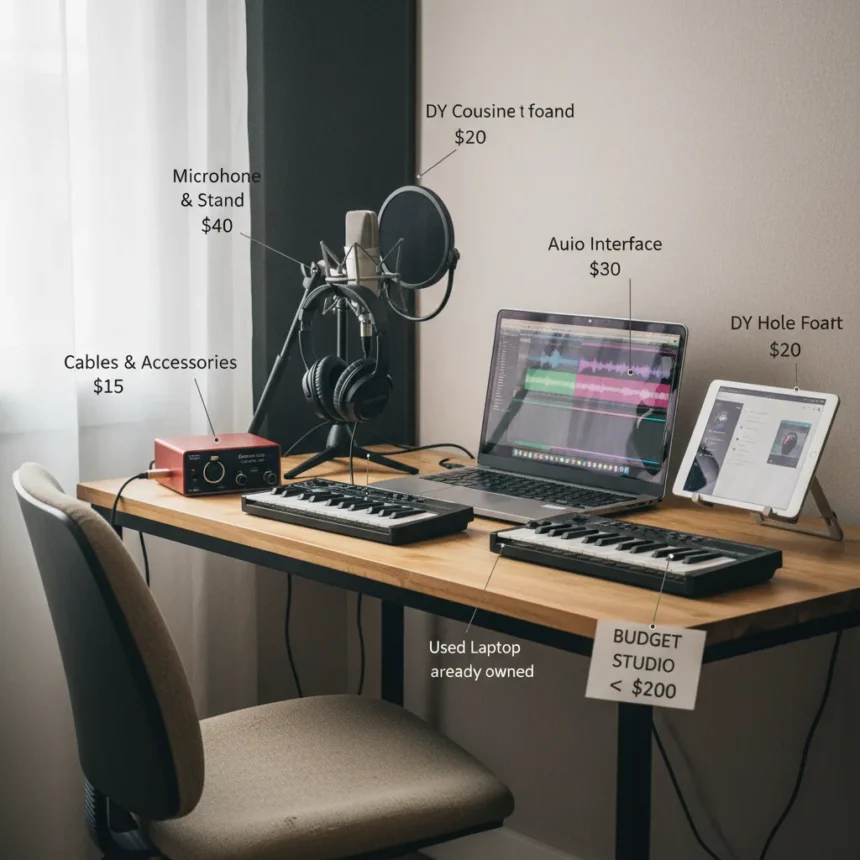
The real cost driver is microphone quality and audio capture hardware. A cheap USB microphone ($30-60 on sale) plus an interface or adapter ($20-40) consumes half your budget immediately. Cables, pop filters, and mounting brackets eat another $30-50. That leaves room for one premium item—perhaps better headphones or a second microphone for interviews—or forces you to sacrifice convenience for raw functionality.
How Sales Events Change the Math
A parallel TechRadar challenge created a $100 home vlogging setup for just $92 using Amazon Spring Sale pricing. That project combined a smartphone, tripod, and RGB lights—all discounted items. The same principle applies to audio gear. Microphones and interfaces that normally cost $80-120 drop to $40-60 during promotional events. Without those sales, a home studio under $200 becomes far more constrained, forcing compromises on microphone quality or forcing you to skip headphones entirely.

This dependency on sales is both the strength and weakness of budget studio building. You can absolutely hit the $200 target if you time purchases correctly. You cannot reliably maintain that budget if you need gear immediately or prefer buying at regular prices. The challenge assumes patience and flexibility on timing.
What Gear Actually Fits the Budget
A realistic home studio under $200 includes a USB microphone ($40-60 on sale), an audio interface or USB adapter ($20-30), XLR cables and a pop filter ($15-25), monitor headphones ($30-50), and a microphone stand or boom arm ($20-40). That totals roughly $165-205 depending on sales and brand choices. You are not including a microphone preamp, audio mixer, or studio monitors—those remain out of reach at this price point.



The trade-off is immediate. Without studio monitors, you mix on headphones, which introduces risk of mixes that sound wrong on other speakers. Without a preamp, your microphone signal runs directly into your computer, limiting gain control and introducing potential noise. Without a mixer, you cannot easily layer multiple audio sources for interviews or collaborative recordings. These are real limitations, not minor inconveniences.
Home Studio Under $200 vs. Vlogging on a Budget
TechRadar’s $100 vlogging challenge at $92 actual cost reveals how different creator needs shape budget allocation. A vlogger prioritizes image capture and lighting; audio is secondary. A podcaster or music producer inverts that priority. The vlogging setup could skip a dedicated microphone entirely, relying on smartphone audio. A home studio under $200 cannot—audio quality is the primary deliverable. This explains why audio-focused budgets feel tighter than visual budgets at similar price points. Decent microphones cost more than decent smartphone cameras.
Who Should Actually Build This Setup
A home studio under $200 makes sense for beginners testing whether podcasting or bedroom music production is worth pursuing seriously. It works for independent podcasters recording solo or with one guest. It suits lo-fi musicians and beat makers who embrace budget constraints as an aesthetic choice. It does not work for anyone recording voiceovers professionally, running a podcast network, or attempting to compete on audio quality in crowded categories.
The prerequisite is honest self-assessment. If you own a modern smartphone capable of 1080p video or a laptop made in the last five years, you have the foundation. If your devices are older or lack basic processing power, the budget setup fails immediately—you will spend the $200 on replacement hardware instead of audio gear.


Can You Actually Record Music at This Price?
Music production at $200 is possible but limited. You can record acoustic instruments, vocals, or spoken word with acceptable fidelity. You cannot reliably record electric instruments without amplifier microphone techniques. Drum recording becomes impractical with a single microphone. Mixing and mastering require either substantial free software learning or acceptance of lo-fi production aesthetics. Many successful bedroom producers started here, but they invested heavily in learning production fundamentals rather than expecting gear to compensate for skill gaps.
Podcasting is the stronger use case for a home studio under $200. A single USB microphone captures voice clearly. Editing happens in free software. Distribution platforms handle compression and loudness normalization. The technical bar is lower, and the quality floor is higher—listeners tolerate podcast audio that is merely clear, not pristine.
The Hidden Costs Nobody Mentions
Budget gear requires more troubleshooting than premium equipment. Cheap USB microphones sometimes have driver conflicts on older Windows systems. Budget audio interfaces occasionally introduce latency that makes real-time monitoring impossible. Pop filters from unknown brands sometimes rattle or affect frequency response. You will spend hours researching workarounds, watching YouTube tutorials, and testing configurations. That time investment is invisible in the $200 price tag but very real in the execution.
You will also likely upgrade within six months. The budget microphone will feel thin compared to a $150 alternative. The lack of studio monitors will drive you crazy during mixing. The single microphone setup will frustrate you when you want to record two voices simultaneously. Budget gear teaches you what matters, then makes you want better. Plan for that trajectory rather than expecting the $200 setup to satisfy you long-term.
Is a home studio under $200 worth building?
Yes, if you are genuinely uncertain whether you will stick with podcasting or music production. The low financial commitment removes the guilt of abandonment. If you are already committed to creating content, save another $100-200 and build a $400 setup that will not frustrate you after a month of use. The math changes once you factor in your time and the quality of your output.
What’s the best microphone for a $200 budget studio?
Look for USB microphones in the $40-60 range during sales. Brands like Audio-Technica and Rode offer models that perform well at this price point, though the research brief does not specify exact model recommendations. Avoid the cheapest options under $25—the quality gap between a $25 and $50 microphone is substantial, while the gap between a $50 and $150 microphone is modest.
Can I use my smartphone as the recording device?
Yes. A modern smartphone with 1080p video capability has sufficient audio recording quality for podcasting and voice memo-style music production. Pair it with a USB microphone using a USB-to-lightning or USB-C adapter, and you have a complete recording chain. This approach actually saves money by eliminating the need for a separate laptop or computer.
The home studio under $200 is real, but it requires three things: existing gear you already own, patience to catch sales, and honest expectations about what you can accomplish. Build it as a proof-of-concept, not as your forever setup. Once you understand what you actually need, upgrade strategically. That progression—from constraint to capability—is how most successful creators begin.
Where to Buy
43% OFFSynidoSynido USB-C Audio Interface$39.99$69.99shop now | MackieEm-91c, Large-Diaphragm Condenser Microphone$49.99shop now | Amazon BasicsAmazon Basics Microphone Boom Arm Stand$24.14shop now | 36% OFFAKGAkg K240studio Semi-Open Studio Headphones$50.49$79shop now | AokeoAokeo Pop Filter$8.99shop now
Edited by the All Things Geek team.
Source: TechRadar