





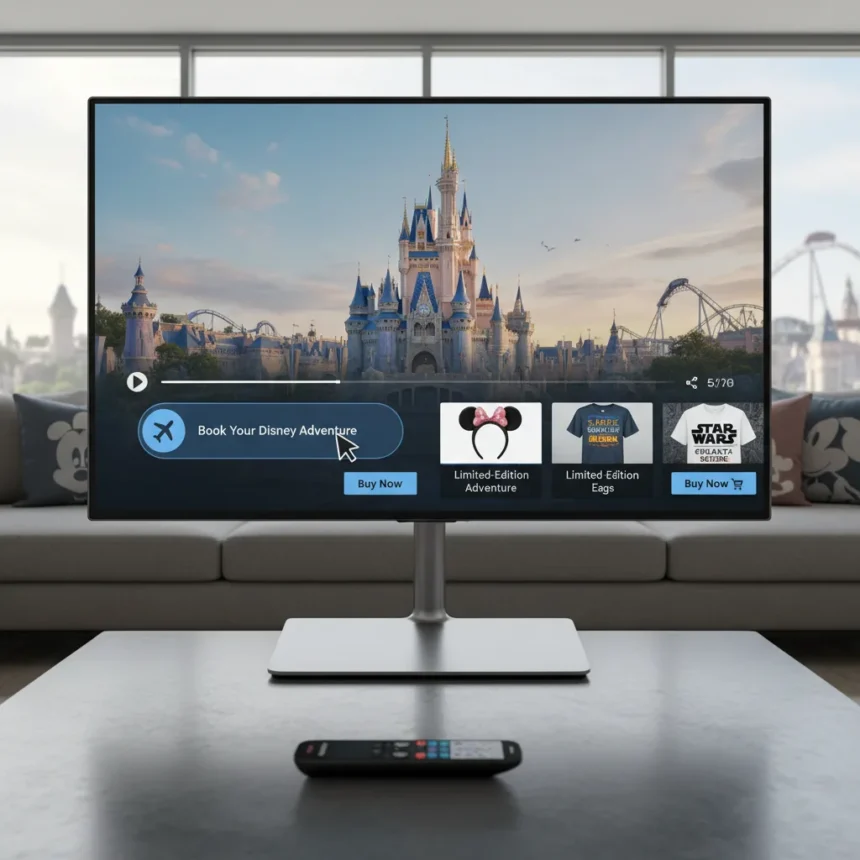
Disney+ commerce expansion marks a fundamental shift in how the streaming giant plans to compete in an increasingly crowded market. CEO Bob Iger announced at Disney’s Q1 2024 earnings call that Disney+ will evolve into a “one-stop shop” for entertainment and commerce, transforming the app from a pure content delivery platform into a gateway for purchasing park tickets, booking hotels, and buying themed merchandise directly tied to what you’re watching.
Key Takeaways
- Disney+ will integrate shopping and park ticket booking directly into the streaming app starting in 2025.
- Features include in-app purchases for merchandise and experiences triggered during relevant content playback.
- Initial rollout targets US users, with global expansion planned for later in 2025.
- Disney+ has 153.8 million subscribers globally as of Q1 2024.
- The move positions Disney+ against Amazon Prime Video’s shoppable ads and Netflix’s merchandise gifting.
Why Disney+ Is Becoming a Booking Platform
Disney+ commerce expansion is not a random feature—it’s a strategic response to subscriber churn and the streaming wars. Disney’s Q1 2024 earnings revealed the platform lost 1.3 million subscribers in the period, forcing the company to look beyond content licensing for growth. By tying shopping directly to streaming, Disney can convert passive viewers into active buyers. Imagine pausing a She-Hulk episode to instantly purchase Avengers merchandise, or watching a Galaxy’s Edge-themed show and booking a park ticket without leaving the app. This friction-free path from entertainment to purchase is where Disney believes the real revenue lies.
The integration will leverage Disney’s existing MagicBand+ technology and Genie+ app infrastructure, meaning the backend already exists. Disney’s parks business generates over $32 billion annually—far more than streaming subscriptions. By funneling even a fraction of Disney+ viewers into park bookings and merchandise sales, the company can offset streaming losses with higher-margin revenue. This is not about making Disney+ a better streaming service. It’s about making Disney+ a profit center for the broader Disney ecosystem.
Disney+ Commerce Expansion vs. Competitor Approaches
Amazon Prime Video has been testing shoppable ads for years, allowing viewers to purchase products directly from advertisements during streams. Netflix has experimented with merchandise gifting and live shopping events tied to popular shows like Squid Game. But Disney’s approach is uniquely powerful because it combines streaming content with real-world experiences at theme parks—something no competitor can replicate. Universal Studios offers an app for booking tickets and hotels, but it lacks streaming integration. Apple TV+ focuses purely on content, with no commerce ambitions announced. Disney+ commerce expansion gives Disney a moat that pure streamers cannot match.



The shoppable experience will trigger contextually during relevant content. Watch Star Wars and see lightsaber purchase prompts. Watch a travel documentary and get hotel booking suggestions. This is not aggressive advertising—it’s merchandising disguised as utility. For Disney, it transforms the app from a cost center into a sales channel.
What Disney+ Commerce Features Will Actually Look Like
Details remain sparse because the features are still in development, with pilots expected in 2025. Disney has not confirmed exact pricing for new commerce features or shown working prototypes. Based on the Q1 2024 announcement, the rollout will begin in the US, with expansion to the UK and EU following later. Current Disney+ pricing—$13.99 per month or $139.99 annually for the standard tier, with an ad-supported option at $7.99 per month—will not change. The commerce features will layer on top of existing subscriptions.



Park tickets booked through the app would use existing pricing structures. A single-day Walt Disney World ticket currently ranges from $109 to $159 depending on the date and park. By integrating these bookings into Disney+, the company eliminates the step of visiting a separate website or calling a travel agent. For international expansion, Disney will need to navigate regional commerce regulations and payment methods, but the core model remains the same: reduce friction between content consumption and spending.
The Real Risk: Will Viewers Feel Manipulated?
Disney+ commerce expansion depends entirely on execution. If in-app shopping prompts feel intrusive or interrupt the viewing experience, subscribers may resent the feature. Netflix’s merchandise gifting works because it’s optional and unobtrusive. Amazon’s shoppable ads work because Prime Video viewers expect commerce integration. But Disney+ has positioned itself as a premium entertainment destination. Aggressive merchandising could damage that perception.
There’s also the question of whether viewers actually want to book vacations while binge-watching. The impulse to purchase a lightsaber during a Star Wars episode is real, but the impulse to book a $5,000 park vacation during casual viewing is less certain. Disney will need to balance monetization with user experience, or risk turning a beloved app into a shopping mall.
What This Means for the Streaming Wars
Disney+ commerce expansion is a bet that streaming alone cannot sustain profitability. Netflix, Amazon, and Apple have all pursued different paths—Netflix raised prices and cracked down on password sharing, Amazon bundled Prime Video with shopping, Apple subsidized content losses with hardware sales. Disney is choosing to blur the line between entertainment and commerce entirely. If successful, it could become a template for other streamers with real-world assets. Warner Bros. Discovery could integrate HBO Max with theme parks. Paramount+ could tie shopping to its film and TV franchises.



For viewers, the shift is significant. Disney+ will no longer be purely about entertainment—it will be an extension of Disney’s retail and hospitality operations. That’s not inherently bad. Convenience has value. But it does mean Disney+ is becoming something different from what subscribers signed up for. The question is whether that evolution strengthens the platform or dilutes it.
Will Disney+ Commerce Features Actually Launch?
Disney announced the concept at Q1 2024 earnings, but no confirmed launch date exists. Pilots are expected in 2025, meaning the feature could arrive as early as next year or slip into 2026. Disney has a history of announcing ambitious digital initiatives and taking years to deliver them. The company will need to solve payment processing, inventory management, and regional compliance issues before rolling out globally. Initial US availability makes sense—Disney’s largest parks and subscriber base are domestic.
Should You Expect This Feature on Your Disney+ App Soon?
If you’re a Disney+ subscriber, the commerce features will likely arrive in 2025, starting in the US. You won’t be forced to use them—they’ll be optional add-ons triggered during relevant content. For international subscribers, the wait will be longer. The feature represents a fundamental shift in how Disney monetizes its streaming platform, so expect it to expand aggressively once pilots prove successful.
How Will Disney+ Commerce Affect Pricing?
Disney has not announced price changes tied to commerce features. Current subscription tiers—$13.99/month standard, $139.99/year, or $7.99/month ad-supported—should remain stable. The commerce features are intended to drive incremental revenue from shopping and bookings, not subscription price hikes. However, if commerce integration becomes a major revenue driver, Disney may eventually tie premium commerce benefits to higher subscription tiers.
Disney+ commerce expansion is a calculated gamble that the future of streaming is not just content—it’s commerce. By integrating shopping, bookings, and merchandise directly into the app, Disney is betting that convenience and impulse purchasing will offset subscriber losses and justify the streaming investment. Whether viewers embrace this evolution or resent the commercialization will determine whether it becomes an industry standard or a cautionary tale about pushing monetization too far.
Where to Buy
Apple iPhone 17 Pro Max | Apple TV 4K (2022) | Roku Streaming Stick 4K | Google TV Streamer 4K | Manhattan Aero 4K TV Streamer with
Edited by the All Things Geek team.
Source: T3




