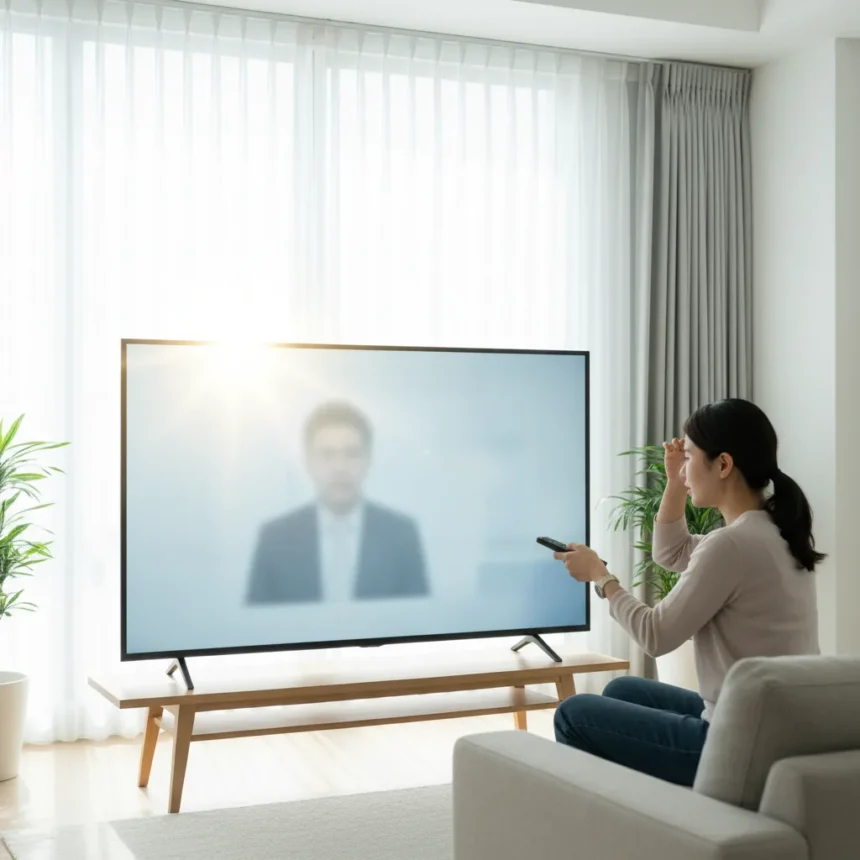
TV visibility in daylight remains one of the most frustrating home theater problems, yet it is often overlooked in setup guides. You buy a television with impressive specs, mount it on the wall, and then discover that afternoon sunlight renders the picture nearly invisible. The issue is not a defect—it is a fundamental mismatch between how modern TVs are engineered and how natural light behaves in your living room.
Key Takeaways
- Most TVs are optimized for dark rooms and struggle when direct sunlight hits the screen
- Brightness settings alone cannot fully compensate for ambient light interference
- Contrast ratio and peak brightness specifications determine daytime viewing capability
- Room layout and window placement have as much impact as TV settings
- Practical solutions range from simple adjustments to architectural changes
Why Your TV Screen Disappears in Bright Rooms
The root cause of poor TV visibility in daylight is the gap between a television’s peak brightness output and the ambient light flooding your room. Most modern TVs are designed for controlled, dimly lit environments where the screen is the dominant light source. When sunlight enters the room, it competes with the TV’s backlight, washing out colors and reducing perceived contrast. The brighter your room, the dimmer your TV appears by comparison.
Television brightness is measured in nits—a unit of light intensity. A typical television produces between 300 and 500 nits in standard mode, which is adequate for evening viewing but insufficient when competing with direct sunlight, which can exceed 10,000 nits indoors near windows. This physical limitation cannot be overcome by adjusting settings alone; it requires either reducing ambient light or choosing a television with exceptionally high peak brightness.
TV Visibility in Daylight: Settings That Actually Help
Before considering expensive solutions, optimize your television’s picture settings for daytime viewing. Most TVs include a brightness or backlight adjustment—these are not the same thing, though many users confuse them. Brightness controls the black level, while backlight controls overall light output. Increasing backlight will improve visibility in bright rooms, though it may reduce energy efficiency and shorten panel lifespan if left at maximum permanently.



Check your TV’s picture mode settings. Many televisions include a dedicated bright room or vivid mode designed for well-lit spaces. These modes boost contrast and color saturation to compensate for ambient light interference. Some TVs also offer dynamic contrast features that automatically adjust brightness based on scene content—enabling these can help during daytime viewing. However, these software solutions have hard limits; they cannot magically create brightness that the panel does not physically produce.
Architectural and Environmental Fixes
The most effective long-term solution is controlling the light in your room, not fighting it with TV settings. Window treatments matter far more than most people realize. Heavy blackout curtains or motorized roller shades can reduce incoming sunlight by 90 percent or more, transforming a bright room into a controlled viewing environment. If you are unwilling to install permanent window coverings, even temporary solutions like reflective film or thermal shades provide meaningful improvement.



Room layout also affects daytime TV visibility. Positioning your television away from windows and ensuring no direct sunlight hits the screen makes an enormous difference. If your current setup places the TV opposite a large window, even moving it to an adjacent wall may significantly improve visibility without any other changes. Matte TV screens reduce glare better than glossy panels, though this is a consideration for your next television purchase rather than a fix for your current one.
When to Consider a New Television
If you spend significant time watching television during daylight hours and your current TV still seems invisible after optimizing settings and reducing ambient light, a television upgrade may be justified. Look for models with high peak brightness specifications—premium OLED and mini-LED televisions often exceed 1,000 nits in peak brightness, compared to 400-600 nits for standard models. These sets handle bright rooms substantially better, though they cost more and may not be necessary if you are willing to manage room lighting.
Brightness alone should not be your only purchasing criterion. Consider your actual viewing patterns: if you primarily watch television in the evening, a standard brightness TV with good picture quality in dark rooms may be the better choice. But if daytime viewing is important to you, peak brightness becomes a primary specification rather than a secondary one.
Does closing curtains really help that much?
Yes. Blackout curtains or shades can reduce visible light by 80-95 percent, fundamentally changing how your TV appears. Direct sunlight creates such intense ambient light that no television setting can fully compensate. Closing curtains transforms the problem entirely by reducing the light your TV must compete with, making even standard brightness levels appear vivid and clear.



Can I fix daytime TV glare with picture mode settings alone?
Picture mode adjustments help but cannot fully solve the problem if your room receives strong direct sunlight. Switching to vivid or bright room modes boosts contrast and brightness, but these modes have limits based on your TV’s physical brightness output. They work best when combined with reduced ambient light rather than as standalone solutions.
What brightness level should I target for daytime viewing?
For comfortable daytime viewing, aim for a television with at least 600-800 nits of peak brightness if your room receives regular sunlight. Standard televisions at 400-500 nits will struggle in bright conditions. Premium models exceeding 1,000 nits handle daylight viewing most reliably, though they represent a significant investment if daytime viewing is your only concern.
TV visibility in daylight is not a mystery—it is a simple matter of physics. Your television’s light output must exceed the ambient light in your room for the picture to appear bright and clear. The practical path forward depends on your priorities: manage room lighting through window treatments and layout adjustments, optimize your current TV’s settings, or invest in a brighter television designed for well-lit spaces. Most viewers find that combining modest window treatment improvements with picture setting adjustments solves the problem without requiring a new purchase.
Where to Buy
55-inch QM6K is just $447 at Amazon | 55-inch U65QF is on sale at Amazon for just $398
Edited by the All Things Geek team.
Source: Tom's Guide