A free streaming diet is now genuinely competitive as an alternative to paid subscriptions, with ad-supported platforms, broadcast TV, and library services delivering thousands of titles without monthly fees. Streaming prices have climbed 25–50% since 2021—Netflix jumped from $13.99 to $22.99 for premium, Disney+ raised rates multiple times, and even newer services like Max demand more each year. The economics have shifted: building a zero-cost viewing strategy is no longer a compromise. It’s a rational response to subscription fatigue.
Key Takeaways
- Tubi offers 20,000+ titles and 200+ live channels entirely free with ads.
- An indoor antenna ($20–$50) unlocks 50–100+ local broadcast channels depending on location.
- Library cards unlock Kanopy and Hoopla, giving free access to indie films and Criterion Collection titles with no waitlists.
- Pluto TV, Freevee, Crackle, and Plex provide on-demand and live content across all major platforms.
- Smart TV apps like Roku Channel and Samsung TV Plus add 350+ free live channels directly to your television.
Why streaming prices triggered the shift to free alternatives
The free streaming diet emerged because the paid subscription model became unsustainable for casual viewers. Netflix, Disney+, Hulu, and Max all raised prices multiple times over five years. A household subscribing to four major services now pays $80–$120 monthly—more than a basic cable package cost a decade ago. That math breaks for millions of viewers. Ad-supported tiers exist on most platforms, but they still charge $6–$12 monthly. Free alternatives remove that friction entirely.
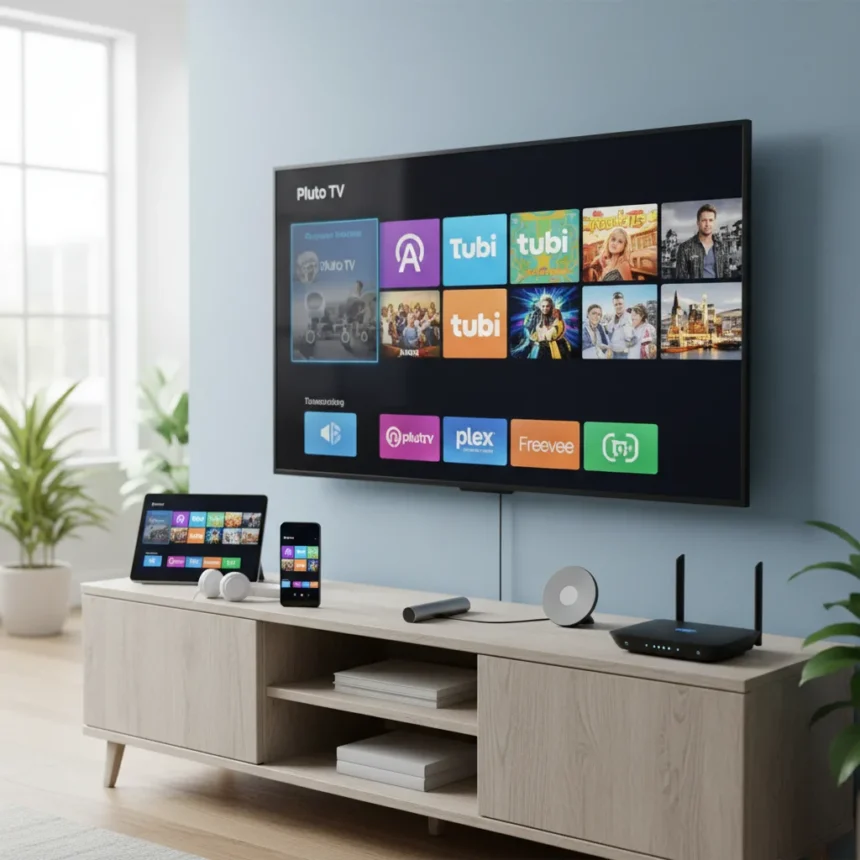
Tubi exemplifies the shift. The platform hosts over 20,000 titles across 200+ live channels, all free. Pluto TV delivers 250+ live channels plus on-demand content. Freevee, owned by Amazon, includes originals like Bosch alongside catalog films. Crackle (Sony-owned) and Plex round out the ecosystem. None require payment. This isn’t niche content either—these services compete directly with Netflix and Prime Video on volume, though with more ads and fewer prestige originals. For viewers willing to tolerate ad breaks, the value proposition is unbeatable.
Building your free streaming diet: The hardware foundation
Start with an antenna. This is the single most important investment in a free streaming diet, and it costs almost nothing. An indoor antenna like the Mohu Leaf runs about $30 and accesses local broadcast networks—ABC, CBS, NBC, Fox, and PBS—with 50–100+ free channels depending on your location. To set one up: buy the antenna, place it high near a window facing broadcast towers (use the FCC.gov tower locator map to find your nearest transmitters), plug it into your TV, and run an auto-scan in your TV’s Settings menu under Channels. Rescan monthly to catch new stations. That single device locks in local news, sports, and primetime broadcasts without touching the internet.


If you want DVR functionality, pair your antenna with a Tablo or HDHomeRun device (hardware costs around $100). Both offer free software for streaming and recording over-the-air content. This transforms your antenna from a passive receiver into a full-featured DVR system. Most households never need this—basic antenna viewing covers the essentials—but it exists for cord-cutters who demand flexibility.
Free streaming diet apps: The core lineup
Download these five apps to your phone, tablet, or streaming device. Tubi leads the pack with 20,000+ titles and 200+ live channels. Pluto TV offers 250+ live channels and on-demand content. Freevee brings Amazon-backed originals and a growing film library. Xumo Play delivers 350+ channels. Plex combines free live TV with a curated on-demand library. All are free, all run on iOS, Android, Roku, Fire TV, and most smart TVs. Create accounts (no payment required), and you’re watching immediately.



Crackle (Sony’s platform) rounds out the selection with movies and TV shows. These services monetize through ads, not subscriptions. You’ll see 15–30 second commercials, typically two to three per half-hour episode. It’s the trade-off for zero cost. For most viewers accustomed to cable, the ad load feels familiar rather than intrusive.
Library services unlock premium content for free
Your public library or university offers Kanopy and Hoopla, two platforms that eliminate the paid streaming diet entirely for certain content. Kanopy includes the entire Criterion Collection, documentaries, and indie films—titles you’d never find on Tubi. Hoopla adds ebooks, movies, and more with no holds or waitlists. Access is instant: visit kanopy.com or hoopla.com, enter your library barcode, and start watching. This is the best-kept secret in the free streaming diet. A library card costs nothing and unlocks thousands of curated titles that paid services charge $15+ monthly to access.
Check your library’s website to confirm Kanopy and Hoopla participation. Most major US library systems offer both. If yours doesn’t, request it—librarians track demand and add services based on patron interest.
Smart TV and device-native free channels
Modern televisions come with built-in free streaming. Roku Channel offers 350+ live channels and free content on any Roku device. Samsung TV Plus delivers the same breadth on Samsung televisions. Vizio WatchFree+ works on Vizio sets. These are passive—they come pre-installed or require one tap to enable—and they duplicate much of what Pluto TV offers. But having them directly on your TV remote, without opening a separate app, makes casual viewing frictionless. Spend 10 minutes enabling these during TV setup, and you’ve added hundreds of channels to your free streaming diet at zero ongoing cost.


News and sports on a free streaming diet
Local broadcast TV via antenna covers most sports and news needs. Antenna access to ABC, CBS, NBC, and Fox gives you local news, primetime sports, and live events without internet dependency. For national news, ABC News Live, NBC News Now, and CBS News 24/7 stream free on platforms like Roku and Pluto TV. YouTube hosts free movies, live news channels, and creator content. PBS.org and local PBS station apps stream live and on-demand content free. Sports blackouts and regional restrictions apply (antenna locals vary by ZIP code), but the foundation is solid.
Maximizing your free streaming diet long-term
The free streaming diet works best when you treat it as a system, not a collection of one-off services. Bookmark your antenna’s channel list. Set up smart TV apps during initial setup rather than installing them later. Link your library card to Kanopy and Hoopla immediately—don’t wait until you want to watch something. Create accounts on Tubi, Pluto, and Freevee on your phone, then cast to your TV. This 30-minute setup creates a viewing ecosystem that rivals Netflix in breadth and costs nothing monthly. Rescan your antenna monthly to catch new local channels. Rotate between services based on what you’re in the mood for: library services for indie films, Tubi for catalog depth, Pluto for live TV, antenna for sports and news.
Avoid the temptation to subscribe to free trials and forget to cancel. Netflix ended its free trial in late 2023. Other services follow similar patterns. If you use a trial, set a calendar reminder to cancel before the charge hits. The free streaming diet works only if you maintain discipline around paid services.
Can you really watch everything for free?
No, but you can watch most things. A free streaming diet covers broadcast TV, news, sports, thousands of films, and most prestige television. You’ll miss some originals—Netflix’s newest shows, HBO’s exclusive series, Apple TV+ productions. You’ll encounter regional blackouts on sports. Some titles rotate off platforms. But for someone spending $100+ monthly on subscriptions, the 80–90% overlap with free services is remarkable. The question isn’t whether free streaming covers everything. It’s whether the 10–20% you miss justifies $100 monthly. For most viewers, it doesn’t.
How do I find broadcast towers near my location for antenna placement?
Use the FCC.gov tower locator map. Enter your ZIP code, and it shows transmitter locations and signal strength. Place your antenna high and near a window facing the strongest towers. Indoor antennas work best within 30 miles of transmitters; outdoor models extend range to 50+ miles. If you’re far from towers or in a dense urban area with signal interference, experiment with antenna placement—move it around the room and rescan channels until you find the sweet spot.
What’s the difference between Tubi and Pluto TV?
Tubi emphasizes on-demand content (20,000+ titles) with 200+ live channels as a secondary feature. Pluto TV is live-channel-first (250+ channels) with on-demand content as a supplement. Tubi is better if you want to search and pick specific movies. Pluto TV is better if you like passive, curated viewing. Both are free with ads. Most free streaming diet users subscribe to both and switch based on mood.
Is a free streaming diet actually sustainable, or will services start charging?
Free ad-supported streaming is a proven business model—broadcast TV, YouTube, and Spotify all monetize through ads without subscription paywalls. Tubi, Pluto, and others are venture-backed and growing (Tubi reached 80+ million monthly active users). Expect more free services, not fewer. However, ad loads may increase, and content libraries will rotate. The free streaming diet is sustainable if you accept that it’s not static—it evolves as platforms shift content to maximize ad inventory. The core remains: antenna TV, library services, and ad-supported apps will stay free.
The free streaming diet is no longer a fringe strategy—it’s a rational alternative to subscription stacking. An antenna, your library card, and five free apps deliver thousands of titles without monthly fees. Yes, you’ll see ads. Yes, you’ll miss some originals. But you’ll also reclaim $100 monthly and escape the treadmill of rising subscription costs. That trade-off is increasingly attractive.
Where to Buy
Amazon Prime | Philips Rabbit Ears TV antenna for just $13 | Roku Streaming Stick 4K (2021) | Roku Streambar | Roku Ultra
Edited by the All Things Geek team.
Source: Tom's Guide