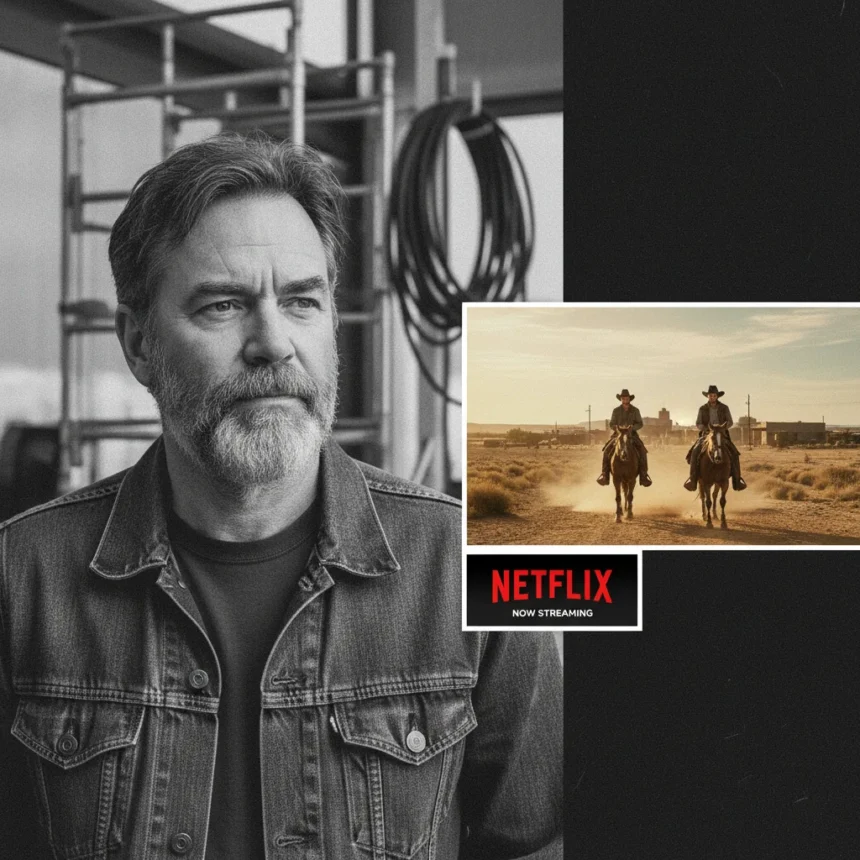
Hell or High Water director David Mackenzie has revealed he hasn’t stayed in touch with writer Taylor Sheridan and isn’t familiar with any of the screenwriter’s subsequent television work, despite their creative partnership on the 2016 neo-Western crime thriller that is now experiencing a surprising streaming resurgence. The admission underscores how creative collaborations in film often diverge into separate career trajectories, even when initial projects achieve critical and commercial success.
Key Takeaways
- Hell or High Water premiered August 11, 2016, with a $12 million budget and $37 million box office gross.
- The film earned 4 Academy Award nominations, including Best Picture and Best Original Screenplay for Sheridan.
- David Mackenzie directed the film but has not stayed connected with writer Taylor Sheridan.
- Hell or High Water debuted on Netflix February 1, 2026, in the US and climbed streaming charts globally.
- The film is scheduled for removal from Netflix in May 2026.
The Disconnect Between Collaborators
Mackenzie’s candid acknowledgment that he hasn’t maintained contact with Sheridan reveals a common reality in entertainment: filmmakers and writers often part ways after a project concludes, pursuing independent creative paths. Hell or High Water, a 102-minute film centered on a divorced father and his ex-con brother orchestrating bank heists while evading a local lawman, became a critical darling upon its 2016 theatrical release. Yet despite the film’s accolades and Sheridan’s subsequent rise as a television powerhouse, the two professionals have not remained in regular communication.
Mackenzie’s unfamiliarity with Sheridan’s television output—which includes the sprawling Yellowstone universe and its spinoffs—highlights how the film industry compartmentalizes talent. A director who helmed a Best Picture nominee does not automatically track every project his collaborators undertake, especially when those projects shift mediums entirely. The Western genre style that Hell or High Water helped establish for Sheridan on the big screen evolved into something vastly different when adapted for prestige television audiences.
Hell or High Water’s Unexpected Streaming Second Act
The film’s February 2026 Netflix debut in the United States marked an unexpected commercial moment for a project that had already recouped its modest $12 million budget years earlier. Hell or High Water climbed Netflix’s streaming charts and became one of the most popular Apple TV purchases globally by March 2026, demonstrating that the film’s appeal transcends its original theatrical window. This renewed interest comes a decade after the film’s initial release, suggesting that audiences continue to discover Sheridan’s pre-Yellowstone work through streaming platforms.



The 97% Rotten Tomatoes rating and four Academy Award nominations—including nods for Best Picture, Best Original Screenplay for Sheridan, Best Supporting Actor for Jeff Bridges, and Best Film Editing—remain the film’s most visible credentials. Yet streaming algorithms and global availability have introduced Hell or High Water to viewers who may have missed it in 2016. The film’s lean runtime of 102 minutes and tight narrative structure make it ideal for contemporary streaming consumption patterns, where viewers often favor focused, character-driven stories over sprawling epics.
The Shadow of a May 2026 Removal
Netflix’s decision to remove Hell or High Water in May 2026 injects urgency into the film’s current streaming moment. The three-month window between the film’s February debut and its scheduled departure creates a finite period for new viewers to access the title, a common licensing reality in the streaming era. This temporary availability mirrors the transient nature of streaming catalogs, where films and shows vanish based on expiring rights agreements rather than strategic choices.



For audiences who discovered the film through its recent Netflix prominence, the May removal deadline becomes a practical concern. Those seeking to own the film permanently may turn to Apple TV purchases or physical media, where Hell or High Water has proven commercially viable. The streaming strategy—introduce the film to a broad audience through Netflix, then remove it to encourage platform-agnostic purchases—reflects how modern distribution operates across multiple revenue channels.
Sheridan’s Evolution Since Hell or High Water
Taylor Sheridan’s career trajectory since writing Hell or High Water has followed a decidedly television-centric path. The writer’s subsequent work in prestige television, particularly with Yellowstone and its spinoffs, has established him as a dominant force in the streaming and cable television landscape. His recent move to NBCUniversal represents another significant shift in his career, one that Mackenzie may or may not be tracking closely.
The disconnect between Mackenzie and Sheridan’s post-2016 careers underscores how film and television exist as separate ecosystems within the entertainment industry, despite increasing convergence in audience and production values. A film director’s attention naturally focuses on cinema, while a writer who finds massive success in television naturally gravitates toward that medium’s demands and opportunities. Hell or High Water remains Sheridan’s most significant film credit in terms of prestige, even as his television work has generated far greater cultural impact and commercial revenue.
Does David Mackenzie plan to work with Taylor Sheridan again?
There is no public indication that Mackenzie and Sheridan plan to collaborate on future projects. The director’s admission that he hasn’t stayed in touch suggests that the professional relationship concluded after Hell or High Water, a common outcome even for successful creative partnerships. Both filmmakers have pursued distinct career paths over the past decade.



Why is Hell or High Water suddenly popular on Netflix?
The film’s February 2026 Netflix debut introduced it to a new global audience unfamiliar with its 2016 theatrical run. Streaming algorithms, international availability, and the film’s tight 102-minute runtime have contributed to its renewed popularity. The May 2026 removal deadline may also be driving increased viewership as audiences rush to watch before it leaves the platform.
What makes Hell or High Water stand out among neo-Western films?
The film combines Sheridan’s sharp screenplay with Mackenzie’s precise direction, creating a character-driven crime narrative rather than a traditional Western spectacle. The ensemble cast—led by Chris Pine, Jeff Bridges, and Ben Foster—delivers understated performances that prioritize psychological tension over action spectacle. Its four Academy Award nominations and 97% Rotten Tomatoes rating reflect critical consensus on its artistic merit within the neo-Western subgenre.
Hell or High Water’s streaming comeback demonstrates that critically acclaimed films can find new audiences years after their theatrical release, even when their creators have moved on to separate endeavors. Mackenzie and Sheridan may not be in regular contact, but their 2016 collaboration continues to resonate with viewers discovering it for the first time through Netflix and Apple TV. For those watching before May 2026, the film remains a masterclass in economical storytelling and ensemble acting—proof that a $12 million investment can yield art that endures well beyond its original release window.
Edited by the All Things Geek team.
Source: TechRadar