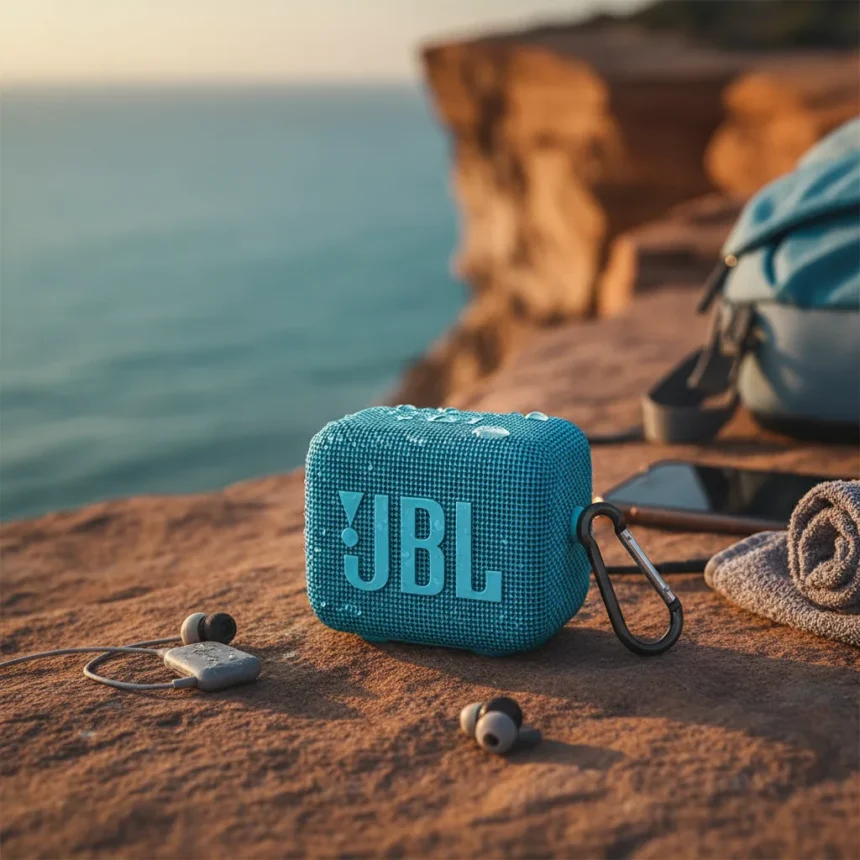
The JBL Go 5 is a compact Bluetooth speaker made by JBL, launched in 2026, priced at $54 USD (£39.99 GBP, AU$59.95), available globally as a portable audio device. At first glance, it looks like every other pocketable speaker—small enough to slip into a backpack, light enough to forget you’re carrying it. But spend an afternoon with the Go 5 soundtracking a beach day or poolside hangout, and something becomes obvious: JBL packed far more capability into this 4.8-ounce frame than the price tag suggests.
Key Takeaways
- JBL Go 5 costs $54 with IP68 waterproofing for pool, beach, and outdoor durability
- 45mm driver and 4.8W output deliver dynamic sound with refined bass and wide soundstage
- Bluetooth 6.0 and USB-C lossless audio via built-in DAC add premium features to a budget speaker
- 8-10 hour battery life trades endurance for portability and sound quality
- Stereo pairing with another Go 5 via AirTouch and Auracast support expand functionality
Sound Quality That Punches Above Its Price
The JBL Go 5 improves on its predecessor, the JBL Go 4, by offering more refined sub-bass and overall dynamic sound quality thanks to a wider soundstage. The 45mm driver produces 4.8W of power—a 14% boost over the Go 4—with Harman-tuned acoustics that prioritize clarity without the ear-fatigue that plagues many budget speakers. When streaming hi-res audio from Qobuz, the speaker shows solid separation between instruments; guitar and synth lines stay distinct even at moderate volumes, and bass impact hits harder than you’d expect from something so small.
The frequency response spans 100Hz to 19kHz, which means you won’t feel chest-thumping sub-bass the way you would with a larger speaker. But what JBL delivers instead is a thick, warm low-end that sits comfortably in the mix without overwhelming vocals or mids. This is the sound signature of a speaker designed for real-world listening—patios, kitchens, beach trips—not a studio reference monitor pretending to be portable.
If you’ve used a truly cheap Bluetooth speaker before, you know the drill: tinny highs, boomy bass, no definition. The Go 5 sidesteps all of that. It’s louder and more articulate than the Go 4, with LED lighting strips on the top and bottom adding a visual dimension to your music without feeling gimmicky.



Durability and Features Built for Real Use
The JBL Go 5 carries an IP68 rating, meaning it’s fully waterproof, dustproof, and drop-proof—ideal for pool decks, desert trips, and the inevitable moment when someone spills a drink near your speaker. That durability matters more than specs on paper when you’re actually using the device. You can leave it out in light rain, toss it into a backpack with keys and coins, or submerge it without fear. Most budget speakers fail this real-world durability test; the Go 5 passes with room to spare.
Connectivity options round out the feature set. Bluetooth 6.0 ensures stable pairing, while USB-C with a built-in DAC allows lossless wired audio from a computer—a feature rarely seen at this price point. The speaker also supports Auracast technology for pairing with other JBL speakers, and you can tap-pair stereo with another Go 5 using AirTouch, turning two tiny speakers into a wider soundstage. For a device costing less than a mid-range meal, the Go 5 offers surprising ecosystem flexibility.



JBL Go 5 vs. JBL Go 4: Worth the Upgrade?
If you own a JBL Go 4, the upgrade case is moderate. The Go 5 adds refined bass, higher output, LED lighting, and Bluetooth 6.0, but the Go 4 still sounds respectable and costs roughly $10 less. The real win for the Go 5 is in new buyers—anyone shopping for their first portable speaker should skip the Go 4 entirely and grab the Go 5. The price difference barely registers, but the audio gap does.
Larger competitors like the JBL Charge 5 offer richer sound via a long-excursion driver, tweeter, and dual radiators, plus a 20-hour battery and power-bank functionality. But the Charge 5 weighs significantly more and costs substantially more, making it a different product for a different use case. The Go 5 owns the category of speakers you actually carry everywhere; the Charge 5 is for trips where audio quality is the priority and weight is less of a concern.
Battery Life: The Tradeoff
The 1,000mAh lithium-ion battery delivers 8-10 hours of playtime, which isn’t the best endurance in the budget category. But here’s the thing: that battery limitation exists because JBL prioritized sound quality and portability over all-day runtime. A bigger battery would make the speaker heavier and bulkier, defeating the purpose. If you need multi-day battery life, you’re already shopping in a different category. For a weekend trip or daily use with regular charging, 8-10 hours is practical.
Why the JBL Go 5 Matters Right Now
In 2026, budget Bluetooth speakers have become commoditized. Most sound mediocre. The JBL Go 5 refuses to be mediocre. It takes the formula that made the Go 4 popular—pocketable, durable, affordable—and genuinely improves it without inflating the price. The addition of Bluetooth 6.0, USB-C lossless audio, and refined sound tuning signals that JBL treats this category seriously, not as an afterthought. For anyone soundtracking a summer of travel, outdoor hangs, or poolside moments, the Go 5 is the clear winner under $60.



Is the JBL Go 5 worth buying?
Yes, absolutely. If you need a portable speaker that sounds good, survives rough treatment, and costs less than most coffee makers, the JBL Go 5 is the best option in its size and price range. The only reason not to buy it is if you specifically need multi-day battery life or prefer a larger speaker with deeper bass.
How does the JBL Go 5 compare to the JBL Go 4?
The Go 5 adds refined sub-bass, higher output power, LED lighting, and Bluetooth 6.0 versus the Go 4. Both are excellent, but the Go 5 is the better speaker for roughly the same price. If you own a Go 4, the upgrade is optional; if you’re buying new, get the Go 5.
Can you pair two JBL Go 5 speakers together?
Yes. You can stereo-pair two Go 5 speakers using AirTouch (tap-to-pair) technology, and the speaker also supports Auracast for pairing with other JBL devices. This expands the soundstage and volume beyond what a single unit can deliver.
The JBL Go 5 succeeds because it refuses to compromise on the fundamentals. It sounds genuinely good, survives real-world abuse, and costs less than most people spend on a single meal. In a market flooded with forgettable budget speakers, that’s exactly what matters.
Where to Buy
JBL Go 5: | $54 | £39 at Amazon | $54.95 | $54.95
Edited by the All Things Geek team.
Source: Tom's Guide