




The LG C6 vs LG C5 OLED debate boils down to one uncomfortable truth: they are nearly identical TVs, and that is not necessarily a bad thing. LG’s C6 OLED (2026 model) is a successor to the C5 OLED (2025 model), featuring the Alpha 11 AI Gen 3 processor and measurable brightness gains, but real-world differences are subtle enough that most viewers will struggle to spot them without a side-by-side comparison.
Key Takeaways
- C6 delivers 16% brighter overall performance, with full-screen HDR reaching 245 nits versus C5’s 195 nits
- Smaller C6 models (42-65 inches) use the same WOLED EX panels as the C5; only 77- and 83-inch C6H models feature upgraded Tandem RGB 2.0 panels
- C6 shows improved color accuracy and more natural saturation, with better grayscale handling and balanced contrast
- C5 remains excellent value, especially at discounted prices, making it the smarter choice for budget-conscious buyers
- webOS 26 on C6 brings minor smoothness improvements over C5’s webOS 25, but differences are negligible in daily use
The Real Performance Gap: Smaller Than You Think
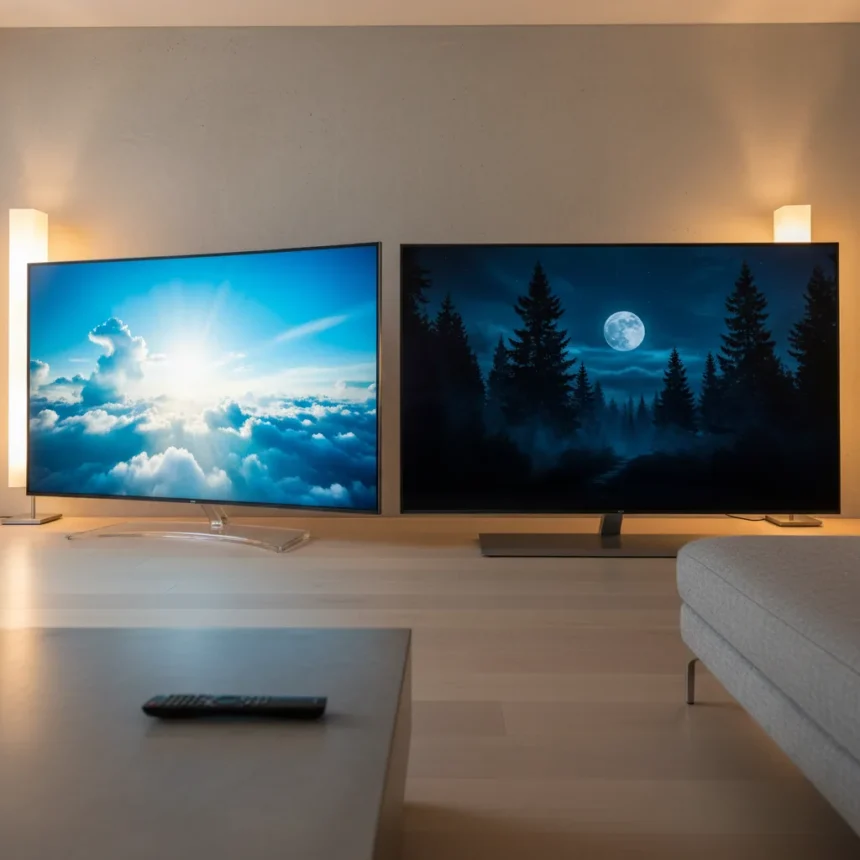
The brightness difference between these two TVs is measurable but not dramatic. The LG C6 vs LG C5 OLED brightness comparison shows the C6 hitting approximately 245 nits in full-screen HDR Filmmaker mode, compared to 195 nits on the C5—a roughly 25% improvement in that specific measurement. Across the board, the C6 is about 16% brighter overall. That sounds impressive until you realize that 50 nits, while a healthy step-up for an OLED TV, becomes almost imperceptible in dimly lit living rooms where most people watch. In bright daylight, the difference matters more, but it is hardly a significant shift for standard viewing.
The honest assessment, according to reviewers who tested both side-by-side, is blunt: most people will not notice a massive difference. The C6 is technically superior in brightness, slightly smoother in processing, and has a few upgrades under the hood, but in real life, those upgrades feel incremental rather than transformative. This is where the LG C6 vs LG C5 OLED choice becomes a value proposition rather than a pure performance argument.
Color Accuracy and Processing: Where the C6 Actually Wins
If brightness is a wash, color accuracy is where the C6 pulls ahead, albeit modestly. Testing revealed that the C6 handles color more naturally, with saturation dialed back compared to the C5, resulting in a more balanced and less oversaturated image. Grayscale accuracy improved noticeably—watch a black-and-white film like Sunset Boulevard and you will see less green tint in shadow areas, a common OLED quirk the C6 addresses better. Contrast balance is also more refined, contributing to a more film-accurate presentation overall.



The Alpha 11 AI Gen 3 processor powers these improvements across all C6 sizes, the same chip found in LG’s flagship G6 model. For the C6 vs LG C5 OLED comparison, this processor translates to smarter upscaling and better color tone consistency across the entire screen. However, webOS 26 (versus the C5’s webOS 25) brings only minor smoothness and processing tweaks—nothing that will make you feel like you are using a fundamentally different operating system.
Panel Architecture: A Critical Difference for Larger Screens
Here is where the LG C6 vs LG C5 OLED story gets complicated. Smaller C6 models at 42, 55, and 65 inches use the same WOLED EX panels as their C5 counterparts. That means if you are buying a 55-inch C6, you are getting virtually the same panel as a 55-inch C5, just with a better processor and slightly improved processing. The real upgrade comes at 77 and 83 inches, where LG switched to the C6H variant with Primary Tandem RGB 2.0 OLED panels featuring dual-layer Hyper Radiant technology. These larger C6H models are genuinely brighter and more advanced, but they are also ultra-expensive and represent a different product tier.


This architectural split is crucial for your decision. If you want a 55-inch TV, the LG C6 vs LG C5 OLED choice is almost purely about processor and minor refinements—not worth a premium. If you are considering 77 or 83 inches, the C6H is a more meaningful step forward, though the price reflects that superiority.
Gaming and HDR Performance: Comparable Strengths
Both TVs support the full suite of HDR formats: HDR10, HDR10+, Dolby Vision, and HLG. Input lag metrics for gaming are similar between the two, with the C6 showing a slight edge in some gaming tests, but the differences are marginal enough that competitive gamers will barely notice. If you are using either TV for console or PC gaming at 4K@120Hz or 1080p@60Hz, performance is functionally equivalent. The LG C6 vs LG C5 OLED gaming experience is not a differentiating factor—both handle modern gaming with aplomb.
The Value Verdict: Why the C5 Might Be the Smarter Buy
The C5 earned praise as one of 2025’s best TVs with a five-star rating, and that assessment still holds. As the LG C6 vs LG C5 OLED decision sits in the market, the C5 is increasingly available at discounts, making it the smarter purchase for most buyers. Unless you specifically need the brightness gains (bright room viewing, HDR content focus) or are targeting the larger 77/83-inch C6H with its superior Tandem OLED panels, the C5 delivers nearly identical performance at a lower price. The C6 is a nice upgrade, not a necessary one.
Should you upgrade from the C5 to the C6?
Only if you are buying a 77 or 83-inch model and want the C6H’s superior Tandem RGB panels, or if you watch in bright conditions and value the brightness boost. For 42-65 inch sizes, the C5 is the better value. The processor and color improvements are real but subtle—not worth a significant price premium for most viewers.


What is the brightness difference between the C6 and C5?
The C6 reaches approximately 245 nits in full-screen HDR Filmmaker mode, compared to the C5’s 195 nits—roughly a 25% improvement in that measurement. Overall, the C6 is about 16% brighter. The difference is noticeable in bright rooms but minimal in typical home viewing conditions.
Do smaller C6 models use the same panel as the C5?
Yes. The 42, 55, and 65-inch C6 models use the same WOLED EX panels as their C5 equivalents. Only the 77 and 83-inch C6H variants feature the upgraded Primary Tandem RGB 2.0 panels. This means smaller C6 improvements are limited to processor and software enhancements, not panel technology.
The LG C6 vs LG C5 OLED showdown is ultimately a question of patience and budget. If you can grab a discounted C5 right now, do it—you are getting a five-star TV at a better price. If you are set on the latest generation and watch in bright conditions, the C6 offers meaningful brightness gains and superior color handling. But for the vast majority of viewers in typical living rooms, the differences are small enough that the C5 remains the smarter choice.
This article was written with AI assistance and editorially reviewed.
Source: What Hi-Fi?