





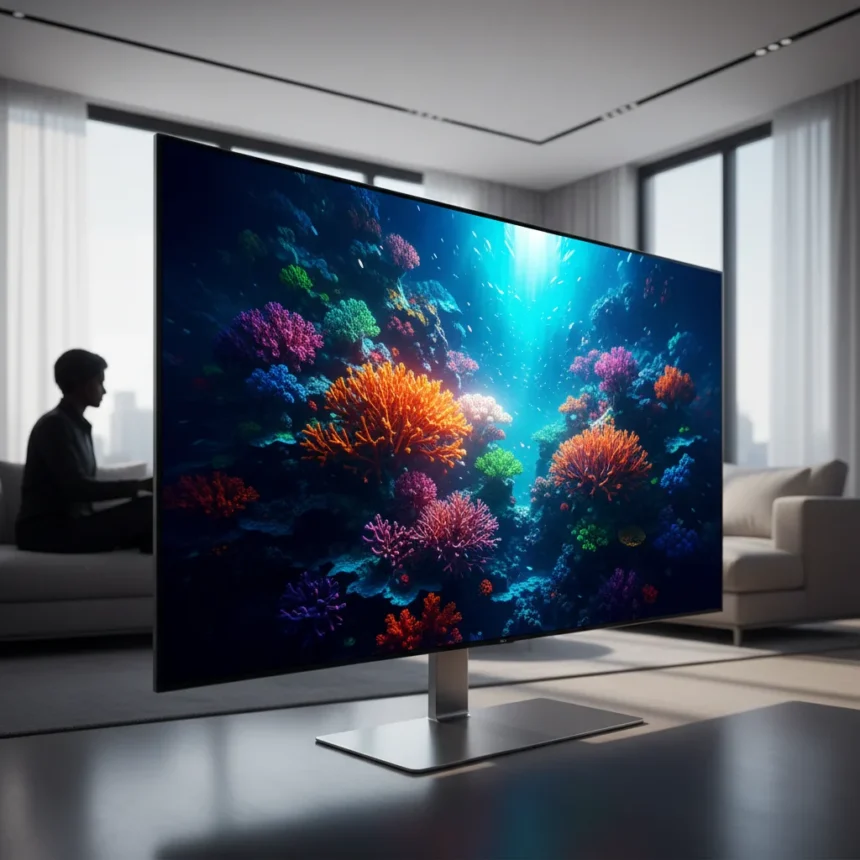
LG’s Hyper Radiant Color technology represents a fundamental shift in how the company approaches OLED performance, arriving in the 2026 lineup with the G6, C6H, and W6 Wallpaper models. This technology combines three core components—Brightness Booster, Perfect Black, and Perfect Color—powered by the Alpha 11 AI Processor Gen3, delivering up to 3.9x brighter images than conventional OLEDs while maintaining the deep blacks and accurate colors that define the format.
Key Takeaways
- LG Hyper Radiant Color technology achieves up to 3.9x brightness improvement in W6 and G6 models versus conventional OLEDs.
- Perfect Black levels verified at ≤0.24nit up to 500lux by UL Solutions, maintaining shadow detail in bright rooms.
- Perfect Color consistency exceeds 99% up to 500lux, ensuring accurate hues under high ambient light.
- Intertek Reflection Free Premium certification confirms lowest reflectance among LG TVs.
- W6 Wallpaper TV revives the thin-frame design with True Wireless connectivity via Zero Connect Box.
What LG Hyper Radiant Color Technology Actually Does
LG’s Hyper Radiant Color technology solves a problem that has plagued OLED TVs since their inception: brightness in bright rooms. Traditional OLEDs excel in dark environments but struggle when ambient light floods the viewing space. This technology balances peak brightness, black levels, and color accuracy without sacrificing contrast or accuracy, according to hands-on reviews. The system relies heavily on processing—the Alpha 11 AI Processor Gen3 handles the heavy lifting, intelligently managing pixel output across over 8.3 million self-lit smart pixels to maintain picture quality across varying lighting conditions.
The technology achieves these improvements through three integrated components working in concert. Brightness Booster pushes luminance output—Ultra variant in the W6 and G6 reaches up to 3.9x brightness versus conventional OLEDs, while the Pro variant in the C6H delivers up to 3.2x improvement. Perfect Black ensures shadow detail remains visible even under 500lux of ambient light, with UL Solutions verification confirming black levels stay at or below 0.24nit. Perfect Color maintains color saturation and consistency above 99% under the same bright-room conditions, preventing the washed-out appearance typical of bright-room OLED viewing.
Why Bright-Room Performance Matters for OLED TVs
Conventional OLEDs have always demanded dark viewing environments to shine. Their self-emissive pixels produce stunning contrast and color in controlled settings, but reflections and light washout become problems the moment you crack open the curtains. LG’s Hyper Radiant Color technology addresses this directly. The W6 and G6 achieve Intertek’s Reflection Free Premium certification, the lowest reflectance rating among LG TVs, maintaining performance up to 500lux of ambient light. This certification matters because it means the TV can deliver its promised brightness and color accuracy even in living rooms with windows, skylights, or bright overhead lighting—scenarios that previously forced OLED buyers to choose between picture quality and practical room design.



The brightness multipliers (3.9x and 3.2x) compare against LG’s older B-series models at standard 3% window measurements. These are meaningful improvements, though they reflect LG’s own progression rather than universal OLED brightness standards. What matters more is the verification: UL Solutions independently confirmed the black and color performance metrics, lending credibility to claims that wouldn’t otherwise survive scrutiny.
The 2026 LG OLED Lineup and Design Implications
LG’s Hyper Radiant Color technology appears across three distinct 2026 models, each targeting different buyer priorities. The W6 Wallpaper OLED revives the thin-frame design that debuted in 2017, now equipped with True Wireless connectivity via the Zero Connect Box, eliminating visible cables. It supports 4K at 165Hz, appealing to gamers and high-frame-rate content enthusiasts. The G6 targets mainstream premium buyers, delivering the full Hyper Radiant Color experience with Brightness Booster Ultra. The C6H sits one tier down with Brightness Booster Pro, offering meaningful brightness gains without the absolute peak output of the G6.



All three models feature 70% improved graphics processing compared to prior generations, a specification that hints at the computational demands of managing Hyper Radiant Color across millions of pixels in real time. The Alpha 11 AI Processor Gen3 handles this workload, analyzing content frame-by-frame and adjusting pixel brightness, color, and black levels dynamically. This processing-heavy approach explains why LG positioned the technology as an evolution rather than a simple hardware upgrade—the gains come largely from smarter software managing the OLED stack more effectively.
How This Compares to Conventional OLED Standards
Traditional OLEDs, including LG’s older models, cannot match the brightness of LED-backlit TVs without sacrificing contrast. Hyper Radiant Color narrows this gap significantly. The 3.9x brightness improvement in the W6 and G6 moves OLED performance into a range where bright-room viewing becomes genuinely practical, not a compromise. However, these multipliers measure against LG’s own prior models, not against current flagship LED or mini-LED TVs from other manufacturers. The real competitive advantage lies in combining that brightness with OLED’s inherent strengths: perfect blacks, infinite contrast, and pixel-level color control that no backlit display can match.
The Reflection Free Premium certification from Intertek distinguishes LG’s approach from competitors who may chase brightness alone without addressing reflections. A bright OLED that mirrors your ceiling lights defeats its own purpose. LG’s focus on reflectance reduction, verified independently, suggests a more holistic design philosophy.
Should You Care About Hyper Radiant Color?
If you watch TV in a bright room, yes. If your viewing space is naturally dark or heavily light-controlled, the technology offers less practical benefit—conventional OLEDs already deliver superior picture quality in those conditions. Hyper Radiant Color targets the real-world scenario most buyers face: a living room with windows, daytime viewing, and no blackout curtains. For those buyers, the verified performance metrics matter. The ≤0.24nit black levels and >99% color consistency up to 500lux mean you can actually see shadow detail and accurate colors without the washed-out appearance that has historically plagued bright-room OLED viewing.



The W6’s wallpaper design and True Wireless connectivity add practical appeal beyond picture quality, solving the cable clutter problem that has deterred some buyers from OLED despite its superior image. The G6 and C6H offer the same Hyper Radiant Color benefits in more conventional form factors at different price tiers, though no verified pricing was announced at launch.
What Makes Hyper Radiant Color Processing-Driven?
The technology’s reliance on the Alpha 11 AI Processor Gen3 means much of the improvement comes from intelligent software, not hardware alone. The processor analyzes incoming video content and makes real-time decisions about how to allocate brightness across the pixel array while preserving black levels and color accuracy. This explains why LG can achieve these gains without fundamentally redesigning the OLED panel itself—the stack remains largely similar to prior generations, but the processing layer above it has become dramatically more sophisticated. This approach allows LG to scale the technology across different models with different processor variants (Ultra in the W6/G6, Pro in the C6H), delivering proportional performance gains without requiring entirely different panel technologies.
Is LG Hyper Radiant Color technology worth upgrading for?
If you currently own an older OLED and watch in bright conditions, the verified brightness and black-level improvements justify consideration. If you own a recent flagship OLED and control your viewing environment well, the gains are incremental. For buyers purchasing their first premium TV, Hyper Radiant Color becomes a strong argument for choosing OLED over LED or mini-LED, especially if your room has natural light.
Which 2026 LG OLED model should I choose?
The W6 suits buyers prioritizing design and wireless connectivity alongside picture quality, plus gamers wanting 4K at 165Hz. The G6 delivers maximum brightness (Brightness Booster Ultra) for mainstream premium buyers. The C6H provides meaningful Hyper Radiant Color benefits (Brightness Booster Pro) at a lower tier for budget-conscious upgrades. All three deliver the core technology; your choice depends on budget, design preference, and specific feature priorities.
Does Hyper Radiant Color affect gaming or sports viewing differently?
The technology benefits any content viewed in bright conditions, but gaming and sports gain particular advantage from the maintained black levels and color accuracy. Fast-moving content in bright rooms often reveals OLED weaknesses—shadow detail loss and color washout. Hyper Radiant Color’s verified performance up to 500lux means competitive gaming and daytime sports viewing remain sharp and detailed.
LG’s Hyper Radiant Color technology represents a meaningful step forward for OLED adoption in real-world living rooms. The verified performance metrics, independent certifications, and processing-driven approach suggest LG has solved a genuine problem rather than chasing marketing hype. For bright-room viewers, the 2026 G6, C6H, and W6 deserve serious consideration.
Where to Buy
55-inch LG G5 is just $1,799 at Amazon
Edited by the All Things Geek team.
Source: Tom's Guide




