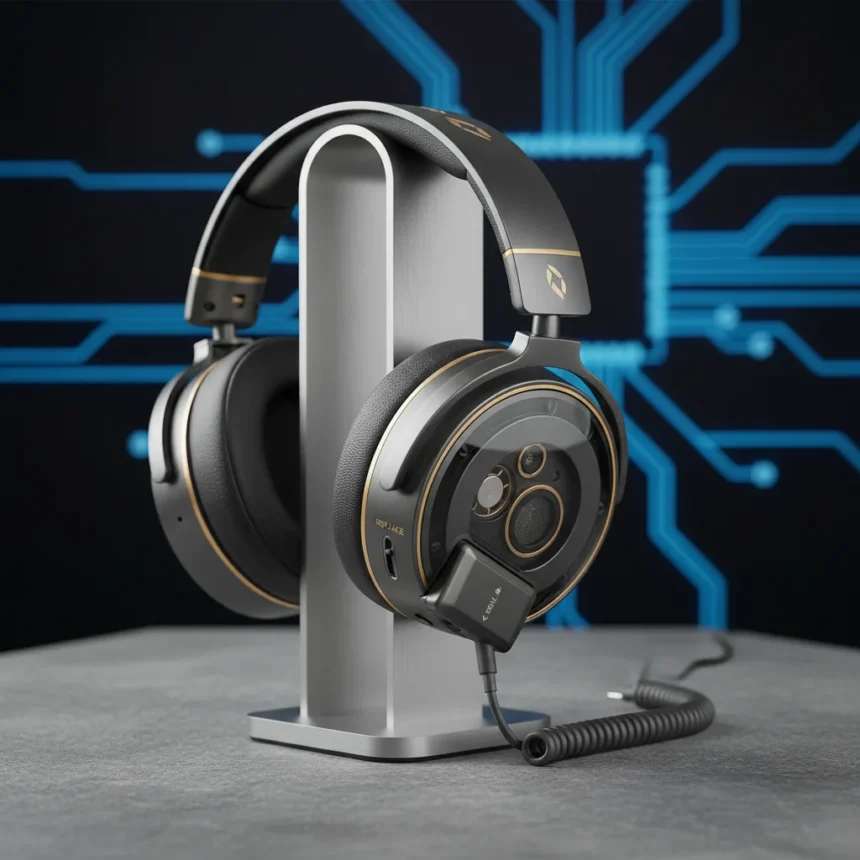
Noble Audio FoKus Apollo is the company’s first over-ear wireless headphone, built around a hybrid three-driver architecture that remains uncommon in the wireless audio market. The headphones combine dynamic, planar magnetic, and balanced armature drivers into a single over-ear design, with a replaceable battery that sets them apart from most modern competitors.
Key Takeaways
- Noble Audio FoKus Apollo uses three driver types: dynamic, planar magnetic, and balanced armature drivers.
- The headphones feature a replaceable battery, extending product lifespan compared to sealed designs.
- Multi-driver wireless over-ear headphones remain rare, making this architecture notable in the consumer market.
- Noble Audio describes the FoKus Apollo as a powerhouse of industry-leading sound quality and innovation.
- This is Noble Audio’s first venture into over-ear wireless headphone design.
Why Triple-Driver Design Matters for Wireless Headphones
Most wireless headphones rely on a single driver type, typically dynamic drivers for their simplicity and cost efficiency. Multi-driver wireless designs are uncommon because they add complexity, weight, and power demands to a battery-powered device. The Noble Audio FoKus Apollo breaks this pattern by combining three distinct driver technologies into one over-ear form factor.
Each driver type handles different frequencies and sonic characteristics. Dynamic drivers excel at bass and midrange punch, planar magnetic drivers deliver clarity and detail across the spectrum, and balanced armature drivers provide precision in the treble and upper midrange. This hybrid approach allows Noble Audio to claim broader frequency coverage and tonal balance than any single-driver system could achieve. The company describes the FoKus Apollo as a powerhouse of industry-leading sound quality and innovation.
Wireless over-ear headphones with multi-driver setups face genuine engineering trade-offs. Battery life, thermal management, and acoustic tuning all grow more demanding when three driver types share the same enclosure. That Noble Audio tackled this challenge suggests the company prioritized sonic ambition over simplicity—a positioning that will appeal to listeners willing to sacrifice some convenience for audio quality.



Replaceable Battery Changes the Longevity Equation
The FoKus Apollo’s replaceable battery is the second major design choice that distinguishes it from mainstream wireless headphones. Most premium over-ear models seal the battery inside the earcup, meaning when the battery degrades after a few years, the entire headphone becomes less practical or requires expensive service. A replaceable battery extends the product’s practical lifespan significantly.
This approach echoes older design philosophy—phones and laptops once shipped with user-replaceable batteries as standard. That feature largely disappeared from premium consumer electronics as manufacturers prioritized thinness and water resistance. Noble Audio’s decision to include a replaceable battery suggests the company values durability and repairability over minimal thickness, a stance that resonates with environmentally conscious buyers and those frustrated by throwaway electronics.



How Noble Audio FoKus Apollo Compares to Existing Wireless Options
Noble Audio’s product lineup already includes the Fokus Rex5, which uses a five-driver setup with a dynamic driver, planar magnetic driver, and three balanced armature drivers. The Rex5 is a wireless earbud model, not over-ear headphones, so the FoKus Apollo represents a different form factor and target use case. Listeners who prefer over-ear comfort and isolation will find the FoKus Apollo more suitable, while those seeking portability will gravitate toward the Rex5.
Compared to conventional wireless over-ear headphones from mainstream brands, the FoKus Apollo’s triple-driver architecture is unusual. Most competitors in the wireless over-ear segment use single dynamic drivers or at most a dual-driver design. The FoKus Apollo’s commitment to multi-driver complexity positions it as a niche product for audio enthusiasts rather than a mainstream alternative.
The replaceable battery also sets the FoKus Apollo apart. Premium wireless over-ear models from established brands typically offer sealed batteries and multi-year warranty coverage instead. Noble Audio’s approach prioritizes long-term ownership and repairability, appealing to a different buyer psychology—one that values sustainability and control over convenience and brand assurance.
Frequently Asked Questions
What makes the Noble Audio FoKus Apollo different from other wireless headphones?
The FoKus Apollo combines three driver types—dynamic, planar magnetic, and balanced armature—in a single over-ear wireless design, which is uncommon in the wireless audio market. Additionally, the replaceable battery extends the headphones’ lifespan beyond typical sealed-battery designs.



Is the Noble Audio FoKus Apollo the company’s first over-ear headphone?
Yes, the FoKus Apollo is Noble Audio’s first over-ear wireless headphone product. The company previously focused on wireless earbuds and in-ear monitors with multi-driver configurations.
How does a replaceable battery benefit wireless headphone owners?
A replaceable battery allows users to extend the headphones’ lifespan by swapping out a degraded battery instead of replacing the entire device. This approach reduces electronic waste and lowers long-term ownership costs compared to sealed-battery designs that require full replacement or professional servicing.
Noble Audio FoKus Apollo represents a deliberate bet on audio quality and durability over the thin-and-light design philosophy that dominates the wireless headphone market. The triple-driver architecture and replaceable battery suggest the company is targeting listeners who view headphones as long-term investments rather than disposable gadgets. Whether that positioning succeeds depends on execution—sound quality, comfort, battery runtime, and real-world reliability will determine whether the FoKus Apollo justifies its engineering complexity. For audio enthusiasts willing to prioritize sonic ambition and repairability, this headphone deserves serious consideration.
Edited by the All Things Geek team.
Source: Creativebloq