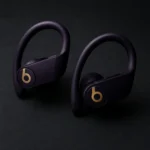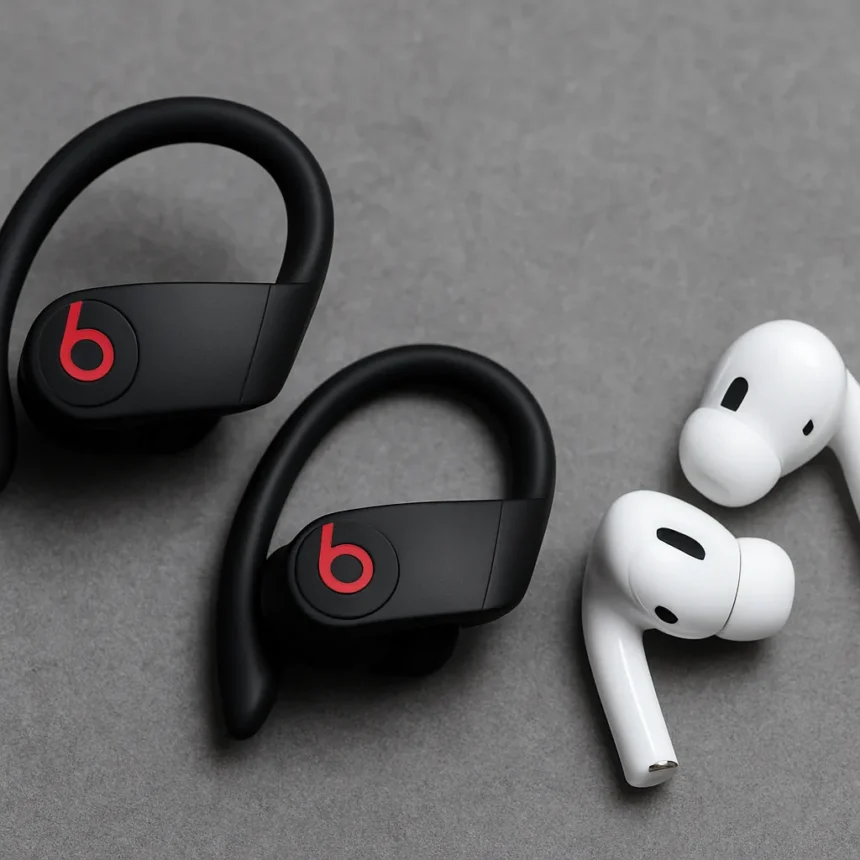
Powerbeats Pro 2 heart rate monitoring is the fitness feature that finally gives Apple’s sport earbuds a genuine advantage over the standard AirPods Pro. Launched in February 2025, the Powerbeats Pro 2 combines built-in heart rate tracking with Active Noise Cancellation, spatial audio personalization, and the H2 chip to create earbuds designed specifically for athletes rather than general consumers.
Key Takeaways
- Powerbeats Pro 2 includes integrated heart rate monitoring, a feature AirPods Pro lacks entirely.
- The H2 chip powers Active Noise Cancellation and Personalized Spatial Audio across both models.
- Battery life reaches 45 hours total with the charging case, matching flagship wireless earbuds.
- Powerbeats Pro 2 targets fitness users while AirPods Pro remains a general-purpose earbud.
- February 2025 launch positions Powerbeats Pro 2 as Apple’s answer to dedicated sports audio.
Why Powerbeats Pro 2 Heart Rate Monitoring Changes the Game
The critical difference between Powerbeats Pro 2 heart rate monitoring and AirPods Pro is obvious: one tracks your pulse, the other does not. For runners, cyclists, and gym-goers, this is not a minor feature—it is the entire point of choosing sports earbuds over consumer headphones. Powerbeats Pro 2 delivers real-time biometric data without requiring a separate wearable or smartphone app polling. You get audio and fitness metrics in a single device.
AirPods Pro, by contrast, remain locked into Apple’s broader ecosystem play. They excel at seamless pairing, Siri integration, and audio quality, but they punt the health-tracking responsibility to Apple Watch or iPhone sensors. For athletes who do not wear a watch, this creates a gap. Powerbeats Pro 2 fills it.
Powerbeats Pro 2 vs AirPods Pro: Core Specs and Performance
Both earbuds share Apple’s H2 chip and Active Noise Cancellation, meaning audio processing and noise isolation are essentially equivalent. The Powerbeats Pro 2 achieves up to 45 hours of total battery life with the charging case, a figure that matches premium wireless earbuds and exceeds most competitors. Personalized Spatial Audio rounds out the feature set, tailoring surround sound to your head geometry and movement.



Where the models diverge is purpose. Powerbeats Pro 2 is engineered for motion—the ear hook design keeps them stable during high-impact activity, and the heart rate sensor integrates directly into the fit. AirPods Pro uses a different form factor optimized for all-day wear and casual listening. Neither design is wrong; they serve different use cases.
Who Should Buy Powerbeats Pro 2 Heart Rate Monitoring?
If you run, train, or take fitness seriously, Powerbeats Pro 2 heart rate monitoring justifies the switch from AirPods Pro. The biometric data alone—real-time HR zones, recovery metrics, training intensity feedback—transforms these earbuds from audio players into coaching tools. Casual listeners who prioritize comfort and ecosystem integration should stick with AirPods Pro.



The Powerbeats Pro 2 are not for everyone, but they are the right choice for a specific, growing segment: athletes who want fitness tracking without another device on their wrist. That focus is their strength.
Battery, Durability, and Everyday Use
Forty-five hours of total battery life is genuinely impressive and gives Powerbeats Pro 2 a practical advantage over AirPods Pro for weekend trips or multi-day training camps. The ear hook design, while polarizing, provides security that in-ear-only designs cannot match during intense workouts. Sweat resistance is implicit in the sports-focused positioning, though exact IPX ratings vary by region.
For everyday use—commuting, office work, casual listening—AirPods Pro remain more comfortable for extended wear. Powerbeats Pro 2 prioritizes stability over all-day comfort, which is the correct trade-off for their intended audience.
Should You upgrade from AirPods Pro to Powerbeats Pro 2?
Yes, if you actively train or run and want heart rate data without a smartwatch. No, if you value seamless ecosystem integration and general-purpose versatility. Powerbeats Pro 2 heart rate monitoring is a specialist tool, not a universal upgrade.



What makes Powerbeats Pro 2 different from the original Powerbeats Pro?
The Powerbeats Pro 2 adds the H2 chip for improved noise cancellation and Personalized Spatial Audio, plus integrated heart rate monitoring—features entirely absent from the original model. The newer version is substantially more capable for fitness use.
Can you use Powerbeats Pro 2 with non-Apple devices?
Powerbeats Pro 2 work with any Bluetooth-compatible device, though the full feature set (heart rate integration, spatial audio personalization) requires iOS or macOS. Android users get audio and basic controls but miss the advanced fitness metrics and spatial features.
Powerbeats Pro 2 heart rate monitoring is the fitness feature Apple’s sport earbuds needed. For runners and serious athletes, they are the better choice than AirPods Pro—not because of audio quality or design, but because they finally deliver the biometric data that turns earbuds into training tools. That singular focus is exactly what the market was missing.
Edited by the All Things Geek team.
Source: Tom's Guide