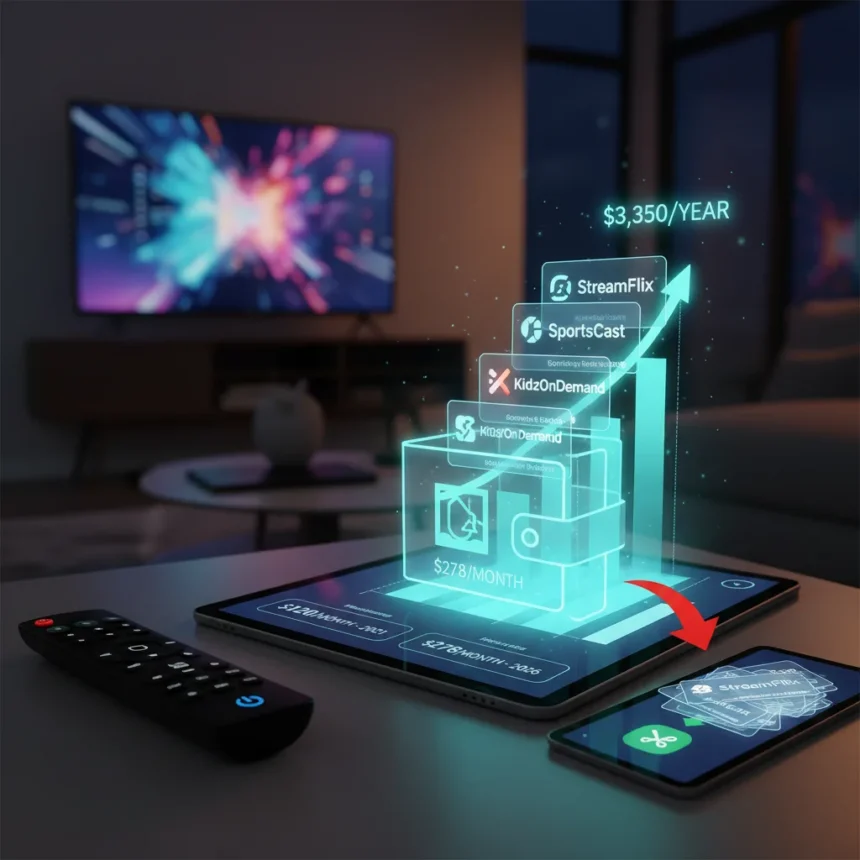
Streaming costs in 2026 have reached an inflection point. U.S. consumers now spend an average of $3,350 per year—or $278.50 per month—on streaming subscriptions, representing a 2% year-over-year increase. Five years ago, when streaming was still positioned as a cheaper alternative to cable, the landscape looked dramatically different. Today, bundling multiple services to avoid ads and access premium content can easily exceed $100 monthly, forcing millions of households to make hard choices about which platforms to keep.
Key Takeaways
- Average U.S. streaming spend reached $278.50 monthly in 2025, up 2% year-over-year
- Most streaming services are holding pricing steady in 2026 after multiple hikes in 2025
- Ad-free tiers and bundled services can push monthly costs above $100
- Free streaming alternatives and selective subscription rotation remain viable cost-cutting strategies
- 2026 may mark a turning point where consumers reassess their streaming portfolios
How Streaming Costs Have Climbed Since 2021
Five years ago, streaming felt like a bargain. A single Netflix subscription cost far less than a cable bundle, and consumers could justify maintaining two or three services simultaneously. Today, that calculus has inverted. The cumulative effect of price increases across Netflix, Disney Plus, Max, YouTube Premium, and dozens of smaller platforms has eroded the original value proposition. What was once positioned as a disruptive, cheaper alternative to traditional television has quietly morphed into a system nearly as expensive as the cable it promised to replace.
The shift accelerated through 2025, when streaming services implemented multiple rounds of price hikes. While most providers are holding pricing steady in 2026, the damage is already done—consumers are now paying substantially more than they were just a few years ago. YouTube Premium, for instance, has raised prices multiple times, with each increase pushing the service further out of reach for casual users.
What’s Driving Streaming Costs in 2026
The economics of streaming have fundamentally changed. Services no longer compete primarily on price; they compete on content exclusivity and ad-free access. This shift means consumers who want to watch without interruption must pay premium tier prices, and those prices have drifted upward across the board. The industry’s strategy is clear: extract more revenue from committed subscribers rather than grow the user base.



Bundling has become the new battleground. Services now offer packages that combine multiple platforms—Netflix with ad-supported tiers, Disney bundles that include Hulu and ESPN Plus—but the total cost of maintaining an ad-free, comprehensive streaming diet remains steep. A household wanting access to major entertainment, sports, and prestige content without ads can easily reach $100 or more monthly.
Proven Ways to Cut Your Streaming Bill
The most effective cost-cutting strategy is ruthless subscription rotation. Rather than maintaining six or seven active subscriptions year-round, commit to three or four at any given time, then swap them monthly based on what you want to watch. This approach requires discipline but cuts your annual spend dramatically. A service you use intensively for one month can be paused while you activate another.



Free streaming alternatives have matured considerably. Ad-supported tiers on major platforms now offer substantial libraries, and free services with ads have become legitimate options for viewers willing to tolerate commercials. Some households have experimented with canceling all paid subscriptions for a month and relying entirely on free options, discovering the experience is less restrictive than expected.
Shared family plans remain valuable, but verify the terms—some services now charge extra for password sharing or restrict simultaneous streams. Coordinating a family plan with relatives or close friends can halve your per-person cost, though this requires trust and coordination.
Is 2026 the Year to Reassess Your Subscriptions?
Industry observers suggest 2026 may be a watershed moment. After years of price increases, consumer patience is wearing thin, and the question of whether streaming remains a better value than cable is no longer rhetorical—for many households, it is not. The fact that most services are holding prices steady in 2026, rather than implementing fresh hikes, signals that companies recognize they have pushed consumers to a breaking point.
The math is simple: if you are paying $278 monthly for streaming, you are spending more than $3,300 annually. That is cable money. At that price point, cable bundles with broadband and phone service start to look competitive again, especially for households that want sports, news, and entertainment without managing a dozen separate subscriptions.



Are streaming costs really higher than five years ago?
Yes. In 2021, a typical household could subscribe to Netflix, Disney Plus, and one or two additional services for under $50 monthly. Today, that same content mix costs $100 or more if you want ad-free access. The cumulative effect of price increases across all major platforms has made streaming substantially more expensive than it was in the early 2020s.
Can you save money by using ad-supported tiers?
Absolutely. Switching to ad-supported tiers can cut your costs by 30-50% depending on the service. Netflix, Disney Plus, and others offer ad-supported options at significantly lower prices. The trade-off is commercial interruption, but for budget-conscious viewers, the savings justify the ads.
What’s the cheapest way to access all major streaming services?
Subscription rotation is the most cost-effective approach. Choose three or four services at a time based on current content, then swap monthly. Combined with ad-supported tiers and family plan sharing, this strategy can reduce your annual spend by 50-60% compared to maintaining simultaneous subscriptions to six or more services.
Streaming costs in 2026 have reached parity with traditional cable, forcing consumers to confront an uncomfortable truth: the platform that promised to disrupt expensive television has become expensive television. The solution is not to accept the status quo but to actively manage your subscriptions, embrace ad-supported tiers, and rotate services strategically. The days of maintaining a sprawling, always-active subscription portfolio are over. Smart viewers are now treating streaming like a utility to be optimized, not a luxury to be accumulated.
Where to Buy
Roku Streaming Stick 4K (2021) | Roku Streambar | Roku Ultra
Edited by the All Things Geek team.
Source: Tom's Guide