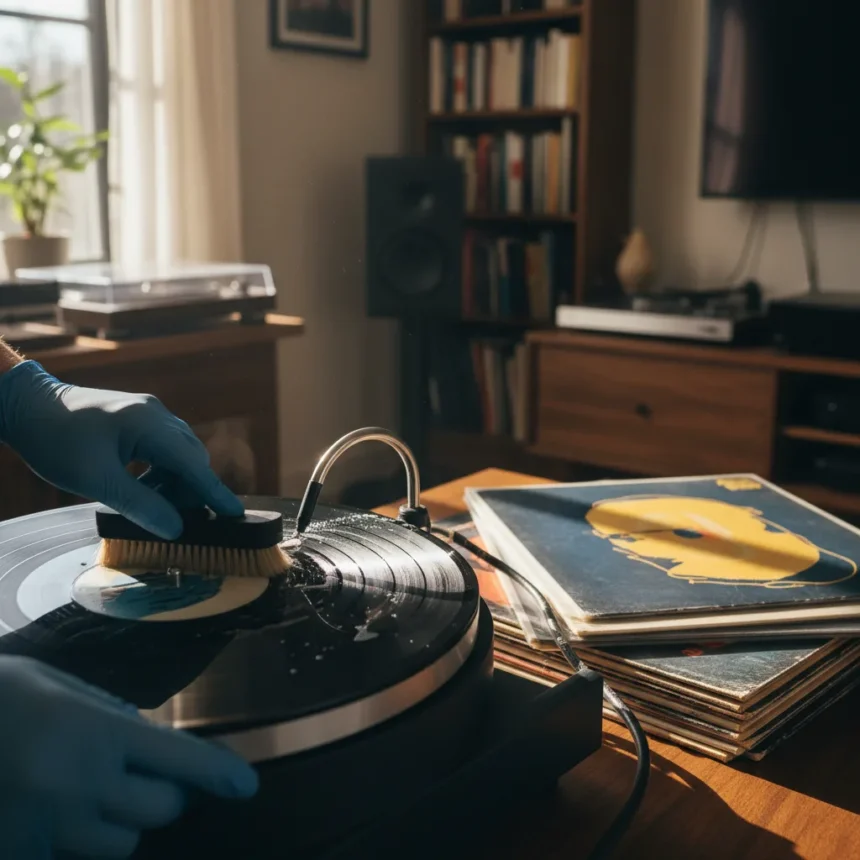
Vinyl record cleaning is the overlooked maintenance practice that separates collectors who enjoy pristine playback from those tolerating constant pops and crackles. Dust and dirt accumulation on records causes audible distortion during playback, degrading the listening experience and potentially damaging your stylus over time. The good news: proper cleaning can revitalise your entire collection without expensive equipment or complicated procedures.
Key Takeaways
- Dust and dirt on vinyl records directly cause audible pops and crackles during playback
- Vinyl record cleaning restores audio quality that accumulation has degraded
- Multiple cleaning methods exist, from dry brushing to wet cleaning to ultrasonic machines
- Proper maintenance protects both your records and your turntable stylus
- Regular cleaning prevents long-term damage and extends record lifespan
Why Vinyl Records Collect Dust and Lose Sound Quality
Records don’t stay clean on their own. Every time you remove a record from its sleeve, handle it, or play it, microscopic particles settle into the grooves. Dust particles sit directly in the vinyl’s grooves where your stylus tracks. When the needle hits these particles, it produces the characteristic pops and crackles that plague older collections. This isn’t just an annoyance—it’s an audible symptom of degraded playback fidelity. The dust essentially acts as interference between your stylus and the actual recorded groove, preventing the needle from reading the music accurately.
Beyond dust, vinyl records accumulate fingerprints, skin oils, and environmental contaminants. These substances bond to the record’s surface over months and years, creating a film that further degrades sound. Many collectors assume these pops and crackles are permanent flaws in their records, when in reality they’re temporary problems caused by surface contamination. This misconception leads people to abandon records they could easily restore to near-original condition.
Vinyl Record Cleaning Methods: From Dry to Wet
Vinyl record cleaning comes in three primary approaches, each suited to different levels of contamination and collector budgets. Understanding these methods helps you choose the right technique for your collection’s condition.



Dry brushing represents the simplest entry point into vinyl record cleaning. A soft-bristled brush removes loose dust particles from the record surface without introducing moisture. This method works best for records that are already relatively clean but have accumulated light surface dust. Dry brushing takes seconds per record and requires no special equipment beyond a quality brush designed specifically for vinyl. However, dry brushing cannot remove oils, fingerprints, or stubborn dirt embedded in the grooves.
Wet cleaning goes deeper. This method uses record cleaning solutions and lint-free cloths to physically remove oils and contaminants from the vinyl surface. Wet cleaning requires more care than dry brushing—you must avoid excess moisture and ensure thorough drying—but it delivers superior results on heavily soiled records. Many collectors find wet cleaning the sweet spot between effectiveness and practicality, offering dramatic improvements in sound quality without requiring expensive machinery.



Ultrasonic cleaning represents the most thorough approach. Ultrasonic record cleaning machines use high-frequency sound waves to dislodge particles from deep within the grooves. These machines deliver the most dramatic restoration of audio quality, particularly for vintage records that have accumulated decades of contamination. The trade-off is cost—ultrasonic machines represent a significant investment—and the machines occupy dedicated space in your listening room.
How Vinyl Record Cleaning Restores Your Collection
The transformation after proper vinyl record cleaning is immediate and undeniable. Records you’ve owned for years suddenly sound noticeably cleaner. The pops and crackles diminish or disappear entirely. Vocals become clearer. Instruments separate more distinctly in the mix. Bass response tightens. This isn’t magic—it’s simply the difference between listening to music through a layer of contamination versus hearing the actual recording your stylus is reading.
The restoration effect varies depending on how dirty your records were before cleaning. A lightly dusty record might show modest improvement. A heavily contaminated record can sound like a completely different pressing after thorough cleaning. Collectors often report that vinyl record cleaning reveals details in familiar albums they’ve never heard before, even after decades of ownership. This discovery aspect keeps many people engaged with vinyl—the format rewards proper maintenance with sonic rewards.
Beyond sound quality, vinyl record cleaning protects your equipment. Dirty records drag more particles across your stylus, accelerating wear and potentially damaging the needle. A worn stylus then damages subsequent records, creating a downward spiral of degrading playback. Regular vinyl record cleaning breaks this cycle, protecting both your records and your turntable investment.



Building a Vinyl Record Cleaning Routine
Establishing a maintenance schedule prevents the accumulation problem from returning. Records stored in a dust-free environment need less frequent cleaning than those in typical living spaces. Many collectors clean records before first play if they’re acquisitions, then periodically thereafter depending on storage conditions and play frequency.
The key is consistency. A record cleaned once and then neglected for years will eventually return to its previous contaminated state. A record cleaned regularly stays in superior condition indefinitely. Think of vinyl record cleaning not as a one-time restoration project but as ongoing maintenance, similar to changing your turntable’s stylus or maintaining any other audio equipment.
Start with records you play most frequently. These are the ones where sound quality improvements matter most. As you develop your vinyl record cleaning technique and find the method that works for your setup, you can gradually work through your entire collection. Many collectors find the process meditative—there’s something satisfying about physically restoring an object and immediately hearing the sonic reward.
Does vinyl record cleaning work on all record types?
Vinyl record cleaning works on all vinyl records, though results vary based on the record’s condition, age, and storage history. Older records often show the most dramatic improvements because they’ve had decades to accumulate contamination. Newer records typically need less aggressive cleaning since they haven’t been exposed to as much dust and handling.
Can vinyl record cleaning damage records?
Improper vinyl record cleaning can damage records, which is why technique matters. Excessive moisture, abrasive brushes, or harsh chemicals can harm the vinyl surface. Using proper cleaning solutions designed for vinyl and lint-free cloths minimizes risk. When in doubt, start with gentle dry brushing before progressing to wet cleaning methods.
How often should you clean vinyl records?
Cleaning frequency depends on how often you play records and your storage environment. Records in dust-free, climate-controlled storage need cleaning less frequently than those in typical living spaces. Many collectors clean records before first play and then annually or as needed based on audible pops and crackles. Some clean after every few plays if they’re in frequent rotation.
Vinyl record cleaning isn’t complicated, expensive, or time-consuming—yet it’s the maintenance practice most collectors overlook. The sonic reward is immediate and undeniable. If your collection sounds like it’s buried under static, the problem likely isn’t the records themselves. It’s the dust. Clean them properly, and you’ll rediscover why you loved these albums in the first place.
Where to Buy
Edited by the All Things Geek team.
Source: What Hi-Fi?