WiiM Sound vs Apple HomePod 2: The Case for Each
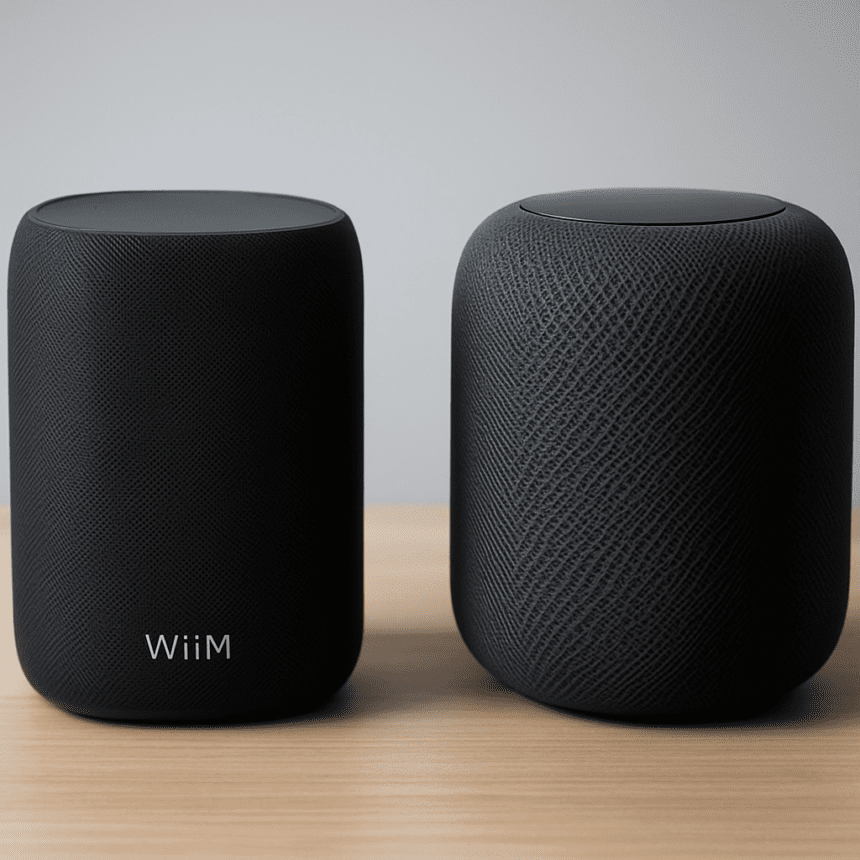
WiiM Sound vs Apple HomePod 2 is one of the most interesting wireless speaker matchups right now — two same-priced rivals with radically different philosophies about what a smart speaker should be. The WiiM Sound is a recently launched wireless speaker from WiiM, built around platform-agnostic streaming, hi-res audio, and deep EQ customisation. The Apple HomePod 2 is a three-year-old speaker that still sets the benchmark for effortless, high-quality sound in the Apple ecosystem. On paper, they are equals. In practice, they are not.
What the WiiM Sound Gets Right
The WiiM Sound’s hardware specification is genuinely impressive for the price. It houses a 4-inch long-throw woofer alongside dual full-range and silk dome tweeters, delivering a peak power output of 100W. Its forward-facing sound design is a deliberate choice, and its frequency response stretches from 35Hz to 20kHz, with hi-res audio support up to 24-bit/192kHz and gapless playback throughout.
Where the WiiM Sound pulls well ahead of the HomePod 2 is connectivity and streaming flexibility. It supports Wi-Fi 6E, Bluetooth 5.3 with SBC, AAC, and LD3 codec support, Ethernet, and a 3.5mm aux input. Streaming options include Spotify Connect, Tidal Connect, Qobuz Connect, Google Cast, Alexa Cast, DLNA, Chromecast, LMS, and over 20 services in total including YouTube Music — a list that makes the HomePod 2’s Apple Music and AirPlay 2 focus look narrow by comparison. For Android users or anyone living outside the Apple ecosystem, the WiiM Sound is simply the more practical device.
The WiiM Sound also includes AI RoomFit, an auto-tuning system that takes room acoustic measurements and applies correction automatically. On top of that, it offers 24 preset EQ profiles, a 10-band graphic EQ, and parametric EQ that can be set separately for Wi-Fi and Ethernet, Bluetooth, and aux inputs. There is also a 1.8-inch display window, multi-room support with other WiiM, Google Cast, and Alexa devices, smart music alarms, and Dolby 5.1 setup support. For a single speaker, the feature list is extraordinary.


Where the Apple HomePod 2 Still Wins
Sound quality is where the HomePod 2 reasserts itself, and the gap is not subtle. The HomePod 2 uses a 10cm high-excursion woofer, five beamforming tweeters, and Apple’s S7 chip for real-time computational audio and room adjustment. Its 360-degree acoustic architecture means it fills a room rather than projecting at it, and in direct comparisons, the HomePod 2 delivers more powerful, detailed, rhythmic sound with deeper bass and a more spacious, authoritative soundstage.
As What Hi-Fi noted in their comparison, the WiiM Sound is not as commanding or as subtle as the more engaging and exciting HomePod 2. The WiiM’s loosely defined edges and narrowed dynamic scope become particularly apparent when the two are placed side by side. In a room measuring 3x4x7 metres, the WiiM Sound struggles to fill the space fully — a real-world limitation that matters for anyone with a larger living area. The HomePod 2 handles the same environment with noticeably more authority.



For Apple users specifically, the HomePod 2 also integrates seamlessly with HomeKit, Matter, Siri, and AirPlay 2, and it pairs with a second unit for a genuinely spacious stereo setup with Dolby Atmos support for TV. That level of ecosystem integration requires minimal effort from the user — which is exactly what Apple has always been good at. The HomePod 2 does, however, require an iPhone or iPad for initial setup, making it a poor fit for Android households regardless of its sonic strengths.
The AirPlay 2 Question That Could Change Everything
One notable absence on the WiiM Sound is AirPlay 2 support — a gap it shares with other WiiM products including the WiiM Ultra and Amp Pro. For Apple users considering a switch, this is a potential deal-breaker. WiiM has not confirmed whether AirPlay 2 support is coming, but its addition would dramatically expand the WiiM Sound’s appeal to the single largest premium wireless speaker audience. Until that changes, the WiiM Sound and the HomePod 2 are essentially serving different households rather than truly competing for the same buyer.
The Sonos Era 100 is another point of reference here — smaller than the WiiM Sound but occupying a similar space in the platform-flexible market. The WiiM Sound’s superior specs and hi-res audio support give it an edge in that comparison, though Sonos brings its own mature multi-room ecosystem to the table.
Which wireless speaker should you actually buy?
If you are an Apple household with an iPhone, an Apple TV, and a preference for music that just sounds right without tinkering, the HomePod 2 remains the smarter buy despite being three years old. Its sound quality advantage over the WiiM Sound is real and audible, and its ecosystem integration is unmatched at this price.



If you use Android, subscribe to Tidal or Qobuz, want hi-res audio at 24-bit/192kHz, or simply want a speaker that works with everything rather than Apple’s everything, the WiiM Sound makes a compelling case. Its AI RoomFit tuning, deep EQ options, and extraordinary streaming compatibility make it one of the most flexible wireless speakers available at this price point.
Does the WiiM Sound support AirPlay 2?
No, the WiiM Sound does not currently support AirPlay 2. This is a limitation it shares with other WiiM products. For Apple users who rely on AirPlay 2 for multi-room audio or TV integration, this is a significant gap that makes the HomePod 2 the more practical choice.
How does WiiM Sound handle room acoustics compared to HomePod 2?
Both speakers include automatic room correction, but they take different approaches. The WiiM Sound uses AI RoomFit, which measures room acoustics and applies correction, backed by 24 EQ presets and a 10-band graphic EQ. The HomePod 2 uses Apple’s S7 chip for real-time computational audio adjustment. In direct listening tests, the HomePod 2’s approach produces a more authoritative and detailed result, particularly in larger rooms.
Is the WiiM Sound good for non-Apple users?
Yes — the WiiM Sound is arguably the better choice for anyone outside the Apple ecosystem. It supports over 20 streaming services including Spotify Connect, Tidal Connect, Qobuz Connect, and YouTube Music, alongside Google Cast, Alexa Cast, Bluetooth 5.3, Ethernet, and a 3.5mm aux input. Android users in particular will find it far more accommodating than the HomePod 2, which requires an iPhone or iPad for setup.
The WiiM Sound vs Apple HomePod 2 decision ultimately comes down to what you value more: flexibility or fidelity. WiiM has built a remarkable feature set into a single speaker, but the HomePod 2 still sounds better in a room, and for most people, that is the point of buying a speaker in the first place. WiiM needs to close the audio gap — and add AirPlay 2 — before it can genuinely claim the crown.
Edited by the All Things Geek team.
Source: What Hi-Fi?