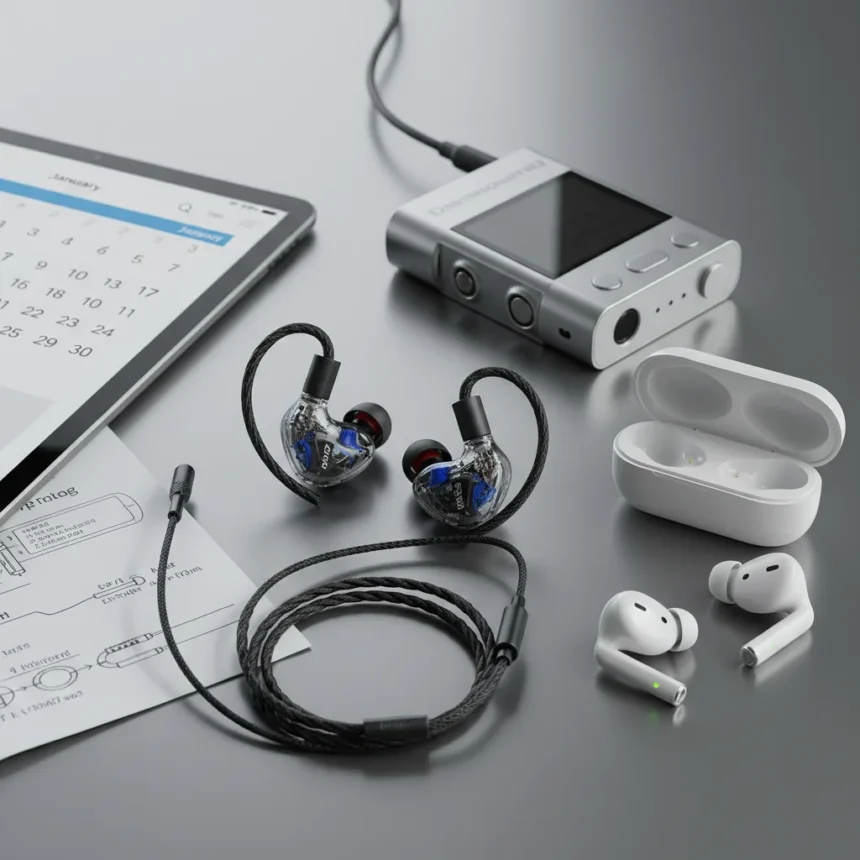
The debate between wired earbuds vs Bluetooth refuses to die, even as wireless dominates the market. After three weeks of deliberately abandoning high-end Bluetooth earbuds for wired IEMs, the question is no longer whether wired audio sounds different—it does—but whether that difference justifies the inconvenience in 2026.
Key Takeaways
- Wired earbuds eliminate Bluetooth compression and offer direct audio signal transmission to your device
- High-end Bluetooth earbuds provide noise cancellation, app controls, and seamless switching that wired gear typically lacks
- Wired listening requires adapters or USB-C connections depending on your device’s audio input
- Wired IEMs often cost significantly less than comparable wireless earbuds
- The choice between wired earbuds vs Bluetooth depends on whether you prioritize sound quality or daily convenience
What Changed After Three Weeks Without Bluetooth
Switching to wired earbuds meant abandoning the frictionless experience wireless has created. No pairing. No battery anxiety. No app ecosystem. Instead, there was a cable, and in 2026, that cable felt like stepping backward. Yet something unexpected happened: the listening experience itself shifted. Wired earbuds bypass the compression and latency inherent to Bluetooth, delivering audio directly from your device’s DAC to your ears. The difference is real, though not universally dramatic—it depends entirely on what you’re listening to and how much your ears care about the details.
The wired earbuds vs Bluetooth comparison hinges on a fundamental trade-off. Wireless earbuds excel at convenience: they integrate with your phone’s ecosystem, offer noise cancellation, and let you move freely without a cable tethering you to your device. Wired IEMs, by contrast, prioritize audio fidelity and eliminate the wireless bottleneck that even premium Bluetooth codecs cannot fully overcome. After three weeks, the sound quality advantage of wired was undeniable. But convenience is a drug, and going without it felt like a genuine sacrifice.
Wired Earbuds vs Bluetooth: The Practical Reality
Here is where the experiment collided with real life. Modern phones have largely abandoned the 3.5mm headphone jack, which means wired earbuds require either a USB-C adapter or a USB-C connection built directly into the earbuds themselves. This is not a showstopper, but it is a friction point that wireless simply does not have. If you charge your phone via USB-C and want to listen to audio simultaneously, you need either a splitter, a wireless solution, or a device with a dedicated headphone jack—increasingly rare.



The cost argument initially seemed compelling. Wired IEMs, even high-quality ones, often undercut wireless earbuds by a significant margin. For listeners on a budget, wired earbuds vs Bluetooth is not really a choice—wired wins on price alone. But premium wired IEMs exist too, and when you factor in adapters, replacement cables, and the friction of managing a physical connection, the cost advantage narrows. Bluetooth earbuds, meanwhile, have matured to the point where sub-$100 options sound genuinely good, removing some of the traditional value proposition of wired audio.
Why Wired Earbuds Still Matter in a Wireless World
The case for wired earbuds vs Bluetooth is not that wired is objectively better—it is that wired serves a specific listener. If you sit at a desk for hours, a wired connection eliminates battery management. If you care deeply about audio quality and own equipment with a headphone jack or USB-C input, wired IEMs deliver measurable sonic benefits. If you are budget-conscious and willing to carry an adapter, wired earbuds offer genuine value.



But here is the honest part: most people will choose Bluetooth, and they will be right to do so. Wireless earbuds have solved enough of their historical problems—battery life, connection stability, audio quality—that the remaining advantages of wired listening no longer justify the daily friction for the average listener. The three-week experiment proved that wired earbuds vs Bluetooth is not a battle wired can win on convenience. Wired wins on specific, measurable technical grounds that matter primarily to people who already care about audio quality enough to research the topic.
The Verdict: Wired Earbuds vs Bluetooth in 2026
Returning to Bluetooth earbuds after three weeks felt like regaining a superpower—instant pairing, noise cancellation, battery that lasts all day, the ability to switch between devices without thinking. The wired IEMs sounded better, but they demanded more from me. They required planning. They required adapters. They required me to care about my audio setup in a way that modern life does not encourage.
Wired earbuds vs Bluetooth is ultimately a false choice. The real question is: what do you value? If sound quality is non-negotiable and you have the infrastructure to support wired listening, wired earbuds deserve serious consideration. If convenience, features, and seamless integration matter more, Bluetooth has won this argument decisively. The fact that wired audio still exists and still sounds good is not a failure of the format—it is proof that some listeners still want what wired offers. But they are the exception, not the rule.
Are wired earbuds better than Bluetooth earbuds?
Wired earbuds typically offer superior sound quality because they avoid Bluetooth compression and deliver audio directly from your device. However, Bluetooth earbuds provide noise cancellation, app controls, and convenience that wired models lack. The better choice depends on whether you prioritize audio fidelity or daily usability.



Do I need an adapter to use wired earbuds on modern phones?
Most modern phones lack a 3.5mm headphone jack, so you will need either a USB-C adapter or wired earbuds with a built-in USB-C connector. Some devices support both options, but adapters are an extra expense and potential point of failure.
Are wired earbuds cheaper than Bluetooth earbuds?
Entry-level wired IEMs are often significantly cheaper than wireless alternatives, making them attractive for budget-conscious listeners. However, premium wired earbuds and the cost of adapters can narrow this advantage, especially when compared to mid-range Bluetooth options.
The three-week experiment answered its central question: wired earbuds still make sense, but only for specific listeners with specific priorities. For everyone else, Bluetooth’s convenience has earned its dominance. The choice between wired earbuds vs Bluetooth is no longer about which is objectively better—it is about understanding what you actually need from your audio gear and accepting the trade-offs that come with it.
Where to Buy
Edited by the All Things Geek team.
Source: Android Central