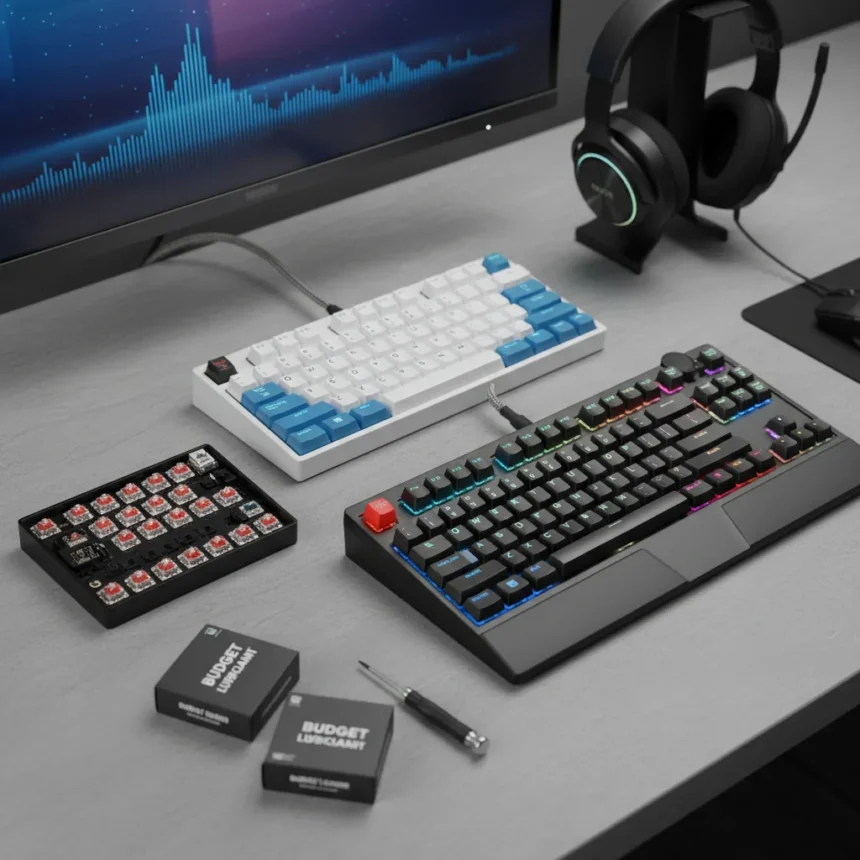
Budget keyboards under $120 have become genuinely competitive machines. You can now find boards with hot-swappable PCBs, customizable actuation points, rapid trigger gaming modes, and both wired and wireless connectivity—features that lived exclusively in $200+ territory just a few years ago. The shift from mechanical to magnetic (Hall Effect) switches at budget prices represents a real industry movement, not a marketing gimmick.
Key Takeaways
- Hall Effect keyboards under $120 now include rapid trigger and adjustable actuation, previously exclusive to premium gaming boards.
- Mechanical keyboards deliver superior typing satisfaction and durability compared to membrane alternatives at $20-30.
- Hot-swappable PCBs at budget prices let you customize switches without soldering.
- Budget boards match typing feel and build quality of entry-level Razer and Logitech models costing significantly more.
- Black Friday and Cyber Monday sales push already-affordable options even lower, sometimes to $50-70 range.
Why Budget Keyboards Matter Right Now
The keyboard market has fundamentally shifted. Five years ago, a sub-$100 mechanical board meant compromises on build quality, switch feel, or feature set. Today, the same budget buys you a keyboard that types like boards three times the price. The mechanical keyboard renaissance has democratized what was once a niche, expensive hobby. Budget Hall Effect keyboards now pack rapid trigger and adjustable actuation points—gaming features that Corsair and other premium brands charge $300+ to access.
Membrane keyboards, still dominant at the $20-30 price point, feel mushy and wear out faster. They lack the tactile feedback and durability of mechanical switches. Once you type on a properly tuned mechanical board, going back to membrane feels like typing on a sponge. The gap between a $30 membrane keyboard and a $80 mechanical one is enormous, and the mechanical option will outlast the membrane by years.
Mechanical vs. Hall Effect: What’s the Real Difference
Mechanical keyboards use physical switches with springs and stems. They’re tactile, durable, and satisfying to type on. Hall Effect keyboards use magnetic sensors instead of physical contact points. This allows adjustable actuation—you can change how far down the key needs to travel before it registers. For gaming, Hall Effect switches offer rapid trigger modes where keys register multiple times per press, giving competitive shooters an edge. For typing, both feel great; the choice depends on whether you want gaming features or pure mechanical simplicity.


The real story: budget Hall Effect keyboards now deliver gaming features previously locked behind premium price tags. A $100 Hall Effect board can outfeature a $200 mechanical gaming keyboard from just a few years ago. This is not hype. Magnetic switches have moved from luxury to accessible in a remarkably short window.
What to Look for in a Budget Keyboard
Switch type matters first. Linear switches feel smooth and fast—ideal for gaming. Tactile switches have a bump in the middle—good for typing feedback. Clicky switches make noise—satisfying but loud. Decide which matches your use case, then check if the board is hot-swappable. Hot-swap means you can pop switches in and out without soldering. This flexibility is now standard even on budget boards.



Layout size affects desk space and portability. A 60% keyboard is tiny and portable but lacks arrow keys and a numpad. A 75% adds function keys and arrows while staying compact. A tenkeyless (TKL) board is full-width minus the numpad. Connectivity matters too: wired boards never need charging but limit desk freedom; wireless adds convenience but requires battery management. Check software support—RGB lighting and macro customization need reliable drivers.
The Budget Hall Effect Gaming Shift
Hall Effect keyboards have moved from premium-only to genuinely affordable. You can find magnetic gaming boards under $120 with rapid trigger, adjustable actuation, and wireless connectivity. Compare this to Corsair’s Vanguard Pro 96 at $349 MSRP—the budget Hall Effect option delivers similar gaming features for a third the cost. This is the industry shift happening right now: magnetic switches are becoming the default for gaming, and budget brands are capturing the market before premium players can react.
Gaming features like rapid trigger matter if you play competitive shooters or fighting games. Casual gamers won’t notice the difference between a $80 Hall Effect board and a $120 mechanical one. But if you’re chasing frame-perfect inputs, the adjustable actuation and rapid trigger at budget prices represent genuine value that didn’t exist two years ago.
Typing Feel and Durability at Budget Prices
Mechanical keyboards under $120 now deliver the thocky, satisfying typing feel that used to justify $150+ price tags. The difference between a clacky switch and a deep, resonant thock is mostly about the stabilizers and case material—things budget brands have gotten right. A $70 keyboard can sound and feel nearly identical to a $150 one if the stabilizers are tuned properly and the case dampens sound well.


Durability is where mechanical switches shine. A quality mechanical switch lasts 50 to 100 million key presses. Budget mechanical boards use the same switches as premium ones—the difference is in case material, stabilizers, and software polish, not the switches themselves. A $80 mechanical keyboard will outlast a $200 membrane board and feel better every single day.
When to Buy: Black Friday and Beyond
Budget keyboard prices fluctuate, but Black Friday and Cyber Monday push already-affordable options even lower. A board priced at $100 might drop to $70 during these sales. The Lemokey X1, for example, typically runs around $70 and represents exceptional value for a compact mechanical board. If you’re not in a rush, waiting for seasonal sales makes sense. If you need a keyboard now, the sub-$120 market is already cheap enough that waiting may not save much.
FAQ
Are budget mechanical keyboards as durable as premium ones?
Yes. Budget and premium mechanical keyboards use the same switch types—the durability comes from the switch itself, not the price tag. The difference is in case material, stabilizer tuning, and software features, not switch longevity. A $80 mechanical board will last as long as a $200 one.
Should I buy a Hall Effect or mechanical keyboard under $120?
Choose Hall Effect if you game competitively and want adjustable actuation and rapid trigger. Choose mechanical if you prioritize pure typing feel and don’t need gaming features. Both are excellent under $120; the choice depends on your use case.
What’s the difference between a 60%, 75%, and TKL keyboard?
A 60% keyboard is the most compact, omitting function keys, arrows, and numpad. A 75% adds function keys and arrows while staying small. A TKL (tenkeyless) is full-width minus the numpad. Pick based on desk space and whether you need a numpad or arrow keys.
The budget keyboard market has matured. You no longer sacrifice typing feel, durability, or gaming features to stay under $120. The real competition now is between brands fighting for market share in an accessible price range, not between budget and premium tiers. If you’ve been holding off on upgrading because of cost, the timing is right. A $80 mechanical keyboard today outperforms a $200 board from five years ago.
Where to Buy
Keychron V1 8K: | Hexgears Immersion A3 TKL: | GravaStar Mercury K1 Lite: | Chilkey ND75 LP: | McHose X75 V2:
Edited by the All Things Geek team.
Source: Tom's Guide