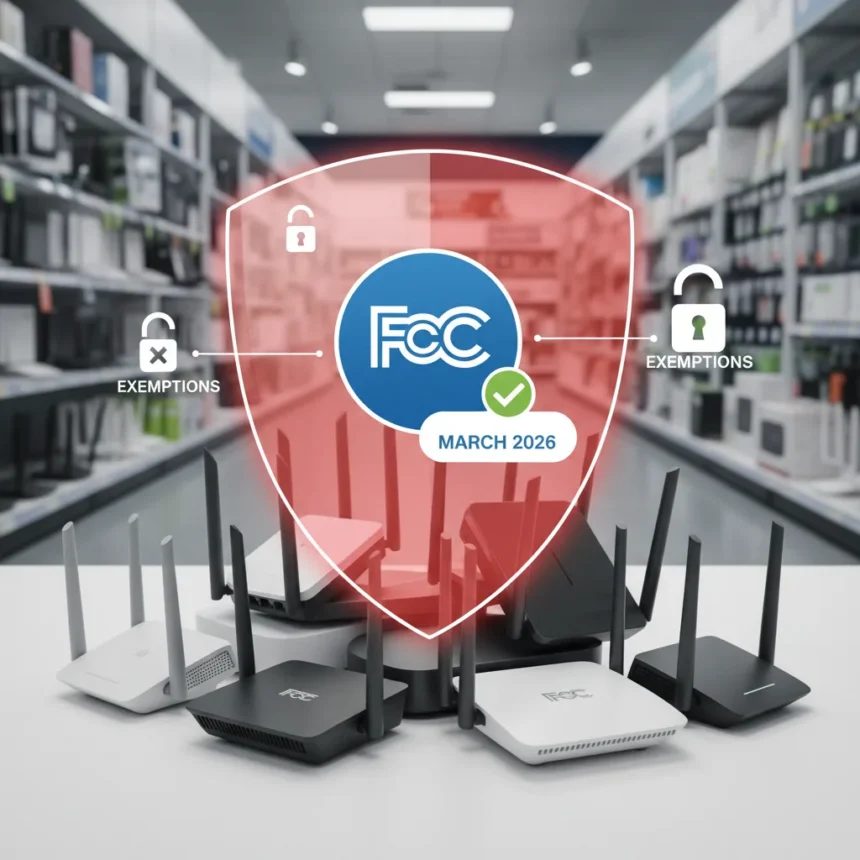
The FCC Wi-Fi router ban announced on March 23, 2026, prohibits imports of new routers and wired connection managers made outside the United States, citing what the agency calls an “unacceptable risk to national security” from vulnerabilities that foreign state and non-state actors have exploited in cyberattacks targeting American homes, businesses, and critical infrastructure.
Key Takeaways
- FCC banned foreign-made Wi-Fi router imports starting March 23, 2026, citing cyberattacks including Volt, Flax, and Salt Typhoon.
- Routers already in US homes are unaffected; software updates allowed until March 1, 2027.
- TP-Link and Google Nest Wifi manufactured overseas but may receive exemptions through DoD and Department of Security reviews.
- Approximately 60% of US home routers come from Chinese manufacturers, making the exemption process critical for market continuity.
- Netgear, a US manufacturer, lobbied for restrictions while TP-Link dismissed claims as a “smear campaign.”
Why the FCC Acted Now
The ban follows a pattern of escalating cyberattacks on American infrastructure. The FCC stated that malicious actors have “increasingly leveraged the vulnerabilities in small and home office routers produced abroad to carry out direct attacks against American civilians in their homes,” disrupting network connectivity and enabling espionage and intellectual property theft. Three specific attack campaigns—Volt, Flax, and Salt Typhoon—directly targeted critical American communications, energy, transportation, and water infrastructure, making the security case hard to ignore. The agency’s logic is straightforward: routers manufactured overseas create a potential backdoor into American homes and critical systems. By restricting imports to domestically produced units, the FCC aims to eliminate that vulnerability at the source.
This move mirrors the FCC’s December 2025 ban on foreign-made drones, suggesting a broader strategy to secure supply chains against foreign interference. However, unlike a blanket prohibition, the router ban includes an exemption process. Companies can apply for approval through Department of Defense and Department of Security risk assessments, meaning major manufacturers may still bring foreign-made routers into the US market if they pass security review.
What Doesn’t Change for Most Users
The FCC Wi-Fi router ban does not affect routers already installed in American homes. Existing devices can continue operating and receiving software updates until March 1, 2027, protecting millions of users from sudden disruption. This exemption is critical because approximately 60% of US home routers are made by Chinese companies, with TP-Link commanding over 65% market share during the pandemic. Without this protection, the ban would have immediately rendered millions of devices obsolete or unsupported.


If you own a TP-Link, Netgear, or Google Nest Wifi router today, nothing changes immediately. Your device will keep working, and you’ll continue receiving security patches. The complication arrives only when you buy a new router. At that point, availability depends on whether manufacturers secure exemptions through the DoD and Department of Security review process. TP-Link, despite being foreign-made, is likely to receive exemption status given its market dominance and the chaos a supply disruption would cause. Google Nest Wifi, manufactured overseas, faces less certain prospects.
The Exemption Process and Market Reality
The FCC Wi-Fi router ban’s real teeth lies in the exemption mechanism. Rather than a permanent prohibition, the agency has created a pathway for foreign-made routers to remain legal if they pass security vetting. This approach avoids the market chaos that would result from instantly banning TP-Link and other dominant brands, while still addressing the underlying security concerns. Companies submit devices for review, and the DoD and Department of Security assess whether they pose unacceptable risks. The timeline and approval criteria remain unclear, but the framework exists to prevent a supply shortage.



This exemption strategy also explains why Netgear, a US manufacturer, lobbied heavily for restrictions against foreign competitors like TP-Link. If the ban had been absolute, Netgear would have captured market share by default. Instead, exemptions level the playing field, allowing TP-Link to potentially remain competitive if it passes security review. TP-Link dismissed Netgear’s security claims as a “smear campaign,” suggesting the lobbying effort was more about market advantage than genuine security concerns. That friction hints at the commercial reality beneath the regulatory language.
Should You Worry About Buying a Router Soon?
Not yet. The FCC Wi-Fi router ban creates uncertainty for future purchases, but the exemption process should resolve most major brands within weeks or months. TP-Link, Google, Netgear, and other established manufacturers have the resources and incentive to pursue DoD and Department of Security approval. Smaller or niche brands may struggle, but the mainstream market will likely stabilize once exemptions are granted. If you need a new router in the coming weeks, check whether your preferred model has received exemption status before purchasing. If it hasn’t, wait for approval or choose an alternative that has.
The real impact falls on consumers seeking obscure or budget brands with no exemption pathway. These routers will become unavailable for import, which may limit choice at the low end of the market. For anyone shopping for a mainstream router from TP-Link, Netgear, Google, Asus, or similar established brands, the ban should prove a minor inconvenience rather than a dealbreaker. The FCC’s goal—securing supply chains against foreign backdoors—is reasonable. The execution, via exemptions, avoids the worst-case scenario of sudden market disruption.
Does the ban affect routers I already own?
No. The FCC Wi-Fi router ban applies only to new imports starting March 23, 2026. Routers already installed in US homes continue working indefinitely, and software updates are allowed until March 1, 2027. If your router is currently in use, the ban does not touch it.



Will TP-Link routers still be available?
Likely, but only if TP-Link secures an exemption through DoD and Department of Security review. TP-Link is the dominant brand in the US market, and a permanent ban would cause severe disruption. The exemption process should resolve TP-Link’s status relatively quickly, though the timeline is not yet public.
What routers are made in the US?
Netgear manufactures routers in the United States and will not be affected by the import ban. Other US-based manufacturers may also produce domestically, but the research brief identifies Netgear as the primary US competitor in the consumer market.
The FCC Wi-Fi router ban reflects a legitimate security concern, but the exemption pathway means it won’t cripple the router market or force millions of users to replace working devices. Major brands will likely navigate the approval process without major disruption. The real winner is security; the real loser is consumer choice at the budget end of the market. For most people shopping for a mainstream router, the ban is a non-event once exemptions are finalized.
Edited by the All Things Geek team.
Source: Tom's Guide