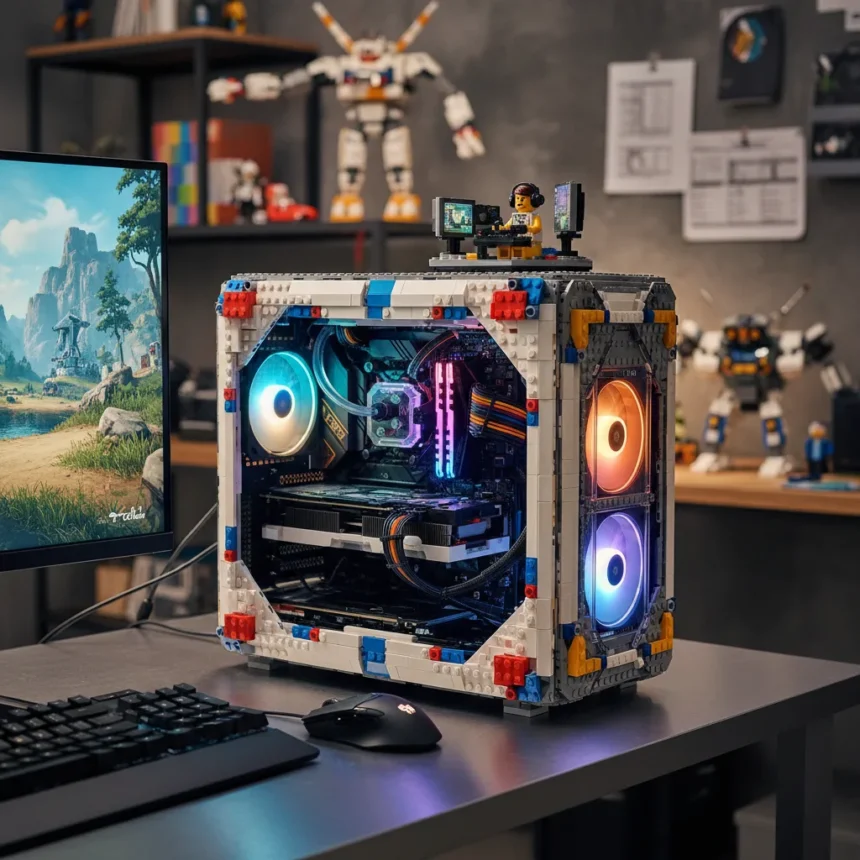
LEGO PC builds represent a radical rethinking of what custom PC gaming can be, moving far beyond traditional metal cases and into the realm of artistic expression. One builder’s stunning LEGO-framed gaming PC has sparked a broader conversation about whether extreme creativity might actually be the best gateway into PC gaming for newcomers, challenging the notion that pre-built systems or standard cases are the natural entry point.
Key Takeaways
- LEGO PC builds combine functional gaming hardware with custom artistic design, standing out from conventional builds.
- The hobby mirrors LEGO assembly itself, making PC building more accessible and enjoyable for creative-minded enthusiasts.
- Custom builds offer full personalization compared to pre-built systems, though they require more time and planning.
- LEGO-inspired concepts extend beyond single builds, including fan-designed GPU concepts that evoke 1990s nostalgia.
- Barebones kits like ASRock DeskMini provide a middle ground, offering pre-assembled core components for faster, guided builds.
Why LEGO PC Builds Stand Out from Standard Custom PCs
The appeal of LEGO PC builds lies in their visual distinctiveness and the creative satisfaction they deliver. While standard custom PCs focus primarily on performance metrics and thermal efficiency, LEGO-integrated designs prioritize aesthetic expression, turning a gaming machine into a conversation piece. This shift in focus—from pure specs to visual storytelling—makes the building process itself more engaging and rewarding.
Traditional custom PC builds often feel interchangeable: black metal cases, RGB lighting, tempered glass panels. LEGO PC builds reject this uniformity entirely. By incorporating LEGO elements into the frame or case design, builders create one-of-a-kind machines that reflect personal taste and imagination. The result is a machine that feels less like a consumer product and more like a bespoke art object, which fundamentally changes how people relate to their hardware.
LEGO PC Builds as a Gateway to PC Gaming Enthusiasm
For newcomers considering whether to enter PC gaming, the traditional path has been either buying a pre-built system or assembling a standard custom build with off-the-shelf components. LEGO PC builds introduce a third option: building as creative play rather than technical necessity. This framing is powerful because it removes the intimidation factor that often deters casual gamers from exploring custom PC construction.


The parallel to LEGO assembly is intentional and effective. People already understand how to build with LEGO—the concept of interlocking pieces, planning a design, and problem-solving when something doesn’t fit are familiar skills. Applying that same mindset to PC building makes the hobby feel less like engineering and more like creative construction. This psychological shift could explain why LEGO PC builds inspire people to attempt their own custom projects, even if they’ve never built a PC before.
The Broader LEGO Gaming Ecosystem
LEGO PC builds exist within a larger ecosystem of LEGO gaming creativity. Fan designers have proposed LEGO GPU concepts inspired by iconic 1990s graphics cards like the 3dfx Voodoo, complete with eyeballs, front-facing pegs, and vent pieces that capture the retro aesthetic. Meanwhile, other builders have created LEGO tabletop versions of gaming experiences, such as a LEGO recreation of the VR game Superhot. These projects demonstrate that the intersection of LEGO and gaming appeals to a specific creative demographic—one that values nostalgia, visual design, and hands-on building.



Comparing LEGO Builds to Barebones Kits and Pre-Built Systems
For those seeking a middle ground between full custom builds and pre-built systems, barebones kits like the ASRock DeskMini offer a compelling alternative. These kits come with core components—motherboard, power supply, and cooler—already assembled, likened to a giant LEGO set that handles the technical heavy lifting. This approach reduces complexity while still allowing customization, making it ideal for builders who want control without the full commitment of sourcing every component individually.
Pre-built systems, by contrast, offer zero customization and typically lock buyers into manufacturer-approved upgrades. LEGO PC builds occupy the opposite extreme: maximum customization and artistic freedom, but requiring significant time, planning, and problem-solving. Barebones kits split the difference, providing structure while preserving creative agency. Each approach serves different audiences, but LEGO PC builds uniquely appeal to those for whom the building process itself is the primary attraction.
What Makes LEGO PC Builds Inspiring
The core reason LEGO PC builds inspire others to build their own is simple: they prove that PC building doesn’t have to follow established templates. Every custom PC doesn’t need to look like every other custom PC. The moment someone sees a LEGO-framed gaming machine actually working, performing games, and looking visually stunning, the barrier to entry drops dramatically. The builder has demonstrated that creativity and functionality are not mutually exclusive.
This inspiration feeds back into the hobby itself. As more people share LEGO-inspired builds, more newcomers feel emboldened to experiment with non-traditional case designs, custom frames, and artistic elements. The PC building community expands not because specs get better, but because the experience of building becomes more personally meaningful and visually rewarding.



Can a LEGO PC build handle real gaming?
Yes. LEGO PC builds house fully functional gaming hardware—CPUs, GPUs, RAM, and storage—just like any other custom PC. The LEGO frame is purely aesthetic and structural; the actual gaming performance depends entirely on the internal components chosen, not the case design. A LEGO-framed build with high-end hardware will game just as well as a standard aluminum case with identical internals.
Is building a PC with LEGO pieces more difficult than using a standard case?
LEGO PC builds require more planning and creative problem-solving than standard builds, since you’re designing a custom frame rather than installing components into a pre-engineered case. However, the core process of installing hardware remains the same. The added complexity is primarily in the design and assembly of the LEGO structure itself, not in connecting power supplies or mounting motherboards.
What’s the difference between LEGO PC builds and barebones kits?
LEGO PC builds are fully custom, requiring the builder to source every component and design the entire frame from scratch. Barebones kits like the ASRock DeskMini come with core components pre-installed, reducing the number of decisions and assembly steps required. Barebones kits are faster and more forgiving for beginners; LEGO PC builds demand more creativity and technical knowledge but offer unlimited customization.
LEGO PC builds have fundamentally changed the conversation around PC gaming entry points. They prove that the best introduction to PC gaming isn’t about the cheapest pre-built or the highest specs—it’s about making the building process itself rewarding, creative, and personally meaningful. For anyone intimidated by traditional PC building, a LEGO-inspired approach might be exactly the permission they need to start.
Edited by the All Things Geek team.
Source: Windows Central