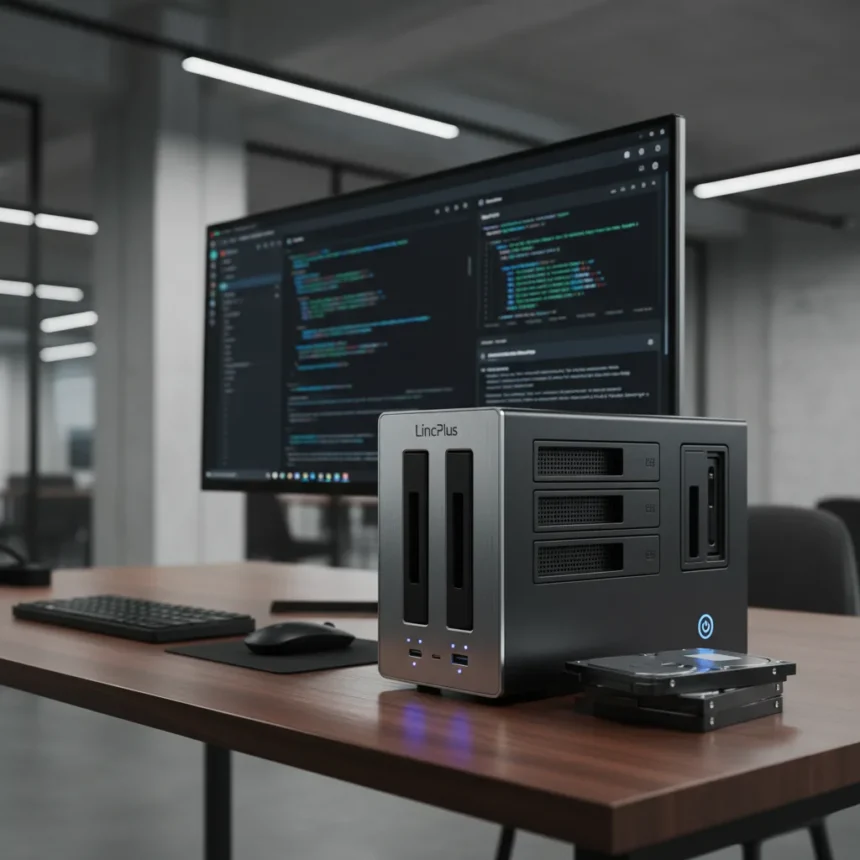
The LincPlus LincStation E1 NAS is a 2+2 bay network-attached storage device that showcases impressive hardware engineering but leaves you waiting for its operating system to catch up. The dual-bay primary configuration plus two additional expansion bays create a flexible storage solution, yet the LincOS platform running the device still feels like it is in active development rather than ready for mainstream adoption.
Key Takeaways
- LincStation E1 features a 2+2 bay hybrid architecture designed for flexible storage expansion.
- Hardware design is strong, but LincOS software ecosystem remains incomplete and under development.
- Full feature set is still pending rollout, making this an early-adoption product for patient users.
- The device shows significant potential once the software matures beyond its current state.
- Early buyers should expect ongoing feature additions and refinements rather than a polished experience.
LincPlus LincStation E1 NAS Hardware Delivers Where It Counts
The LincPlus LincStation E1 NAS impresses immediately with its physical design and storage architecture. The 2+2 bay configuration—two primary bays paired with two additional expansion bays—gives users genuine flexibility without forcing them into an oversized chassis. This hybrid approach appeals to small offices and home users who want room to grow without buying a 4-bay or 8-bay unit from day one.
The hardware engineering is solid. The device handles the core task of network storage competently, with the dual-bay foundation providing enough capacity for most small-to-medium deployments. The additional expansion bays mean users can add storage later without replacing the entire unit, a practical touch that separates thoughtful design from generic box-and-bays commoditization.
Compared to other compact NAS systems in the 2-4 bay category, the LincStation E1’s physical footprint and expansion strategy make sense. Users tired of choosing between underpowered 2-bay units and oversized 4-bay systems will find the hybrid design refreshing.


LincOS Software Is the Weak Link Holding Back the LincStation E1 NAS
Here is where the LincPlus LincStation E1 NAS stumbles: the LincOS operating system does not yet feel like a finished product. The software ecosystem appears to be in mid-development, with the full feature set still waiting to roll out. This is not a minor quibble about UI polish—it is a fundamental limitation that affects how usable the device actually is.
Early adopters testing the LincStation E1 NAS will encounter incomplete workflows, missing integrations, and features that are promised but not yet available. The gap between what the hardware can do and what the software currently allows creates frustration. You have a capable storage device hobbled by an immature platform.



The LincOS development roadmap suggests features are coming, but roadmaps are not shipping products. Users expecting a fully functional NAS experience out of the box will be disappointed. Those willing to live with an evolving platform and trust that LincPlus will deliver on its promises may find the LincStation E1 NAS worth the wait.
Should You Buy the LincPlus LincStation E1 NAS Right Now?
The LincPlus LincStation E1 NAS makes sense only for specific buyer types. If you are an early adopter comfortable with software that is still developing, the hardware foundation is solid enough to justify the purchase. You get a well-designed 2+2 bay unit and the knowledge that future firmware updates will unlock features currently unavailable.
If you need a fully functional NAS today with a mature software ecosystem, wait. The LincStation E1 NAS will be a much more compelling product once LincOS matures. Buying now means accepting incomplete features and ongoing adjustments as LincPlus continues development.
The device’s potential is genuine. The hardware is there. The expansion architecture makes sense. The question is whether you want to be part of the development cycle or whether you would rather let the platform mature first. Neither choice is wrong—it depends entirely on your tolerance for working with software that is still finding its feet.



What Makes the 2+2 Bay Design Different From Traditional NAS Options?
The 2+2 bay architecture of the LincPlus LincStation E1 NAS sits in an interesting middle ground. Traditional 2-bay units are compact but offer limited growth without replacement. Four-bay units provide more capacity but consume more power and desk space. The LincStation E1 NAS splits the difference—you start with two active bays and add two more when you need them, keeping the footprint small until expansion becomes necessary.
This matters for users whose storage needs are unpredictable. You might start with a single 8TB drive and realize in six months that you need more. The LincStation E1 NAS lets you add capacity without buying a new device. It is a pragmatic design choice that reflects real-world usage patterns.
When Will LincOS Feel Ready for Mainstream Users?
The research materials do not specify a timeline for when LincOS will reach feature parity or stability. The LincPlus LincStation E1 NAS is shipping with an incomplete software platform, and only LincPlus knows when the full feature set will arrive. Potential buyers should contact LincPlus directly for a development roadmap before committing.
How Does the LincStation E1 NAS Compare to Established NAS Brands?
Established NAS manufacturers like Synology and QNAP ship with mature, feature-complete software ecosystems. Their platforms have years of development behind them, extensive third-party app support, and stable APIs. The LincPlus LincStation E1 NAS cannot match that maturity yet. However, the hardware design suggests LincPlus is serious about the product category. Once LincOS matures, the LincStation E1 NAS could become genuinely competitive.
The LincPlus LincStation E1 NAS represents a bet on a company that is still building its software platform. The hardware is there. The potential is real. But potential and shipping are not the same thing. Wait for the software to catch up before deciding whether this device deserves a place in your storage setup.
Where to Buy
$409.90 at Amazon | Amazon.com for $219
Edited by the All Things Geek team.
Source: TechRadar