





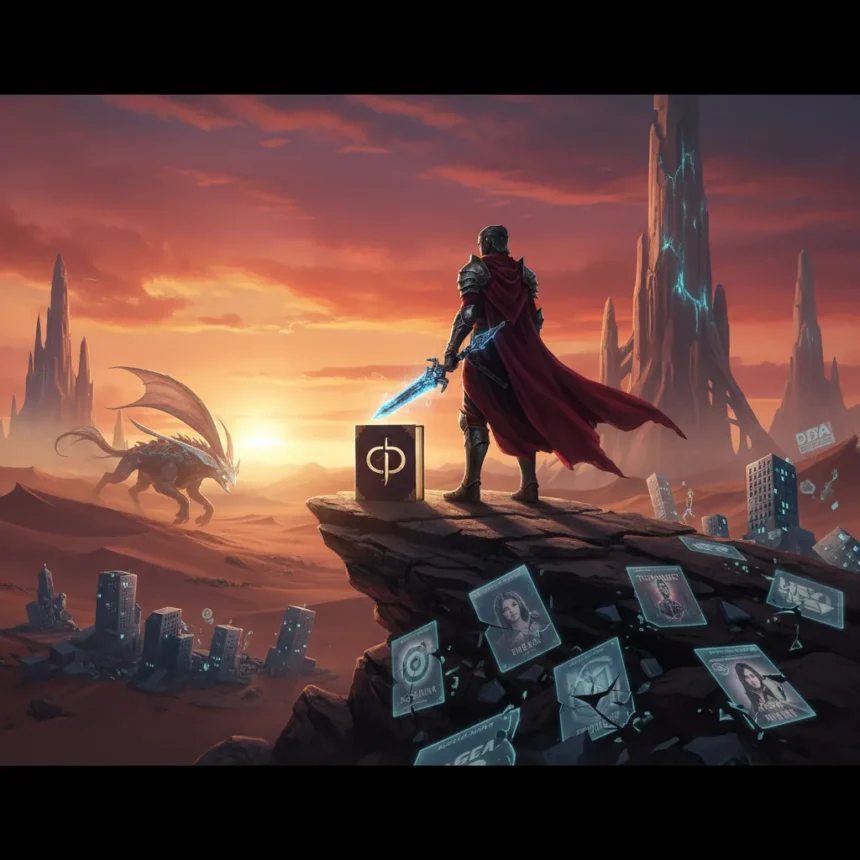
Crimson Desert is an action-adventure open-world game developed and published by Pearl Abyss, released March 19, 2026, across macOS, PlayStation 5, Windows, and Xbox Series X/S. It sold five million copies by doing something radical: it refused to be what modern AAA games have become.
Key Takeaways
- Crimson Desert sold five million copies post-launch, breaking Steam concurrent player records.
- The Witcher 3 director confirmed it is not a copy of other AAA games, positioning it as a classical heroic departure.
- Pearl Abyss’s custom BlackSpace Engine powers dynamic combat, sandbox systems, and environmental traversal without Unreal Engine dependency.
- Post-launch patches fixed early criticism within days, smoothing the experience for three million-plus players.
- Crimson Desert exposes Western AAA bloat by delivering a lean, fast-developed alternative amid industry failures.
Why Crimson Desert AAA Games Stand Apart
Crimson Desert AAA games represent something the industry stopped making: a single-player action experience built on a custom engine, developed over six years without committee-designed sensitivity consultants or compliance overhead. You control Kliff, a scarred mercenary warrior of the Greymanes faction, navigating the fictional continent Pywel. The game’s aesthetic rejects the “uglification” trend dominating modern AAA releases. Instead, it embraces a lived-in, blood-bought heroic aesthetic that communicates weight and consequence through character design alone.
The Witcher 3 director’s endorsement carries weight because it acknowledges what critics initially missed: Crimson Desert AAA games do not copy the structural failures of Concord, Veilguard, Skull and Bones, or Suicide Squad. Those games collapsed under the weight of corporate bloat. Crimson Desert succeeded by stripping it away. Pearl Abyss, a studio previously criticized for Black Desert Online’s monetization model, positioned this release as redemption. The bet paid off within the first week: three million copies sold, shattering expectations.
The BlackSpace Engine Advantage Over AAA Bloat
Most modern AAA games run on Unreal Engine, a decision that locks studios into standardized workflows, middleware dependencies, and asset pipelines that slow iteration. Crimson Desert AAA games use Pearl Abyss’s proprietary BlackSpace Engine, enabling dynamic combat built on combo attacks, environmental traversal, magic integration, and sandbox-driven world interaction. This architectural choice matters: post-launch patches addressed early criticism—lack of direction, difficulty curve issues—within days, not months. The engine’s flexibility allowed rapid response to player feedback without the bureaucratic gatekeeping that plagues Unreal-dependent studios.


The custom engine also eliminated the “tech demo” aesthetic that plagued AAA releases in 2025 and early 2026. Crimson Desert AAA games prioritize gameplay clarity and narrative coherence over graphical showcase moments. Mounts, traversal mechanics, and world interaction systems work in service of the story, not as separate feature showcases. This integration is what separates a cohesive adventure from a checklist of AAA tropes.
Breaking Records Amid Industry Failures
Crimson Desert broke Steam concurrent player records on launch day, a metric that matters because it reflects organic demand, not marketing spend. The community exceeded three million players post-launch, a figure that would be unremarkable for a live-service game but extraordinary for a single-player action-adventure. Why? Because Crimson Desert AAA games arrived when the industry was collapsing under its own weight. Concord shut down after two weeks. Veilguard faced backlash over narrative direction. Skull and Bones limped along with dwindling players. Suicide Squad became a punchline.


Crimson Desert’s success exposed a market gap: players wanted a lean, fast-developed, narratively coherent AAA experience. The six-year development cycle, once criticized as a red flag for an inexperienced single-player studio, became a selling point. Pearl Abyss took the time to build something original rather than chase trends. The custom engine meant no forced live-service mechanics, no battle pass treadmill, no cosmetic bloat. Just a game about a scarred mercenary’s story in a high-fantasy conflict.
Is Crimson Desert worth 175 hours?
The source article’s author claimed 175 hours of playtime, a figure that speaks to depth. The game’s sandbox-driven systems, multiple faction paths, and environmental puzzle-solving support extended engagement without artificial padding. Whether Crimson Desert sustains that playtime depends on your tolerance for open-world structure, but the fact that players are investing that time suggests the core loop works.
How does Crimson Desert compare to Black Desert Online?
Crimson Desert was originally planned as a prequel to Black Desert Online but evolved into a standalone title. Unlike Black Desert Online’s MMO monetization model, Crimson Desert is a single-player action-adventure with no subscription or live-service pressure. This separation allowed Pearl Abyss to rebuild trust with players burned by the original game’s progression systems.
Why did post-launch patches matter so much?
Early criticism focused on lack of direction and difficulty curve issues—standard open-world problems. Pearl Abyss patched these within days, a speed only possible because the BlackSpace Engine enabled rapid iteration without Unreal Engine’s middleware constraints. This responsiveness signaled that the studio was listening, not defending design choices behind corporate messaging. That transparency converted skeptics into advocates.


Crimson Desert AAA games prove a uncomfortable truth: the industry’s bloat is not inevitable. It is a choice. Pearl Abyss chose differently, and five million players validated that decision. The Witcher 3 director was right—this is not a copy of other AAA games. It is a rebuke of them.
Edited by the All Things Geek team.
Source: TechRadar




