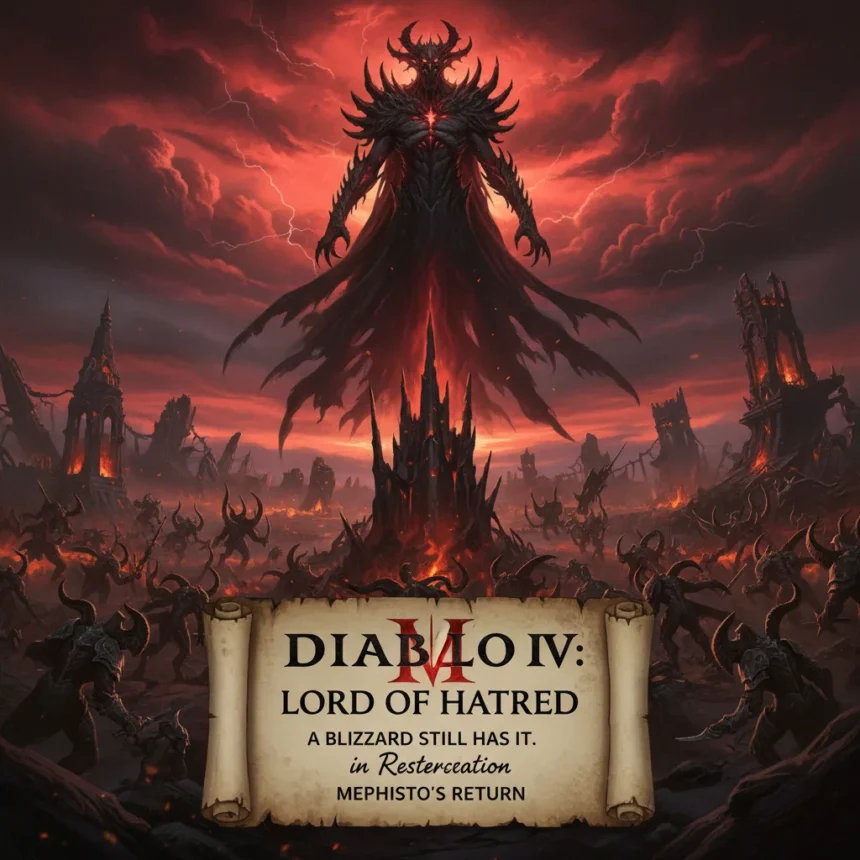
Diablo 4: Lord of Hatred is one of the best expansions in recent memory, and it proves that Blizzard still understands what made the series legendary in the first place. After months away from Sanctuary, this expansion pulled me right back into Diablo 4 once again, and the experience has been nothing short of epic, captivating, and genuinely fun.
Key Takeaways
- Diablo 4: Lord of Hatred launches April 28 and centers the story on Mephisto’s return.
- The expansion introduces a raised level cap, reworked skill trees, and new skill variants for every class.
- A new loot filter system reduces inventory clutter and streamlines farming.
- Mephisto takes over the body of Arakat, setting up a major story confrontation.
- The expansion frames itself as a love letter to Diablo lore, including the Horadrim.
Why Diablo 4: Lord of Hatred Matters Right Now
Diablo 4: Lord of Hatred arrives April 28 as the franchise’s most ambitious expansion since launch. The timing is crucial. The base game’s momentum had stalled, and players were waiting for a reason to return. This expansion delivers that reason by centering the narrative on Mephisto, one of the series’ most iconic villains, and the story’s most compelling thread in years. Rather than diluting the lore with side quests, Blizzard’s developers have used this expansion as a chance to get genuinely dark and uncompromising with the tone. That’s not hyperbole—it’s the kind of creative freedom that produces memorable storytelling.
The narrative stakes feel real. Mephisto’s previous imprisonment in a soulstone has failed, and he’s now inhabiting the body of Arakat, a character whose fate was left ambiguous in the base game. The expansion explores what Mephisto is doing now that he’s in this body, building toward a showdown that should push the Diablo story forward in meaningful ways. For a series that has struggled to justify its narrative direction, this is exactly the kind of focused, character-driven storytelling that fans have been demanding.
Gameplay Changes That Actually Matter
Beyond the story, Diablo 4: Lord of Hatred overhauls core systems in ways that directly address player frustration. The raised level cap gives long-time players a clear progression goal, while the reworked skill tree offers more meaningful build diversity. Every class receives new skill variants, which sounds modest until you realize how stale the meta had become. These aren’t cosmetic tweaks—they’re architectural changes that reshape how you approach combat.


The loot filter is the quality-of-life feature that should have existed at launch. Farming endgame content in Diablo 4 meant drowning in low-value drops, and inventory management became a chore rather than a pleasure. The loot filter solves this by letting players customize what items appear on screen, dramatically reducing clutter and making sessions feel more rewarding. It’s the kind of small feature that dramatically improves the moment-to-moment experience.
A Love Letter to Diablo’s Legacy
What sets Diablo 4: Lord of Hatred apart is its reverence for the series’ history. The expansion doesn’t ignore what came before—it actively celebrates it. References to the Horadrim and deeper lore threads feel earned rather than fan-service pandering. Blizzard has taken the time to understand what players loved about previous Diablo games and woven those elements into a story that feels like the natural next chapter.



This matters because Diablo Immortal and the broader post-launch roadmap had left many fans uncertain about the franchise’s direction. Diablo 4: Lord of Hatred proves that Blizzard can still deliver experiences that respect the fanbase’s intelligence and investment. The expansion doesn’t chase trends or compromise on darkness for broader appeal—it commits fully to being the Diablo game that fans wanted.
How Does Diablo 4: Lord of Hatred Compare to Previous Expansions?
Diablo 4: Lord of Hatred stands out because it combines narrative weight with systemic depth. While the base game offered solid gameplay, it lacked a compelling reason to keep playing beyond loot chasing. This expansion provides both—a story that demands your attention and mechanical changes that reshape how you engage with the world. The addition of new endgame systems and the Warlock class further extends the expansion’s scope.
What New Features Should I Expect in Diablo 4: Lord of Hatred?
Beyond the story campaign, the expansion introduces the Warlock class, the region of Skovos, new endgame systems, and the Paladin class. The skill tree rework applies to all existing classes, so even returning players will need to reassess their builds. The loot filter is available to everyone and fundamentally changes how endgame farming feels.
Is Diablo 4: Lord of Hatred Worth Playing if I’ve Quit the Game?
Absolutely. If you bounced off Diablo 4 after the first few months, Diablo 4: Lord of Hatred gives you a genuine reason to return. The story is engaging, the systems changes address core pain points, and the new classes and regions provide dozens of hours of fresh content. This is the expansion that justifies the base game’s existence.


Diablo 4: Lord of Hatred is proof that Blizzard can still create expansions that matter. It’s not just a content drop—it’s a statement that the studio understands what made Diablo legendary and is committed to honoring that legacy while pushing the franchise forward. If you’ve been waiting for a reason to return to Sanctuary, April 28 is your deadline.
Edited by the All Things Geek team.
Source: TechRadar