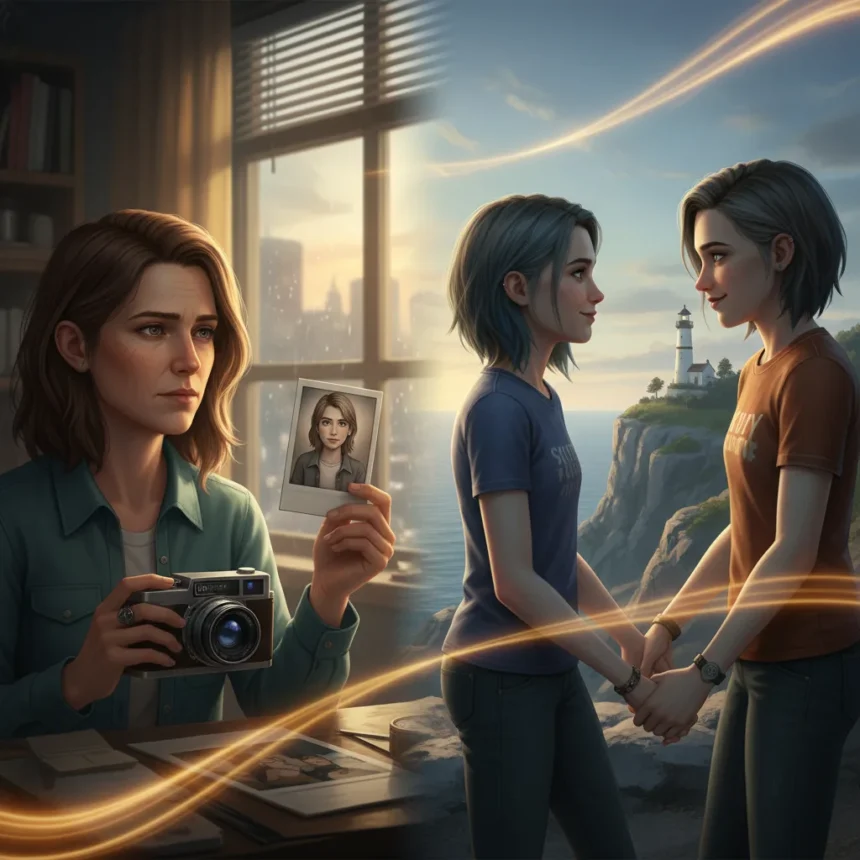
Life is Strange: Reunion is a narrative adventure game developed by Deck Nine, released March 26, 2026, that reunites players with Max and Chloe for what feels like a definitive farewell to the series’ most beloved characters. After years of spin-offs that sidelined Chloe entirely, Reunion strips away the noise and commits to what fans actually wanted: a story about these two characters, their connection, and the weight of choices that span more than a decade of gaming history.
Key Takeaways
- Life is Strange: Reunion brings back Chloe and Max for the first time since 2015, delivering long-awaited emotional closure
- The game features refined time-travel mechanics and a high-stakes Backtalk system that deepen decision-making
- A reality-bending finale incorporates choices from both the original 2015 game and Reunion itself
- Reunion outperforms recent entries like Double Exposure in pacing, story quality, and character focus
- Technical issues and reused environments exist, but the emotional narrative justifies the return
Why Life is Strange: Reunion Works as Fan Service
Fan service gets a bad reputation in gaming. It often means cheap nostalgia without substance, a cynical cash grab that mistakes recognizing a character for actually telling a story about them. Life is Strange: Reunion avoids that trap entirely. The game understands that what made the original 2015 Life is Strange resonate wasn’t just Max’s time-rewind powers or Arcadia Bay’s atmosphere—it was the relationship between Max and Chloe, two people shaped by loss, loyalty, and the impossible weight of choosing between terrible outcomes.
Bringing Chloe back as a hardened late-20s version, witty and brash but haunted by mortality, transforms her from a nostalgic callback into a fully realized character. She’s not here to remind you of who she was. She’s here as someone who has survived, changed, and earned the right to demand answers. Max, still carrying her time-rewind abilities, becomes less the protagonist and more a partner in investigation—two people trying to save Caledon University and its surrounding town from a fire that threatens everything, while uncovering the dark secrets of the Fayyad family and the university’s history with time-warping events.
The setup could have been generic. Instead, the game uses the mystery as scaffolding for something more personal: a reckoning with choices, consequences, and whether redemption is possible when the past refuses to stay buried. That’s not fan service. That’s earned storytelling.


Life is Strange: Reunion vs. Double Exposure
The comparison to Life is Strange: Double Exposure is unavoidable, and it’s where Reunion’s success becomes undeniable. Double Exposure introduced a new town, new cast, and new protagonist, but the mystery felt hollow and the pacing dragged. It chased novelty at the expense of narrative momentum. Reunion does the opposite. Yes, it reuses environments from earlier games. Yes, it focuses on characters players already know. But by narrowing its scope and committing to emotional depth over sprawl, it becomes the more engaging experience.
Where Double Exposure stumbled with a dull mystery and a cast that never clicked, Reunion leans into the strength of its two leads and the stakes they carry. The fire threatening Caledon isn’t just a plot device—it’s a timer that forces difficult choices and creates genuine tension. The investigation sequences and timer-based puzzles demand that players engage with the mechanics rather than simply watching a story unfold. That’s the difference between nostalgia and craft.
Mechanics That Deepen the Emotional Weight
Time-travel mechanics in narrative games risk becoming gimmicks. Reunion refines the system to make every rewind feel consequential. The improved time-travel mechanics allow for deeper decision-making, where using Max’s powers before a timer expires becomes not just a puzzle to solve but a moral choice to weigh. The refined Backtalk system—a high-stakes dialogue mechanic—forces players to commit to responses without the safety net of reloading, making conversation feel like real negotiation rather than trial-and-error.
The pacing deliberately mixes high-tension investigation and puzzle sequences with slower, character-driven chapters. A visit to the Snapping Turtle college bar isn’t filler—it’s a moment to breathe, to listen, to remember why these characters matter. That rhythm is harder to execute than constant adrenaline, and Reunion nails it. By the time the reality-bending finale arrives, where all choices from the original 2015 game and Reunion itself culminate into multiple possible endings, the weight of those decisions feels earned rather than imposed.
The Technical Reality
Reunion isn’t perfect. Reviews note technical issues, and the reuse of environments is noticeable, especially for players familiar with earlier entries. The pacing, while generally strong, occasionally stumbles. Some players report that the ending feels rushed without collecting all optional content, and the timeline-merge logic can feel thin under scrutiny. These aren’t dealbreakers, but they’re worth acknowledging.
What matters is whether a game’s strengths outweigh its weaknesses. Reunion’s facial animations are among the best in the genre, and the soundtrack is exceptional. More importantly, the emotional beats land. There’s a reason players describe it as a beautiful yet heart-wrenching goodbye to two of gaming’s most important characters. Technical rough edges fade when a story moves you.


Is Life is Strange: Reunion worth playing?
If you played the original Life is Strange and cared about Max and Chloe, yes. Reunion is unashamed about being made for you, and it respects that investment by delivering a story with real stakes and genuine emotional resolution. If you skipped recent entries because they felt hollow, Reunion reconnects the series to its roots and proves the formula still works when executed with care.
How do the multiple endings in Life is Strange: Reunion work?
The game features multiple endings with significant replay value, determined by choices made throughout both Reunion and the original 2015 game. Your decisions matter across more than a decade of gaming history, which means different players will experience genuinely different conclusions to Max and Chloe’s story.
Does Life is Strange: Reunion require playing previous games?
While Reunion builds directly on the original 2015 Life is Strange and carries forward player choices from that game, newcomers can still follow the narrative. However, the emotional impact is substantially greater for players who experienced Max and Chloe’s original journey.
Life is Strange: Reunion succeeds because it understands that fan service isn’t about recycling characters—it’s about honoring the investment players made in them. By bringing Max and Chloe back with a story worthy of their return, Reunion proves that the series still has something meaningful to say. In an era where franchises often chase novelty at the expense of substance, a game willing to go backward in order to go deeper is exactly what the series needed.
Where to Buy
Edited by the All Things Geek team.
Source: Tom's Guide