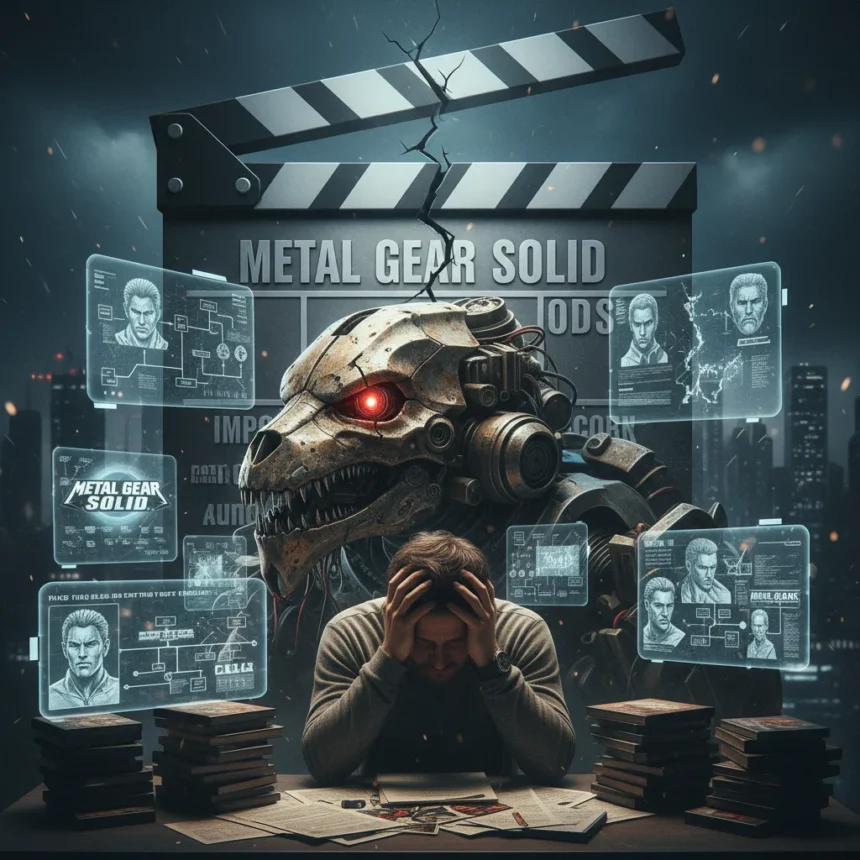
The Metal Gear Solid film adaptation represents one of the gaming industry’s most ambitious attempts to translate interactive storytelling into traditional cinema. The source material’s labyrinthine narrative, philosophical depth, and meta-textual commentary create a fundamentally different challenge than most video game adaptations face.
Key Takeaways
- Metal Gear Solid’s narrative complexity and philosophical themes defy conventional film structure
- The franchise blends stealth gameplay with geopolitical intrigue and fourth-wall breaking
- Video game adaptations historically struggle when source material prioritizes player agency over linear storytelling
- Fan expectations for character accuracy and thematic fidelity are exceptionally high
- The adaptation must choose between cinematic accessibility and preserving the original’s experimental nature
Why Metal Gear Solid Resists Traditional Film Adaptation
Metal Gear Solid’s core identity depends on interactive mechanics and narrative structures that cinema cannot replicate. The games use player choice, codec conversations, and environmental storytelling to build their world—elements that require active participation. A film must compress these layers into a passive viewing experience, inevitably losing the philosophical ambiguity that makes the source material distinctive.
The franchise deliberately deconstructs spy fiction tropes while simultaneously celebrating them. This tonal complexity—simultaneously earnest and ironic—demands screenwriting that respects both impulses without collapsing into parody. Most video game films fail precisely because they prioritize plot clarity over thematic coherence, treating the source material as a skeleton to hang action sequences on rather than as a unified artistic vision.
The Narrative Architecture Problem
Metal Gear Solid games layer exposition through multiple channels: cutscenes, radio conversations, environmental details, and even menu screens contain canonical story information. Translating this into film requires choosing which threads matter and which can be discarded. Every choice alienates some portion of the fanbase while potentially confusing viewers unfamiliar with the games.


The franchise’s willingness to interrogate its own medium—characters discussing the nature of sequels, references to game mechanics as diegetic elements—creates a self-aware narrative structure that few films attempt. Removing this meta-commentary simplifies the story but gutts its intellectual core. Preserving it risks alienating mainstream audiences who expect straightforward espionage thriller conventions.
Fan Expectations and the Adaptation Paradox
Metal Gear Solid possesses one of gaming’s most devoted fanbases, each with precise expectations about character interpretation, thematic priorities, and tonal choices. Unlike adaptations of lesser-known properties, filmmakers cannot quietly reinterpret the source material without immediate, detailed criticism from communities that have spent decades analyzing every narrative layer.

The franchise’s characters carry specific ideological weight. Solid Snake embodies the soldier questioning his own purpose. The Boss represents duty transcending individual morality. Big Boss’s descent into villainy charts a philosophical trajectory across multiple games. Condensing these arcs into a two-hour film risks reducing complex characters to action-movie archetypes, which would betray what makes the source material resonate with audiences in the first place.
What Makes This Different From Other Game Adaptations
Most video game films fail because they treat gameplay as irrelevant—they extract a plot and discard everything that made the game distinct. Metal Gear Solid’s plot alone is not sufficient; the games’ identity depends on how that plot is delivered, questioned, and deconstructed through interactive means. A straightforward heist-thriller adaptation might be competent cinema but would fundamentally misrepresent the source material’s artistic ambitions.
Games like Uncharted or Sonic have relatively linear narratives that translate cleanly to film. Metal Gear Solid’s strength lies in its narrative experimentation—the way it uses the medium itself as a storytelling tool. Filmmakers adapting this property must either embrace that experimental impulse or accept that they are creating a spin-off rather than a true adaptation.
Can Cinema Capture the Philosophical Depth?
At its core, Metal Gear Solid interrogates concepts of identity, control, free will, and the nature of conflict. These themes emerge through gameplay, narrative, and meta-commentary working in concert. A film can certainly explore these ideas intellectually, but it loses the experiential dimension—the way players feel controlled by the game’s systems while simultaneously exercising agency within them.


The challenge is whether a filmmaker can translate this thematic resonance into purely cinematic language. It is possible, but it requires treating the source material as a philosophical text rather than a plot outline. Most studio films prioritize action and spectacle over sustained thematic exploration, which suggests the adaptation will likely emphasize the stealth-action elements over the existential questions that define the franchise.
Frequently Asked Questions
Will the Metal Gear Solid film adaptation follow the games’ plot exactly?
Complete fidelity is unlikely. Filmmakers typically compress, combine, and streamline game narratives for pacing. The question is whether the adaptation preserves the games’ thematic core while restructuring the plot for cinema, or whether it treats the source material as raw material to be remade.
What makes Metal Gear Solid harder to adapt than other video game franchises?
The Metal Gear Solid film adaptation must balance multiple competing demands: respecting fan expectations, maintaining thematic depth, delivering action spectacle, and translating narrative techniques that depend on interactive media into a passive format. Most game adaptations fail on fewer fronts.
Can a film really capture what makes Metal Gear Solid unique?
Partially. Cinema can explore philosophical themes and create complex characters, but it cannot replicate the experiential dimension of gameplay or the meta-narrative effects unique to interactive media. The adaptation will necessarily be a different work that shares DNA with the source material rather than a direct translation.
The Metal Gear Solid film adaptation’s success ultimately depends on whether filmmakers view the source material as a constraint to overcome or a vision to honor. The games’ narrative complexity and thematic ambition represent either an obstacle to streamline or an artistic standard to preserve. That choice—more than any casting decision or action sequence—will determine whether audiences receive a competent spy thriller or a genuine translation of what makes Metal Gear Solid distinctive.
Edited by the All Things Geek team.
Source: What Hi-Fi?