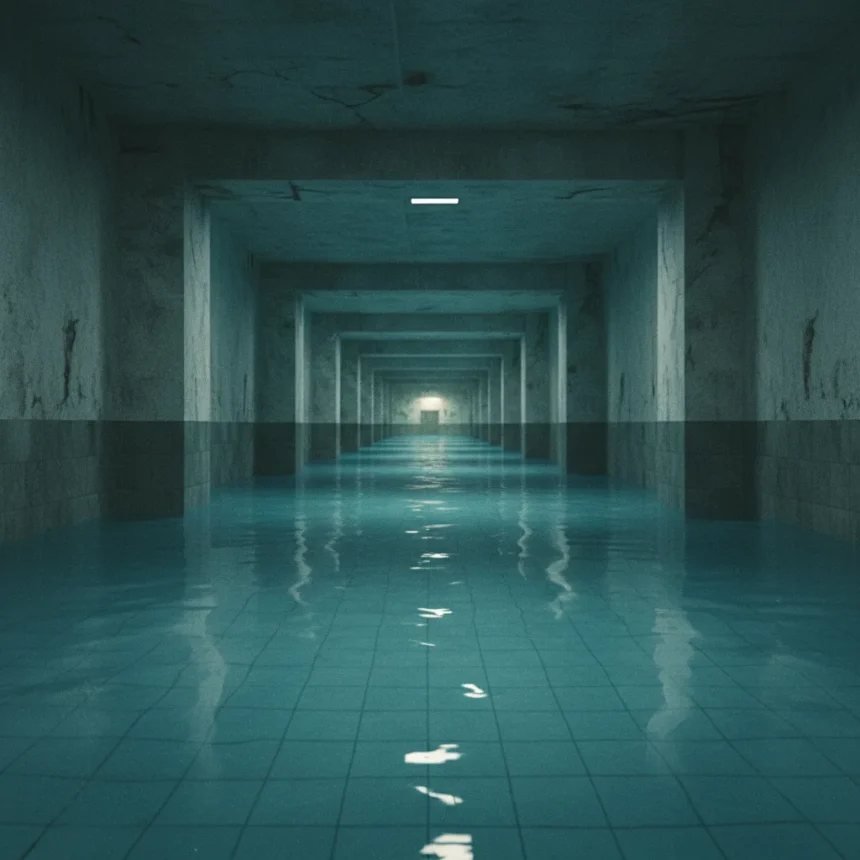
Pools walking simulator is a Backrooms-style horror game that achieves what most horror titles cannot: genuine terror without a single jump scare, enemy encounter, or active threat. The game proves that psychological horror rooted in atmosphere and dread can be far more unsettling than conventional scares.
Key Takeaways
- Pools delivers horror through atmosphere and psychological unease, not jump scares or threats.
- The game is a Backrooms-style walking simulator focused on exploration and environmental storytelling.
- Atmospheric horror without active threats can be more terrifying than conventional game scares.
- The experience relies on player psychology and the uncanny nature of the environments themselves.
- Pools proves that restraint in horror design can be more effective than escalation.
Why Pools Walking Simulator Works Without Traditional Horror Mechanics
Pools walking simulator achieves its horror impact by abandoning the toolkit most games rely on. There are no enemies lurking around corners, no jump scares engineered to spike your adrenaline, and no threats that will end your run. Instead, the game builds dread through something far more insidious: the feeling of wrongness that creeps in as you navigate its environments. This approach forces players to confront their own psychological response to isolation, repetition, and the uncanny rather than reacting to external danger.
The Backrooms aesthetic provides the perfect foundation for this kind of horror. Endless corridors, fluorescent lighting, and the sense of being trapped in a space that shouldn’t exist create a baseline of unease. The game understands that sometimes what you don’t see is more frightening than what you do. By withholding traditional threat mechanics, Pools walking simulator puts the burden of fear entirely on atmosphere, level design, and the player’s own imagination filling in the gaps.
Atmospheric Horror as a Design Philosophy
Pools walking simulator demonstrates that psychological horror can outperform conventional scares when executed with precision. Most horror games escalate: louder sounds, faster enemies, more visceral imagery. Pools does the opposite. It strips away these crutches and forces the player to sit with discomfort. The horror emerges from the mundane made strange, from the familiar twisted just enough to feel wrong.


This design philosophy contrasts sharply with jump-scare-dependent horror games that rely on startle reactions rather than sustained dread. Pools walking simulator builds its terror incrementally, allowing unease to accumulate as you explore. The game trusts that players will scare themselves more effectively than any scripted event could, given the right environment and enough time to think.
What Makes Pools Walking Simulator Genuinely Terrifying
The core terror in Pools walking simulator stems from psychological elements rather than mechanical threats. Exploration becomes an act of vulnerability when there’s no combat system to fall back on, no way to fight back if something goes wrong. The game creates a sense of helplessness not through difficulty but through the complete absence of agency against the environment itself. You are simply walking, observing, and trying to understand what is happening.



The Backrooms-style setting amplifies this effect. These spaces exist in a liminal zone between familiar and alien. They look like places that could exist, yet something is fundamentally off about them. Pools walking simulator leans into this uncanny valley, creating environments that feel almost right but subtly wrong in ways players struggle to articulate. That inability to pinpoint the source of dread makes it more effective than any concrete threat could be.
How Pools Walking Simulator Compares to Conventional Horror Games
Traditional horror games typically rely on a combination of threats, jump scares, and resource management to generate fear. Games with combat systems give players a sense of agency and control. Even games without combat often introduce enemies or hazards that create immediate, recognizable danger. Pools walking simulator abandons all of this. There is nothing to fight, nothing to hide from, nowhere to run. This absence of conventional game mechanics becomes the source of horror itself.
By removing these familiar safety valves, Pools walking simulator forces a different kind of engagement. Players cannot fall back on learned strategies from other horror games. There is no pattern to recognize, no threat to anticipate. The game becomes less about surviving danger and more about tolerating psychological discomfort. This makes it fundamentally different from horror titles that use jump scares or enemy encounters as their primary fear mechanism.
The Psychological Impact of Restraint in Game Design
Pools walking simulator proves that what developers choose not to show can be more powerful than what they do. The game demonstrates restraint as a design philosophy. By withholding jump scares and threats, it creates space for player psychology to fill the void. This approach requires confidence in both the environment design and the player’s imagination.


The Backrooms-style setting is essential to this strategy. These liminal spaces are inherently unsettling because they exist in a space between the familiar and the unknown. Pools walking simulator uses this aesthetic to create a foundation of unease that doesn’t require external threats to maintain. The environment itself becomes the antagonist, and exploration becomes an act of psychological endurance.
Can a horror game be scary without jump scares?
Yes. Pools walking simulator demonstrates that sustained psychological dread, environmental design, and the player’s own imagination can create genuine horror without relying on jump scares or startling events. The absence of these conventional mechanics actually makes the experience more unsettling for many players.
What makes the Backrooms aesthetic so unsettling?
Backrooms-style environments trigger unease because they exist in an uncanny valley between familiar and alien. They look like spaces that could exist, yet something fundamental is wrong about them. This contradiction creates psychological discomfort that conventional threats cannot match.
Why is Pools walking simulator terrifying if there are no threats?
Pools walking simulator achieves horror through atmosphere, isolation, and psychological vulnerability. Without combat or escape mechanics, players experience helplessness not from external danger but from the complete absence of agency against the environment itself. This creates a unique form of dread.
Pools walking simulator succeeds because it understands that the most effective horror doesn’t come from what jumps out at you—it comes from what unsettles you on a deeper level. By stripping away jump scares and threats, the game forces players to confront their own psychological response to isolation and the uncanny. In doing so, it proves that restraint in horror design can be far more terrifying than escalation ever could be.
Edited by the All Things Geek team.
Source: TechRadar