





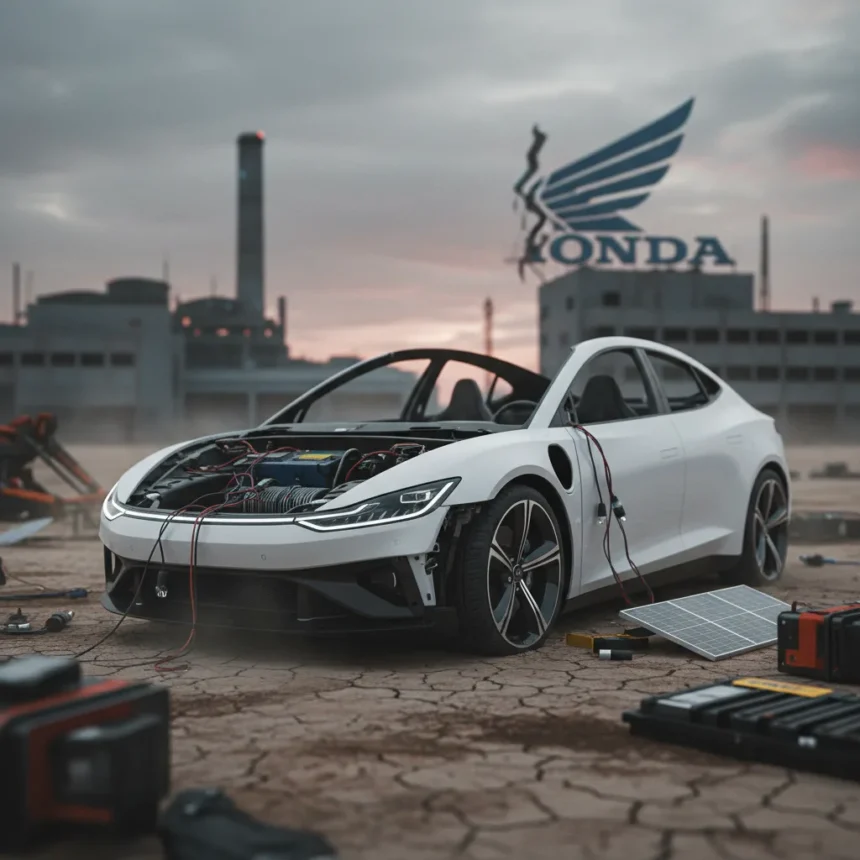
The Sony Honda Afeela EV cancellation marks the spectacular collapse of one of the automotive industry’s most hyped partnerships. On March 25, 2026, Sony Honda Mobility Inc. announced it would discontinue development of the Afeela 1 sedan and its planned SUV successor, just weeks before the sedan was supposed to launch in California. Not a single car was delivered. Not one reservation holder drove home in their pre-ordered PlayStation-branded vehicle. The joint venture, formed in September 2022 with enormous fanfare about blending Sony’s entertainment expertise with Honda’s manufacturing prowess, is dead.
Key Takeaways
- Sony Honda Mobility canceled Afeela 1 and its SUV variant on March 25, 2026, before any deliveries.
- The cancellation followed Honda’s March 12 EV strategy pivot, which projected a 2.5 trillion yen ($15.7 billion) loss.
- Afeela 1 was planned for California mid-2026, with Japanese availability late 2026 at Honda’s Ohio factory.
- Full refunds for Afeela 1 reservation fees in California will be issued to customers.
- The failure reflects broader EV losses totaling $70 billion across four legacy carmakers.
Why Sony Honda Afeela EV cancellation happened now
Honda’s decision to scrap the Afeela project was not sudden—it was inevitable. On March 12, 2026, Honda reassessed its entire electrification strategy and canceled three planned EVs: the Honda 0 Saloon, the Honda 0 SUV, and the Acura RSX crossover, all destined for North America. Honda projected a 2.5 trillion yen loss from this pivot. That financial reality cascaded directly into Sony Honda Mobility’s plans. According to the official statement, “SHM will not be able to utilize certain technologies and assets that were originally planned to be provided by Honda at the time of SHM’s initial business planning”. Without Honda’s platform, components, and manufacturing support, the Afeela had no viable path to production.
The timing was brutal. Sony Honda Mobility had just opened its Afeela Studio and Delivery Hub in Torrance, California, on March 16, 2026—nine days before the cancellation announcement. That facility was supposed to showcase the brand and prepare for customer handovers. Instead, it became a monument to corporate miscalculation. The company had shown the Afeela 1 in near-production form at CES in January 2025, signaling to customers and investors that launch was imminent. Reservation holders in California had already committed funds. None of that mattered once Honda’s losses became undeniable.
What the Afeela cancellation reveals about EV economics
The Sony Honda Afeela EV cancellation is not an isolated failure—it is a symptom of a systemic crisis. Legacy automakers have sunk approximately $70 billion into EV bets, and the tab keeps climbing. Honda’s decision to abandon three dedicated EV platforms reflects the brutal math: building cars people will actually buy at prices that generate profit is exponentially harder than building the cars themselves. Tesla proved the concept works. Everyone else is still bleeding money.

Sony’s involvement was supposed to be the differentiator. The company would bring software expertise, entertainment integration, and a tech-forward user experience—the “PlayStation car” narrative that captured headlines. Honda would provide the manufacturing backbone and dealer network. Together, they would target affluent early adopters willing to pay premium prices for a vehicle that felt like a consumer electronics product, not just a car. That narrative collapsed the moment Honda’s financial reality set in. No amount of Sony’s software wizardry could overcome the fact that Honda could not afford to supply the platforms, drivetrains, and components the Afeela needed.
What happens to Afeela reservations and future plans
Sony Honda Mobility will issue full refunds for all Afeela 1 reservation fees in California. The company has not disclosed the total number of reservations or the aggregate refund amount. Customers who placed deposits will simply get their money back—no compensation for the broken promise, no discount on a future vehicle, no gesture of goodwill. They will also not get the detailed explanation they deserve about why a joint venture between two major corporations could not deliver a product it publicly committed to.


The future of Sony Honda Mobility itself remains murky. The company stated it “plans to continue discussions with Sony and Honda on future business,” but provided no specifics. This language typically signals that negotiations are ongoing and nothing is finalized. It is possible the joint venture will pivot to software, autonomous driving research, or some other mobility-adjacent business. It is also possible it will quietly dissolve. Either way, the Afeela era is finished. The brand name itself—derived from “Feel at the center of the mobility experience”—will fade into automotive history as a cautionary tale.
How this compares to other EV startup collapses
The Afeela cancellation stands out because Sony and Honda are not startups—they are established corporations with decades of manufacturing and financial expertise. Startup EV makers like Fisker and Lordstown have failed spectacularly, but their collapses were blamed on inexperience and underfunding. Sony and Honda had resources, credibility, and market access. Yet they still could not make the economics work. This suggests the problem is not execution or capital—it is the fundamental challenge of entering a market where Tesla has already established cost advantages and brand loyalty, and where legacy automakers are trapped between their profitable internal-combustion businesses and the long-term necessity of electrification. The Afeela was caught in that squeeze.
Could the Afeela have succeeded if Honda had committed differently?
Possibly, but unlikely. The Afeela 1 was planned for mid-2026 launch in California, with Japanese right-hand drive availability late 2026, built at Honda’s Ohio factory. That timeline was already aggressive. The vehicle had been in development for over three years by the time of cancellation. If Honda’s financial projections had been clearer earlier, Sony Honda Mobility could have adjusted scope, target markets, or pricing. Instead, the companies pressed forward until Honda’s losses became impossible to ignore. By then, the Afeela was too far along to pivot and too expensive to launch profitably.
What does this mean for Sony’s other tech ventures?
Sony’s automotive ambitions are now in ruins, but the company’s broader tech strategy remains intact. The Afeela was always a niche bet—a way to explore mobility software and in-car entertainment integration. Its failure does not fundamentally alter Sony’s gaming, entertainment, or semiconductor businesses. However, it does signal that Sony’s ability to execute in hardware-intensive industries outside its core competencies is limited. The company learned an expensive lesson: having great software and brand recognition does not guarantee success in automotive, where manufacturing, supply chains, and regulatory compliance are existential challenges.



Is there any chance the Afeela could be revived?
No. The official statement made clear that SHM “does not have a viable path forward to bring the Models to market as originally planned”. That language rules out a delayed launch or a redesigned vehicle. Revival would require Honda to reverse its EV strategy pivot and recommit to supplying platforms and components—a decision Honda has explicitly rejected. The Afeela is dead, and it will stay dead.
What should reservation holders do now?
Reservation holders in California should expect full refunds to be processed, though Sony Honda Mobility has not announced a timeline. They should monitor the official SHM website and their email for refund instructions. Beyond that, there is little recourse. The company will not offer compensation for the broken promise, and litigation is unlikely to be productive given that the joint venture is dissolving.
The Sony Honda Afeela EV cancellation is ultimately a story about hubris meeting reality. Two major corporations believed they could enter the EV market with a premium product and succeed where others had faltered. They underestimated the cost of manufacturing at scale, the depth of Tesla’s competitive moat, and the brutal economics of a market where legacy automakers are losing tens of billions of dollars every year. The Afeela was never going to be a PlayStation on wheels. It was always going to be a very expensive lesson in why established carmakers struggle to compete in the EV era.
This article was written with AI assistance and editorially reviewed.
Source: TechRadar