





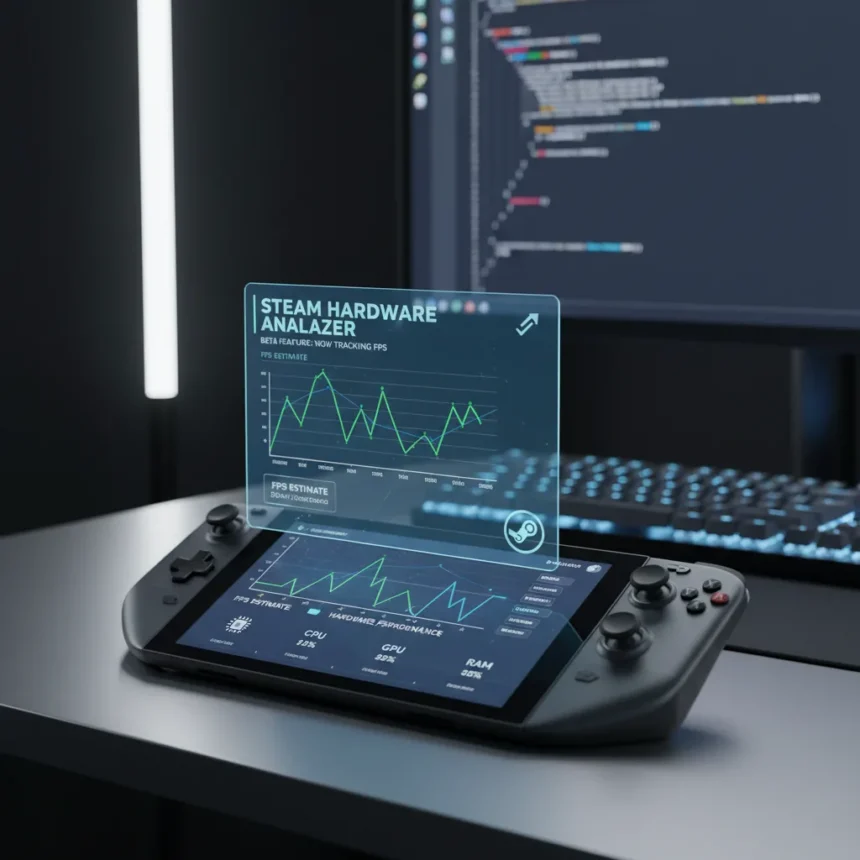
Steam FPS estimator is a new beta feature Valve is rolling out to gather performance data from players’ hardware, with the goal of predicting framerates across different systems. The feature represents Valve’s effort to help gamers understand how their rigs will perform before launching a title, and it marks an important step toward making SteamOS a more viable gaming platform.
Key Takeaways
- Steam FPS estimator collects performance data to predict framerates on individual hardware configurations
- Beta rollout initially targets SteamOS devices to support Valve’s handheld gaming ecosystem
- Feature integrates with Steam’s existing performance monitoring tools and in-game overlay
- Real-time FPS tracking distinguishes actual frames from AI-generated ones in modern games
- Hardware comparison data helps players estimate performance before purchasing games
What the Steam FPS Estimator Does
The Steam FPS estimator analyzes your system’s hardware specifications—GPU, CPU, RAM, and storage type—to forecast how many frames per second you can expect in specific games. Rather than relying on generic performance charts or third-party benchmarks, Valve is building a proprietary database of real-world performance metrics collected directly from Steam players. This approach gives the company granular insight into how thousands of GPU and CPU combinations perform across its entire game library.
The estimator pulls data from Steam’s expanded performance monitoring tools, which now track CPU and GPU usage alongside traditional FPS counts. The system also distinguishes between native frames and AI-generated frames produced by upscaling technologies like DLSS or FSR, giving players a clearer picture of actual performance versus synthetic frame injection.
Why SteamOS Gets Priority
Valve is prioritizing SteamOS devices in the beta rollout because accurate performance prediction is critical to the platform’s adoption. Steam Deck users and future SteamOS handheld systems operate within tighter hardware constraints than traditional PCs, making frame rate estimates more valuable—and more complex. By gathering FPS data specifically from SteamOS players, Valve can build confidence that its performance estimates are reliable for the handheld audience, which has been central to Valve’s gaming hardware strategy.


The focus on SteamOS also reflects a broader push to position the platform as a legitimate PC gaming alternative. If players can trust that Steam’s FPS estimator accurately predicts performance on their SteamOS device before buying a game, adoption barriers drop significantly. This data collection effort is foundational to that confidence-building process.
How Steam FPS Estimator Compares to Alternatives
Unlike third-party performance prediction tools, which rely on crowdsourced benchmarks or generic hardware profiles, the Steam FPS estimator draws from actual gameplay telemetry across Valve’s ecosystem. This gives it an inherent accuracy advantage—the data comes directly from millions of real players running real games, not synthetic test scenarios. Competitors like YouTube tech channels and independent benchmark sites can estimate performance, but they cannot match the scale and specificity of Valve’s first-party data collection.



The estimator also integrates smoothly with Steam’s native overlay and store interface, eliminating friction. Players do not need to leave Steam or consult external websites to check whether a game will run smoothly on their hardware. That convenience factor, combined with data sourced from actual gameplay, positions the Steam FPS estimator as a practical tool rather than a novelty feature.
What Data Valve Is Collecting
Valve is gathering anonymized hardware specifications and real-time performance metrics from players who opt into the beta. The company collects GPU model, CPU model, system RAM, storage type, and actual FPS data during gameplay. This information feeds a machine-learning model that learns correlations between hardware configurations and frame rates across different games and settings.
The data collection is tied to Steam’s existing telemetry infrastructure, so players who have already enabled performance monitoring will automatically contribute to the FPS estimator database. Valve has not disclosed how long it will retain this data or whether it will be anonymized beyond hardware model identification, but the company’s privacy policy governs collection practices.
Rollout Timeline and Availability
The Steam FPS estimator is currently in beta, with initial availability limited to SteamOS devices. Valve has not announced a specific date for broader PC rollout, but the company typically expands beta features to Windows and Mac users within weeks or months of initial SteamOS testing. Players on SteamOS can opt into the beta through Steam’s settings menu if they wish to participate in data collection.



Will the Steam FPS Estimator Work on Windows PCs?
Valve has not officially confirmed Windows support yet, but the feature is designed to work across any hardware that reports performance data to Steam. Once the SteamOS beta matures, expect the estimator to expand to Windows and Mac players. The company benefits from collecting as much hardware diversity data as possible, so broader availability is likely inevitable.
How Accurate Will FPS Predictions Be?
Accuracy depends on how similar your hardware is to the systems already in Valve’s database. If you own a common GPU and CPU combination, predictions should be reliable. Niche or newly released hardware may see wider prediction margins until enough players with those components feed data into the system. Valve will likely improve accuracy over time as the database grows.
The Steam FPS estimator represents a meaningful shift in how Valve supports its gaming ecosystem. By collecting real-world performance data and translating it into actionable predictions, Valve is removing a major friction point for players deciding whether to buy a game. For SteamOS, where hardware constraints are tighter and trust is still building, this feature could prove essential to adoption. The data Valve gathers will also inform future hardware decisions and help the company optimize SteamOS performance across a broader range of titles. If the beta succeeds, expect this tool to become a standard feature across all Steam platforms within the year.
Edited by the All Things Geek team.
Source: Tom's Hardware