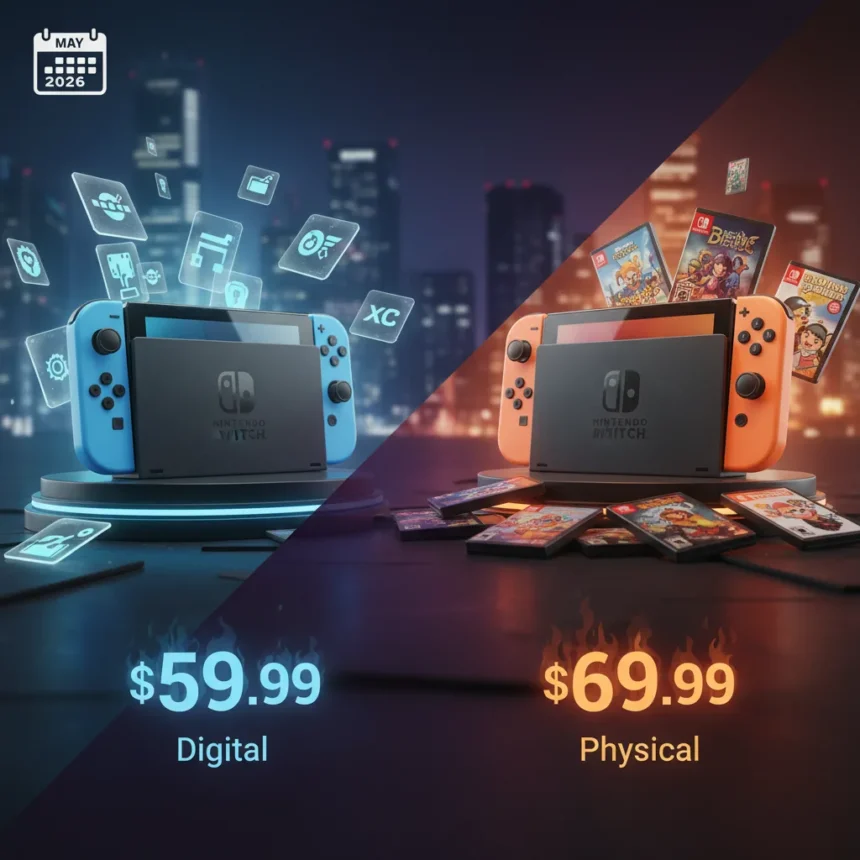
Nintendo Switch 2 digital games pricing is shifting in a way that rewards players willing to go all-digital, while raising questions about the company’s broader hardware cost strategy. On March 25, 2026, Nintendo announced that new first-party digital titles exclusive to Switch 2 will carry a lower suggested retail price than their physical counterparts, starting with pre-orders for Yoshi and the Mysterious Book at $69.99 digital.
Key Takeaways
- Nintendo Switch 2 digital games will cost less than physical versions starting May 2026
- Yoshi and the Mysterious Book digital pre-orders set at $69.99, below physical pricing
- Price difference reflects production and distribution cost variations between formats
- Physical game prices confirmed not increasing despite hardware cost pressures
- Bundle discontinuation effectively raised entry cost for most players to $530
Why Nintendo Is Splitting Digital and Physical Pricing
Nintendo’s official reasoning is straightforward: producing and distributing physical games costs more than delivering digital versions. According to Nintendo, the company stated that new first-party digital titles exclusive to Switch 2 will have a different MSRP from physical versions, reflecting the different costs associated with producing and distributing each format while offering players more choice in how they purchase games. This is the first time Nintendo has implemented such a split for its own exclusive titles, marking a meaningful shift in how the company prices software.
The digital advantage makes economic sense. Physical cartridges require manufacturing, packaging, and logistics. Digital distribution eliminates those expenses entirely. By passing some of those savings to consumers, Nintendo is incentivizing the shift toward digital purchases—a trend that benefits the company’s margins long-term. However, this pricing structure also signals confidence that enough Switch 2 owners will embrace digital-only gaming to make the strategy viable.
The Bundle Discontinuation Nobody Is Talking About
While Nintendo confirmed physical game prices are not rising, the company quietly discontinued the Switch 2 bundle that included Mario Kart World. This move effectively raised the cost of entry for most players. Previously, buyers could grab the console and Mario Kart together for $500. Now they must buy the $449 console separately and the $80 game separately, totaling $530—a $30 increase for the 85 percent of customers who purchase Mario Kart. It’s a subtle price hike disguised as a product discontinuation.
Expert Matthew Ball noted this timing and strategy, pointing out that Nintendo terminated the bundle after just three to four months, which is unusually quick. The move effectively raises costs for the vast majority of buyers without technically increasing any individual product’s price. It’s the kind of pricing maneuver that frustrates players but doesn’t trigger the same backlash as a direct console price increase.
What This Means for Physical Game Buyers
Nintendo explicitly confirmed that physical Switch 2 games are not increasing in price, which is good news for players who prefer owning cartridges. Standard physical titles remain at current levels, while premium titles top out around $80. However, the digital discount creates a two-tier system where digital buyers save money upfront—potentially $5 to $10 per game depending on the title.
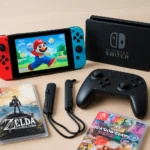
This pricing split puts pressure on retailers and players who value physical media. If digital games consistently undercut physical versions, fewer players will justify the premium for a cartridge. Over time, this could accelerate the industry-wide shift away from physical games, which Nintendo seems to be banking on. The company is not forcing the transition through price hikes—it’s making the alternative more attractive.
Hardware Price Hikes Still Loom
Nintendo President Shuntaro Furukawa stated that no decision has been made on future Switch 2 hardware price changes, but analysts are watching closely. The company faces mounting pressure to raise console prices due to component costs, particularly a reported 41 percent increase in RAM costs. With 17.37 million Switch 2 units sold by December 2025 and strong momentum heading into 2026, Nintendo has the sales volume to absorb a price hike.
Industry speculation suggests any hardware price increase would likely come after the 2026 holiday season, giving Nintendo time to establish the console in the market before asking players to pay more. The year 2026 is being positioned as critical for the Switch 2’s lifecycle. A price hike too soon could dampen adoption; too late could leave money on the table. Nintendo is playing the long game, and the digital pricing strategy may be laying groundwork for that eventual move.
Is Nintendo Switch 2 digital pricing cheaper than physical?
Yes, Nintendo Switch 2 digital games will cost less than physical versions starting May 2026. For example, Yoshi and the Mysterious Book is priced at $69.99 digital, while physical versions will cost more, potentially $70 to $80 for premium first-party titles.

Why is Nintendo lowering digital game prices?
Nintendo is lowering digital prices to reflect the lower production and distribution costs of digital games compared to physical cartridges. The company stated this change offers players more choice in how they buy and play Nintendo games.
Are physical Switch 2 game prices going up?
No. Nintendo confirmed that physical Switch 2 game prices are not increasing. Standard titles remain at current pricing levels, with premium games capping out around $80.
Nintendo’s Switch 2 pricing strategy reveals a company confident in its digital future while maintaining a veneer of consumer choice. By keeping physical prices flat while discounting digital versions, the company avoids the backlash of a direct price increase while steering players toward the higher-margin digital ecosystem. The real question is whether hardware prices follow—and when. For now, players win on software costs, but the bundle discontinuation shows Nintendo is already finding ways to raise the overall cost of entry.
Edited by the All Things Geek team.
Source: TechRadar