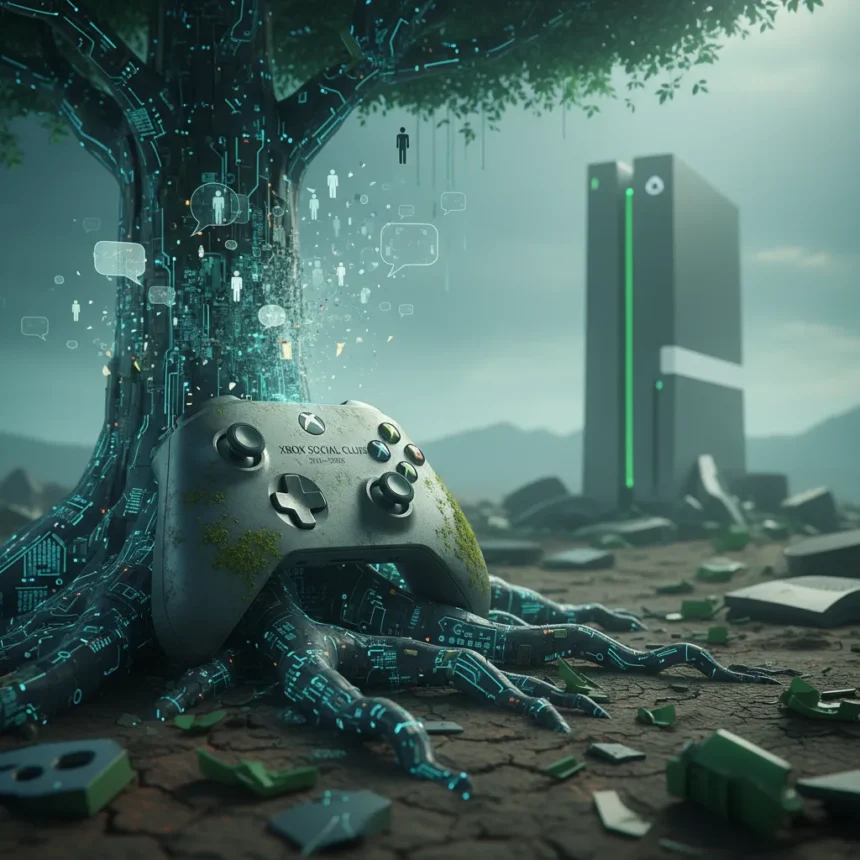
Xbox Social Clubs, the user-created and user-moderated mini-forums that have existed since 2016, are being retired starting in April 2026 across Xbox One, Xbox Series X|S, and related apps. This marks the end of a feature that once symbolized player-driven community on Xbox Live, replaced by what Microsoft calls a focus on social experiences players actually use.
Key Takeaways
- Xbox Social Clubs will shut down in April 2026 on all Xbox platforms and companion apps.
- The feature launched in 2016 as part of an Xbox Live update alongside Looking for Group.
- Microsoft cites low usage as the reason, prioritizing Discord integration, party chat, and Xbox messages instead.
- Official game-specific clubs created by developers remain available within game cards.
- The removal is part of broader platform streamlining for next-gen Xbox-Windows hybrid hardware.
Why Xbox is killing Social Clubs
Low usage killed Xbox Social Clubs. After a decade on the platform, the feature simply never gained traction with the broader player base. A Windows Central poll showed the vast majority of respondents had never used Social Clubs at all. Rather than maintain infrastructure for a feature that sits dormant, Microsoft is consolidating around social tools that actually drive engagement: Xbox messages, Discord on Xbox, party chat, and the Looking for Group system.
This is not a surprising move for a platform in transition. Xbox is preparing for a next-gen hybrid system that bridges Xbox and Windows, and every feature that does not pull its weight gets scrutinized. According to Xbox’s official statement, “This update is part of ongoing platform updates to focus on the social experiences players use most today”. Translation: Social Clubs were a luxury Xbox could no longer afford to maintain.
What happens to your existing clubs
All player-created clubs will be taken offline and become inaccessible. If you have been using a Social Club to coordinate with friends or manage a gaming community, you will need to migrate elsewhere. The Clubs tab will disappear entirely from the Friends and Community Updates app, removing the surface area where these communities once lived.


The distinction Microsoft is making here matters: official game-specific clubs created by developers and publishers will remain untouched and available within individual game cards. These branded communities—the ones EA, Activision, or other studios maintain—are staying put. Only the grassroots, player-run clubs are being eliminated. It is a telling choice that reveals where Xbox sees value in community engagement going forward.
The alternative ecosystem Xbox is betting on
Discord integration on Xbox is the real winner in this shuffle. Rather than build its own social layer, Microsoft is embracing the platform where millions of gamers already hang out. Party chat, Xbox messages, and Looking for Group provide the core tools for coordination and connection. These features clearly resonate more with players than the niche appeal of user-moderated clubs ever did.
This strategy mirrors a broader industry trend: platforms are consolidating social features around what works at scale rather than maintaining specialized tools for smaller user groups. It is a pragmatic choice, even if it feels like a retreat from the idea of player-owned communities. Rumors suggest Xbox may be exploring a Battle.net-style social hub that could eventually span devices and platforms, though nothing official has been confirmed.
Is this the end of social gaming on Xbox?
No. Xbox is not abandoning social features—it is refocusing them. The platform still supports party chat, Discord, Looking for Group, and official game communities. What is disappearing is the middle layer: the independent, user-run clubs that never quite found an audience. For casual players, the change will be invisible. For the small number who relied on Social Clubs, migration to Discord or other external tools is unavoidable.
The real question is whether this signals a broader shift away from player agency in community building. Xbox once positioned itself as a platform where players could create and own their own spaces. Now it is funneling that energy toward corporate-controlled channels or third-party platforms like Discord. It is more efficient, certainly. Whether it is better for community depends on what you believe community should be.
When does the shutdown happen?
Xbox Social Clubs will be retired starting in April 2026. Players should begin migrating their communities to alternative platforms—Discord, private messaging, or official game communities—well before that date. The removal is not happening overnight, but the clock is ticking.


Will official game clubs survive the shutdown?
Yes. Official clubs created by developers and publishers within individual game cards will remain available and are not affected by the retirement. Only player-created clubs are being removed. If your favorite game maintains an official community club, you can keep using it.
What should I do with my Social Club before April 2026?
Export any important information, community guidelines, or member lists from your club now. Migrate your community to Discord, a private Discord server, or another platform that gives you more control and permanence. Do not wait until the last moment—the sooner you move, the more time you have to rebuild momentum in your new home.
Xbox Social Clubs were a well-intentioned experiment in player-driven community that never quite took off. Their retirement reflects a hard truth: not every feature deserves to survive, no matter how theoretically appealing. Microsoft is choosing efficiency and consolidation over niche tools, betting that Discord, party chat, and official game communities will serve players better than scattered, user-moderated clubs ever did. For most players, the change will barely register. For those who built communities around Social Clubs, it is a reminder that platform-dependent spaces are always at risk.
Edited by the All Things Geek team.
Source: Windows Central