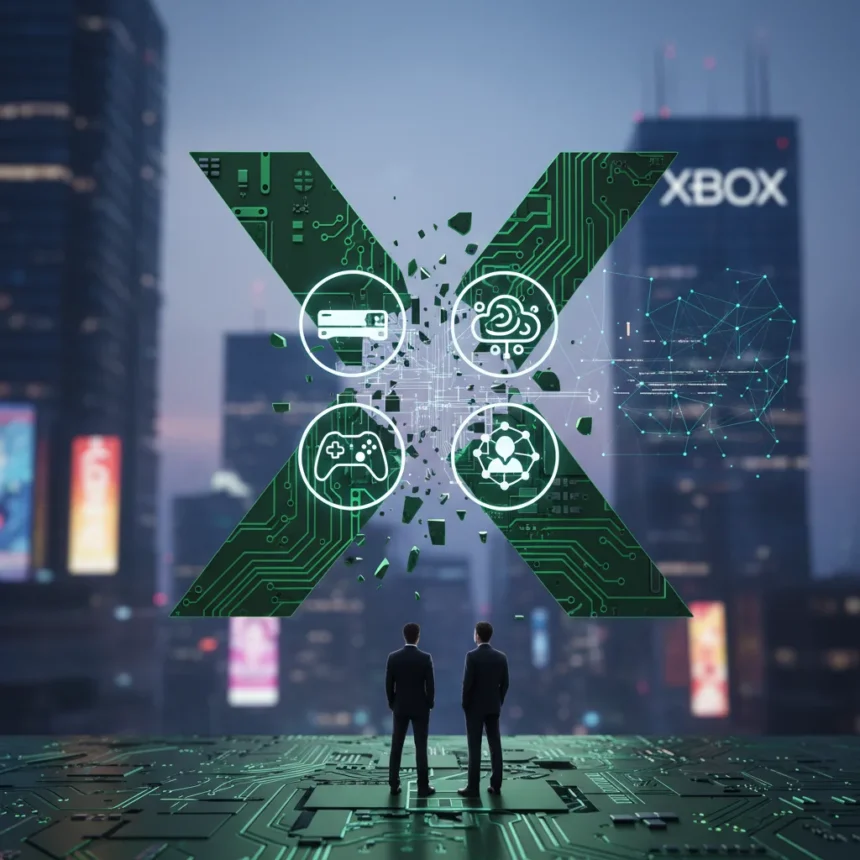
Xbox’s new strategic priorities represent a fundamental reset for Microsoft’s gaming division, one that acknowledges past missteps and charts a radically different course forward. Under new CEO Asha Sharma, the company has rebranded back to simply “Xbox” and declared a new north star: daily active players. But how Xbox gets there—through hardware, content, experience, and services—tells a story of a company retreating from the subscription-first gospel that dominated its messaging for half a decade.
Key Takeaways
- Xbox rebranded from Microsoft Gaming and set daily active players as its primary metric
- New CEO Asha Sharma admits players are frustrated with pricing, discovery, and PC performance
- Hardware gets top billing: Project Helix next-gen console will prioritize performance over Game Pass expansion
- Non-Western markets now represent over 50% of gaming revenue and growth, forcing a global strategic rethink
- Xbox is reevaluating exclusivity and windowing deals, signaling a willingness to put games on competing platforms
Why Hardware Now Leads Xbox’s Agenda
For years, Xbox’s strategy centered on Game Pass as the crown jewel—a Netflix-for-games approach that would supposedly make hardware irrelevant. That narrative has collapsed. The new memo places hardware first, with Project Helix positioned as the foundation of a premium, high-performance console experience. This is not the language of a company betting the farm on subscriptions.
The shift reflects a hard truth: players still want powerful, dedicated gaming hardware. Sharma’s team acknowledges that Xbox’s PC presence “isn’t strong enough” and that the console itself needs stabilization before expansion. Project Helix, described as designed “to lead in performance and play your console and PC games,” represents a return to the basics—raw speed, reliability, and a premium experience that justifies the hardware investment. Accessories also get emphasis, signaling that Xbox wants to compete on the entire hardware ecosystem, not just the console box.
This contrasts sharply with PlayStation’s recent trajectory, which has doubled down on live-service games and multiplatform releases. Xbox is making the opposite bet: a powerful foundation, then expansion outward.


The Global Market Reality Forcing Xbox’s Hand
Behind the strategic reset lies a demographic earthquake. Non-Western markets now account for more than 50% of total gaming market revenue and growth. Developers in emerging regions are competing at scale and speed that threatens established Western studios. Xbox cannot ignore this shift. The memo explicitly calls out expansion into China, emerging markets, and mobile-centric audiences as a core content priority.
This is not new thinking—it is overdue acknowledgment. For years, Xbox’s strategy assumed Western console dominance would persist. That assumption is broken. Developers in Southeast Asia, India, and Latin America are building games that compete globally. Xbox’s response is to double down on creator-centric platforms like Minecraft and The Elder Scrolls, which have proven appeal across regions and age groups. These franchises transcend the “hardcore console gamer” demographic that Game Pass chased.
Experience and Services: Admitting the Broken Pieces
The “experience” pillar reads like a confession. Search, discovery, social, and personalization on Xbox “still feel too fragmented,” according to the memo. This is damning language from company leadership. These are the features that should make Game Pass feel like a coherent ecosystem. Instead, players report that finding games is harder than it should be, that social features are scattered, and that personalization feels half-baked.
Fixing these fundamentals is unsexy work. It does not generate headlines. But it is the difference between a platform that feels intentional and one that feels bolted together. Xbox is committing to overhaul these systems “to connect the community,” which suggests a recognition that Game Pass’s value proposition—unlimited access—means nothing if players cannot find what they want to play.
Services remain part of the strategy, but with a crucial caveat: Game Pass needs “clear differentiation and sustainable economics”. That phrase—sustainable economics—is code for “we are losing money on this subscription model as currently structured.” Expect pricing changes, tier restructuring, or both. The days of Game Pass as an unlimited, cheap entry point are ending.
The Exclusivity Question: Xbox Is Willing to Lose
Perhaps the most striking commitment is Xbox’s willingness to “reevaluate our approach to exclusivity, windowing, and AI”. This is not a promise; it is a statement of uncertainty. But the direction is clear: Xbox is open to putting its games on PlayStation, Nintendo, and mobile platforms if it means reaching more daily active players.


This contradicts fifteen years of industry orthodoxy. Console makers have guarded exclusive content like nuclear codes. Xbox is signaling it will break that mold if the math works. That is either visionary or desperate—likely both. What matters is that Sharma has given permission to her teams to challenge the exclusivity assumption.
AI: Not a Flood, Not a Gimmick
Sharma made a pointed statement: Xbox will not enforce generative AI on developers or “flood our ecosystem with slop”. This matters because it positions Xbox against the current hype cycle. Plenty of gaming platforms and publishers are rushing AI tools into production. Xbox is saying: humans create great stories, AI is a tool, not a replacement.
This is not anti-AI rhetoric. It is pro-craft rhetoric. In a market flooded with AI-generated content, Xbox is betting that human-made games with AI-assisted development tools will stand out. Whether that holds up as AI tools improve is an open question, but the stance signals respect for creators.
What This Means for Players
The Xbox strategic priorities memo is a reset, not a revolution. The company is admitting that past models did not work and that daily active players—not subscriber counts—should drive decisions. That is healthy. It means more focus on making games people actually want to play, less focus on extracting subscription revenue from the largest possible install base.
Expect hardware announcements within the next 12 months. Expect Game Pass pricing to rise or tier structure to shift. Expect more Xbox games on other platforms. Expect better discovery and social tools, though these take time to rebuild. And expect Xbox to take seriously the global market beyond North America and Western Europe.
How does Project Helix compare to PlayStation’s next-gen plans?
Project Helix is described as designed to “lead in performance and play your console and PC games,” emphasizing raw hardware power. PlayStation has not detailed next-gen hardware publicly, so direct comparison is not yet possible. The strategic difference is clear: Xbox is betting on premium performance as a differentiator, while PlayStation has focused on exclusive content and live-service games.
Will Xbox put its games on PlayStation?
Xbox is reevaluating exclusivity and windowing, which means it is open to the possibility. No games have been confirmed for PlayStation yet. The company is still deciding how to approach exclusivity deals going forward, so expect announcements as those decisions firm up.
Is Game Pass getting more expensive?
The memo states Game Pass needs “sustainable economics,” which strongly implies pricing changes are coming. No specific price increases have been announced. The current subscription model is not sustainable at present pricing levels, so changes are inevitable, but details remain unclear.
Xbox’s new strategic priorities represent a maturation of the gaming division—a move away from hype and toward fundamentals. Hardware, content that serves global audiences, a platform experience that actually works, and services with sustainable business models. It is a sober agenda, not a flashy one. But it is honest about the problems Xbox has to solve, and that honesty is the first step toward fixing them.
Edited by the All Things Geek team.
Source: TechRadar