Xbox’s back-to-basics console strategy represents a fundamental recalibration of Microsoft’s gaming priorities, moving away from the cloud-first evangelism that dominated the last five years and returning to the hardware that built the brand’s foundation. The rebranded Xbox—formerly Microsoft Gaming—has outlined a sweeping plan that reaffirms console dominance while simultaneously expanding cloud gaming accessibility, a balancing act that suggests the company finally understands what players actually want: choice, not ecosystem lock-in.
Key Takeaways
- Xbox rebrands from Microsoft Gaming, prioritizing consoles alongside cloud and services expansion
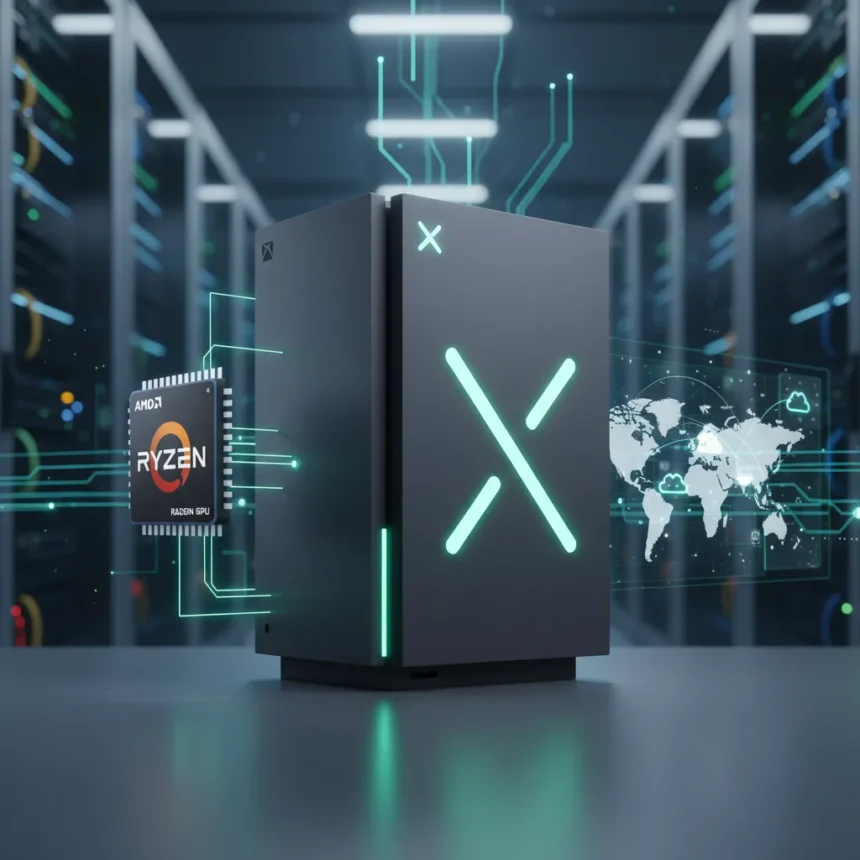
- Multi-year AMD partnership will co-engineer silicon for next-gen consoles and cloud devices
- Next-gen Xbox described as a “very premium, high-end experience,” sparking PC-console hybrid speculation
- Xbox Cloud Gaming expands to Argentina and New Zealand, adds Samsung TV support starting June 30
- Cloud Gaming enables streaming of owned games for Game Pass Ultimate subscribers, broadening beyond Game Pass catalog
Why Xbox Is Abandoning Cloud-First Thinking
For years, Xbox executives preached cloud gaming as the future, suggesting that physical hardware would become obsolete. The company even claimed cloud computing could quadruple Xbox One performance by providing three virtual consoles per physical unit. That narrative has evaporated. The new “We are Xbox” open letter signals that consoles remain the centerpiece of the company’s strategy, with cloud and services playing supporting roles rather than leading the charge. This pivot is not a failure—it is a recognition that players still value owning hardware they control, devices that work offline, and experiences that do not depend on internet stability.
The rebranding from Microsoft Gaming to simply Xbox reflects this philosophical reset. Under new leadership, the company is no longer trying to abstract gaming away from dedicated devices. Instead, it is doubling down on what made Xbox competitive: powerful, accessible consoles paired with Game Pass, a service that actually justifies its cost. The shift also abandons the idea of locking players into a single storefront or ecosystem. Xbox’s messaging now emphasizes cross-device play and platform flexibility—you can play on console, PC, tablet, phone, or Samsung TV without being forced into a proprietary walled garden.
The AMD Partnership and Next-Gen Hardware
Xbox’s commitment to console hardware crystallizes in a multi-year strategic partnership with AMD to co-engineer silicon for future first-party consoles and cloud devices. This is not a casual chip supplier relationship; it is a deep architectural collaboration that signals Xbox plans to remain competitive in the hardware space for at least the next console generation. The partnership extends AMD’s long-standing work with Microsoft, ensuring that custom silicon designed specifically for Xbox’s needs will power the next wave of devices.
The next-gen Xbox is being positioned as a “very premium, high-end experience,” according to Xbox leadership. That language fuels speculation about a potential PC-console hybrid—a device that bridges the gap between a traditional console and a high-end gaming PC. Whether that speculation proves accurate remains unclear, but the emphasis on “premium” and “high-end” suggests Microsoft is not building a budget console. It is building something aspirational, something that justifies a meaningful price point and targets players who demand latest performance.
Cloud Gaming Expansion and Samsung TV Integration
While consoles reclaim the spotlight, Xbox Cloud Gaming is expanding in ways that matter to players worldwide. The service is rolling out to Argentina and New Zealand, enabling streaming across consoles, PCs, tablets, phones, and Samsung TVs. Starting June 30, Xbox app support arrives on Samsung 2022 smart TVs and monitors, removing the barrier to entry for players who do not own a console or gaming PC but have a compatible television. That is a meaningful accessibility move—it lets players try Game Pass without hardware investment.
Cloud Gaming’s feature set is also expanding. Xbox now allows Game Pass Ultimate subscribers to stream games they own, not just titles in the Game Pass catalog. This distinction matters because it means players can stream purchased games without maintaining an active subscription, though the exact scope of which stores and purchases qualify remains somewhat vague in the announcement. The broader point is clear: Xbox is using cloud to expand access, not to force players into a subscription-only future.
What This Strategy Actually Means for Players
Xbox‘s back-to-basics console strategy is fundamentally about giving players options. You can buy a next-gen console and play offline. You can stream games on your TV without owning hardware. You can play on PC, phone, or tablet. You can purchase games or subscribe to Game Pass. This is not revolutionary—PlayStation and Nintendo have always offered hardware-first strategies—but it is a departure from Xbox’s recent cloud evangelism.
The strategy also signals that Microsoft understands the limits of cloud gaming. Internet reliability, latency, and data caps remain real obstacles for billions of players worldwide. Cloud gaming works best as a convenience feature, not as a replacement for local hardware. By repositioning cloud as complementary rather than transformative, Xbox is setting more realistic expectations and building a strategy that works in markets where cloud adoption is still nascent, like Argentina and New Zealand.
How This Compares to PlayStation and Nintendo
PlayStation and Nintendo never abandoned hardware-first thinking; they have always treated consoles as the foundation and services as additions. Xbox is now playing the same game, which means the competitive landscape returns to familiar terrain: which console has the best exclusive games, the best performance, and the best value proposition. Cloud gaming and services become tiebreakers, not differentiators. This is better for players because it shifts competition back to fundamentals—game quality, hardware reliability, and customer service—rather than abstract promises about the future of gaming.

Is Xbox’s back-to-basics console strategy actually a reversal?
Not entirely. Xbox is not abandoning cloud gaming or services; it is simply restoring consoles to their proper place in the strategy hierarchy. Cloud and Game Pass remain important, but hardware is no longer treated as a legacy business that will eventually disappear. The company is investing in next-gen consoles with AMD, expanding cloud gaming to new regions, and integrating cloud into more devices. The strategy is both-and, not either-or.
When will the next-gen Xbox launch?
Microsoft has not announced an official launch date. Speculation suggests a potential 2026 release based on typical console generation cycles, but the company has made no public commitment. The “very premium, high-end experience” language indicates the next console is still in development, not ready for imminent announcement.
Can you stream owned games on Xbox Cloud Gaming today?
Yes, for Game Pass Ultimate subscribers. Xbox now allows streaming of games you own, not just titles available in the Game Pass catalog. This feature is rolling out alongside cloud expansion to Argentina, New Zealand, and Samsung TVs, giving players more flexibility in how they access their libraries.
Xbox’s back-to-basics console strategy is a pragmatic recalibration that acknowledges what players have known all along: consoles matter, cloud is useful, and choice beats lock-in. The company is no longer chasing a speculative future where cloud replaces hardware. Instead, it is building a present where both coexist, where players decide how they want to play, and where Xbox competes on performance, games, and value rather than on vague promises about technology that is still not ready for mainstream adoption. That is a strategy built on reality, not hype.
Edited by the All Things Geek team.
Source: Tom's Hardware