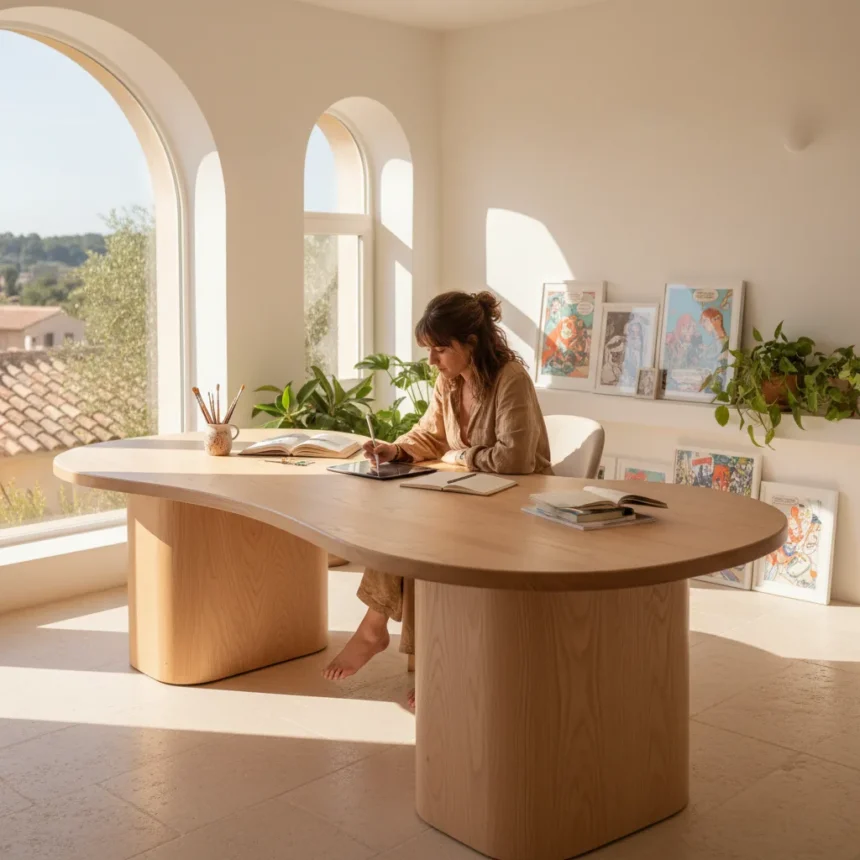
Gretel Lusky, a comics artist based on the Mediterranean coast, has distilled her approach to art studio design into one foundational principle: start with a window. Her studio, which accommodates both drawing and streaming alongside traditional and digital work, demonstrates how natural light and thoughtful spatial planning transform a room into a creative sanctuary.
Key Takeaways
- Natural light from a large window is the core element of inspiring art studio design.
- A curved table running from door to window creates flexible space for two artists working simultaneously.
- Extensive drawer storage accommodates multiple creative hobbies without cluttering the workspace.
- Positioning tools like tablets for immediate visibility reduces friction in creative workflows.
- Separation from home life enables focused, distraction-free work sessions.
Why Natural Light Anchors Art Studio Design
The foundation of Lusky’s art studio design philosophy is deceptively simple: prioritize natural light and views as the core of the space for daily inspiration and motivation. A window is not a luxury feature—it is the anchor that determines workflow, mood, and creative output. Lusky’s Mediterranean location provides consistent daylight, but the principle translates anywhere: position your primary workspace where light enters naturally.
This approach aligns with how other professional artists structure their creative spaces. Mike Butkus, whose studios have evolved from Burbank to Hawaii to Morro Bay, similarly emphasizes dedicated spaces with outdoor views that separate work from home life, allowing for flexible, distraction-free creativity. The common thread is clear: light and visual separation matter more than expensive equipment.
The Curved Table: Flexibility for Multiple Creators
Lusky’s most distinctive design choice is her huge curved table, which runs from the door and curves below the window. This single piece of furniture accommodates her entire drawing and streaming setup while leaving room for a second person to work simultaneously. The curve is intentional—it maximizes the window’s natural light reach across the entire work surface and creates distinct zones without physical barriers.


“When I was setting up this room I knew from the start that I would need a huge table. It runs from the door and curves below the window, and means there’s space for my entire drawing and streaming setup,” Lusky explains. This design choice reflects a broader shift in how creative professionals approach art studio design: flexibility matters more than specialization. A single massive table beats multiple small desks because it accommodates drawing, digital work, and streaming gear in one cohesive space.
Storage That Doesn’t Strangle Creativity
Lusky’s studio includes extensive drawers designed to hold materials from multiple hobbies—paper, yarn, fabric, and basket-weaving supplies—without turning the room into a storage facility. This is where art studio design meets real life: creative people rarely stop at one discipline. Rather than fight this reality, Lusky’s storage strategy embraces it.



“I have lots and lots of drawers, because I tend to pick up a new hobby and where else would I stack all the paper, yarn, fabric and basket-weaving materials?” she says. The lesson here is that good art studio design accounts for creative overflow. Vertical storage, deep drawers, and closed systems keep materials accessible without creating visual chaos. A sewing machine sits on a shelf nearby, ready for creative breaks between drawing sessions—another practical acknowledgment that artistic focus often needs a rest.
Immediate Access: Positioning Tools for Workflow
Small details compound into effective art studio design. Lusky positions her tablet prominently so it is immediately visible upon entering the room. This eliminates the friction of hunting for tools and creates a psychological cue: the moment you walk in, you see what you need to create.
“I love that whenever I enter my room, I can immediately see the tablet waiting for me,” Lusky notes. This principle applies beyond tablets. Placing your most-used tools at eye level, positioning your monitor or drawing surface at arm’s reach, and organizing materials by frequency of use all reduce the small delays that interrupt creative momentum. Art studio design succeeds when the space removes obstacles rather than creating them.
How Does Gretel Lusky’s Studio Compare to Other Artist Spaces?
Lusky’s approach shares DNA with Tofusenshi’s streaming and digital art studio, which similarly combines a huge table with window focus to accommodate multiple creative disciplines. However, Lusky’s Mediterranean location and emphasis on hobby storage differentiate her setup. Other artists like Cheri Wang focus on concept art processes without specifying physical studio architecture, suggesting that art studio design priorities vary by discipline and personal workflow.



What Makes a Window the Foundation of Art Studio Design?
Natural light regulates circadian rhythm, improves mood, and provides consistent color reference for visual work. A window also creates psychological separation—you are looking outward, connected to the world beyond your desk, rather than staring at blank walls. For art studio design, this means your window placement determines everything else: desk orientation, monitor positioning, and even seating height should optimize the light without creating glare.
Can You Build an Inspiring Art Studio in a Small Space?
Lusky’s curved table is large, but the principle scales down. A smaller curved or L-shaped desk positioned below a window still captures natural light and creates distinct work zones. Vertical storage replaces expansive drawers. The core of art studio design—natural light, tool accessibility, and separation from home distractions—works in any size. What matters is intentional placement, not square footage.
Gretel Lusky’s art studio design proves that inspiration is not purchased—it is built. Start with light, add a table that fits your actual workflow, store what you use, and remove what you don’t. The rest follows naturally.
Where to Buy
Wacom Cintiq 24 | Deleter screentones | Copic markers | Wayfinder: The Art of Gretel Lusky | 44% OFFWayfinder:The Art of Gretel Lusky$27.95$50shop now
Edited by the All Things Geek team.
Source: Creativebloq