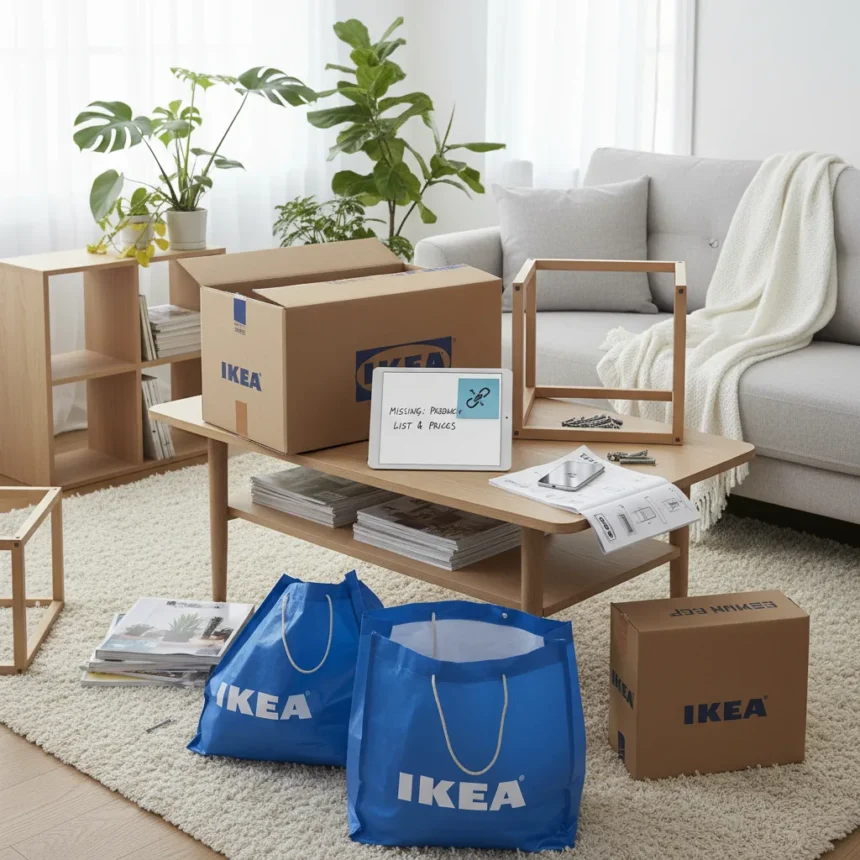
An IKEA spring refresh challenge circulated on Tom’s Guide, claiming to deliver a complete home refresh using 18 affordable finds within a $200 budget. However, the source material does not provide the specific product names, individual prices, or detailed implementation steps needed to evaluate or replicate this IKEA spring refresh.
Key Takeaways
- The IKEA spring refresh challenge promises 18 products for $200 total spending.
- No specific product names, SKU numbers, or individual prices are provided in available sources.
- The challenge lacks step-by-step guidance or before-and-after documentation.
- Readers cannot verify whether the $200 budget is achievable without product details.
- Similar budget home refresh challenges from other retailers offer more transparency.
What the IKEA Spring Refresh Challenge Claims to Deliver
The article title promises a focused outcome: 18 specific IKEA products selected to refresh a home for spring, all within a $200 total budget. This constraint is the article’s central premise. An IKEA spring refresh at this price point would require careful curation, strategic purchasing, and likely focus on small-scale items like textiles, lighting, and decorative accessories rather than furniture. The appeal is clear for budget-conscious readers seeking seasonal updates without major spending.
However, the research brief confirms that the full article content—including the actual list of 18 products, their individual prices, product codes, and purchasing recommendations—is not available in the search results provided. Without these specifics, the article cannot be evaluated on its core promise: whether these 18 items truly exist, whether they cost what the author claims, and whether they genuinely transform a space.
Why Product-Specific Details Matter for Budget Challenges
Budget home refresh articles live or die by specificity. A reader encountering this IKEA spring refresh challenge would want to know: Which exact IKEA products were chosen? What do they cost individually? Can they be purchased together, or are some out of stock? Are there color or size options that affect the final price? Without this information, the article becomes a claim rather than a guide.


Contrast this with how Tom’s Guide typically handles deals content—other articles from the publication provide specific product names, prices, and direct links to purchases. The absence of this detail in the IKEA spring refresh challenge suggests either incomplete indexing by search engines or a gap in the original article’s transparency. Either way, readers cannot act on the information provided.
The Broader Problem: Unverifiable Budget Claims
Budget challenges are popular across home and lifestyle media because they promise achievable transformation. The $200 constraint is aggressive for 18 items—that averages roughly $11 per product. IKEA does sell items in this price range (small plants, picture frames, kitchen utensils, throw pillows), but without knowing the actual selection, it is impossible to assess whether the author prioritized visual impact, functionality, or a mix of both. Did they include large statement pieces or mostly small accents? Were any items on sale or promotion, making the challenge unreplicable at regular prices?



These questions matter because readers will attempt to recreate the refresh. If they cannot find the exact products or discover the prices have changed, frustration follows. A vague promise of 18 affordable finds is less useful than a transparent breakdown showing each item’s name, price, and location in the IKEA catalog.
What Information Is Missing from the IKEA Spring Refresh Challenge
The research brief explicitly states that the complete article content is not available—only a reference to the challenge exists in search results. This means readers cannot access: the full product list with names and SKU numbers, individual prices for each item, photos or descriptions of the selected products, room-by-room breakdown of how items were allocated within the $200 budget, before-and-after images showing the refresh impact, or any commentary on why each product was chosen for a spring refresh specifically.
Without this information, the IKEA spring refresh challenge becomes a headline rather than actionable content. A reader curious about spring home updates cannot follow the author’s logic, compare their own priorities, or decide whether this approach matches their taste and needs.
How This Compares to Other Budget Home Refresh Content
Budget home refresh challenges from other retailers and publications typically provide itemized lists. When a home design article claims to refresh a space for a specific budget, transparency is the baseline expectation. Readers expect to see the exact products, their prices at time of purchase, and ideally links or SKU codes for verification. The IKEA spring refresh challenge, as documented in available sources, falls short of this standard.



Without the product list and pricing breakdown, the article functions more as a teaser than a usable guide. It tells readers that an IKEA spring refresh is possible within $200, but not how to execute it themselves.
Can You Really Refresh Your Home at IKEA for $200?
IKEA’s price range makes a $200 refresh theoretically possible, especially if the focus is on small, high-impact items rather than furniture. Plants, throw pillows, wall art, lighting, and textiles are IKEA staples that cost between $5 and $30 each. Selecting 18 items from these categories could feasibly stay within budget. However, without the specific article details, it is impossible to confirm whether the challenge actually demonstrates this or merely claims it.
What Would Make This Article Useful?
To become actionable, the IKEA spring refresh challenge would need to include a complete product list with names, prices, and links; before-and-after photos showing the refresh in context; a breakdown of which items go in which rooms; and commentary on why these specific products capture spring aesthetics. The article would benefit from transparency about whether prices reflect current IKEA pricing or historical pricing from when the refresh was completed. It should also note any items that may be seasonal and therefore subject to availability changes.
Is the IKEA spring refresh challenge worth following?
Without access to the specific products and prices, it is impossible to recommend this challenge as a reliable guide. The headline is compelling, but the execution details that make budget challenges useful are missing from available sources.
Can you really buy 18 IKEA items for $200?
Mathematically, yes—at an average of $11 per item, this is feasible at IKEA. However, the actual IKEA spring refresh challenge would need to prove this with a real product list and current pricing. Prices fluctuate, availability varies by location, and sales change frequently.
Where can you find the complete IKEA spring refresh product list?
The full article with the 18-item product list and individual prices should be available on Tom’s Guide’s home section, though the complete content is not currently indexed in searchable results. Readers looking to replicate this challenge should visit Tom’s Guide directly and search for the specific article title to access the full product breakdown.
The IKEA spring refresh challenge has potential as a budget home design guide, but it only works if readers can access the complete product list, pricing, and visual context. Without these details, it remains a promise rather than a practical roadmap. For readers serious about refreshing their homes affordably, seeking out articles with transparent product breakdowns and current pricing will deliver far more value than a headline alone.
Edited by the All Things Geek team.
Source: Tom's Guide