





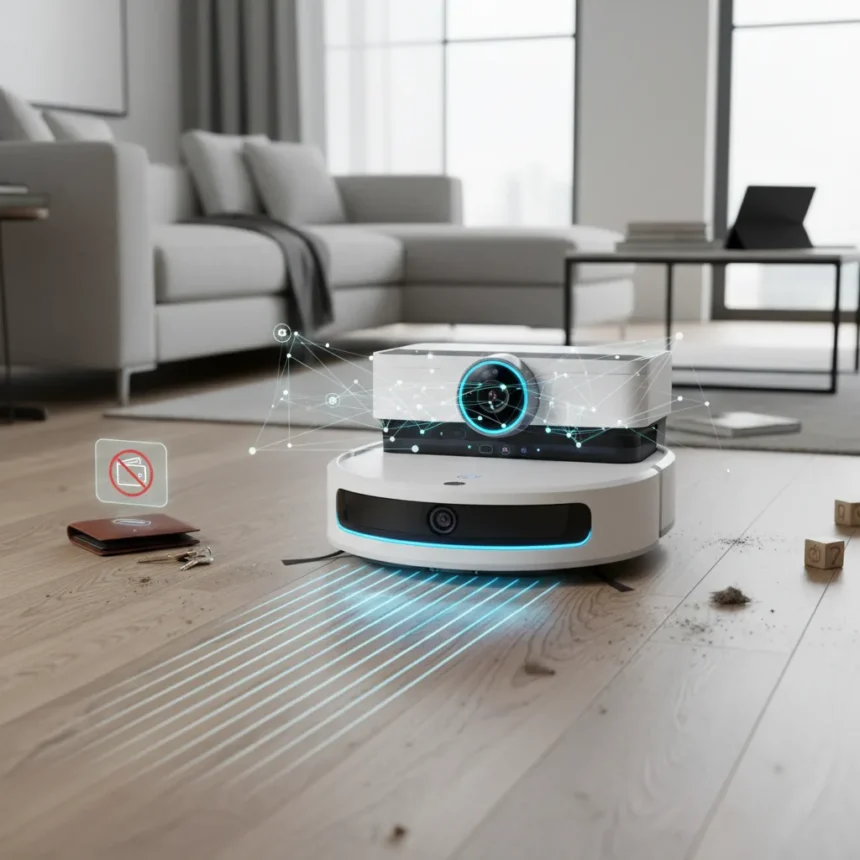
The Narwal Flow 2 is an AI-forward robot vacuum and mop made by Narwal, launching in the US in April as the company’s flagship 2026 model, featuring video cameras and advanced artificial intelligence to assess floor dirtiness and optimize cleaning methods. This is a meaningful shift from traditional robot vacuums that follow preset patterns regardless of actual dirt levels. Instead of blindly mopping every corner, the Flow 2 watches what it is cleaning and adapts in real time.
Key Takeaways
- AI video cameras detect dirt levels and adapt suction, mopping pressure, and cleaning paths automatically
- Object recognition logs dropped items like wallets and tracks their locations during cleaning
- Pet mode enables video calls to pets, plays animal sounds, and increases cleaning in pet areas
- Suction power reaches 22,000Pa with adaptive brush adjustments and deep carpet moonwalk motion
- Hot water mopping with 45°C dock cleaning, sterilization, and up to 120 days between manual dust bag emptying
How the Narwal Flow 2 Uses AI to Clean Smarter
The Narwal Flow 2 uses video cameras and AI-powered object recognition to detect, log, and track dropped items during cleaning. This solves a real problem: you lose your keys or wallet, the robot vacuums them up, and they vanish into the dust bin. The Flow 2 identifies the item, records its location, and alerts you through the Narwal app so you can retrieve it before it gets lost forever. This feature alone makes sense for households with kids, pets, or anyone prone to dropping things.
Beyond object tracking, the AI assesses floor dirtiness in real time. Dirtier areas trigger higher suction, longer contact time, and more aggressive mopping pressure. Cleaner zones get lighter treatment, saving battery and reducing unnecessary wear. The system learns your home’s traffic patterns—high-traffic kitchen versus low-traffic hallway—and adjusts accordingly. This is smarter than robots that run the same cleaning cycle everywhere, wasting energy on already-clean floors.
Specialized Modes for Pets and Babies
The Narwal Flow 2 includes multiple cleaning modes tailored to specific household needs. Pet mode detects pet areas, increases cleaning intensity in those zones, enables video calls to your pets through the robot’s camera, and even plays animal sounds to keep them entertained or calm while it works. For homes with babies, Baby care mode reduces suction noise to avoid waking infants and steers the robot away from play mats and sleeping areas. Toy detection and logging mode tracks dropped toys, so you know where they ended up when the robot finished its run.


These specialized modes reflect a design philosophy that acknowledges different households have different needs. A pet-owning family benefits from targeted cleaning in Fido’s favorite spots. New parents need a quieter machine that respects nap schedules. Generic robot vacuums ignore these realities; the Flow 2 adapts to them.
Cleaning Power and Design Innovations
The Narwal Flow 2 delivers suction power up to 22,000Pa with adaptive brush adjustments and a descending brushroll cover designed specifically for deep carpet cleaning. The robot uses forward and reverse moonwalk motion on thick carpets, a technique that penetrates pile more effectively than single-direction passes. For mopping, it uses a constantly rotating fabric-covered roller fed clean water from an onboard tank, siphoning dirty water to a separate tank for on-the-go self-cleaning. This roller-based approach outperforms standard rotating pads or D-shaped mops because it rotates faster and cleans edges better without smearing.


The low-profile design, inherited from the prior Flow series, allows the robot to clean under furniture where traditional vacuums cannot reach. It features integrated LiDAR navigation, adaptive mop extensions for edges and corners, and a maximum threshold clearance of 1.6 inches (4cm). The dock uses 45°C hot water via 16 anti-clog nozzles, hot air drying, sterilization, and flushing to keep the mop hygienic between runs. Auto-emptying to a 2.5L dust bag means you can go up to 120 days without manual emptying, a quality-of-life feature for busy households.
How the Narwal Flow 2 Compares to Predecessors
The Narwal Flow 2 builds on the prior Narwal Flow, which delivered superb cleaning but suffered from software quirks that frustrated users. The earlier Freo Z Ultra had 20,000Pa suction and 120+ object recognition but showed weaker carpet performance compared to the Flow series. The Flow 2 addresses these gaps: it combines the Flow’s superior carpet handling with the Freo’s object recognition capability, plus new AI dirt assessment that neither predecessor offered. In European pricing, the Flow 2 undercuts premium rivals, though exact figures have not been disclosed.
Smart Home Integration and Privacy
The Narwal Flow 2 supports voice control via Hey Nawa (Narwal’s native voice assistant), Alexa, Google Home, and Siri. The Narwal app lets you customize suction levels, humidity settings, define pet zones, and mark adaptive soiled areas for extra attention. Critically, the robot processes data locally rather than shipping everything to the cloud, protecting your home layout and cleaning habits from external servers. Matter support is promised by the end of the year, which will integrate the Flow 2 more deeply into broader smart home ecosystems. The robot also supports integration with Narwal’s automatic water exchange module for plumbed water management if you want to eliminate manual tank refilling entirely.
Does the Narwal Flow 2 Live Up to the AI Hype?
Promotional claims of super smart AI and the best way to clean lack standardized test data in published reviews, so buyer skepticism is warranted. The prior Flow’s software quirks suggest that Narwal’s software maturity is still developing. Object tracking sounds impressive until you realize it only helps if you actually retrieve the item before it gets vacuumed up—it does not prevent loss, just documents it. Pet mode and baby mode are genuinely useful, but they are refinements rather than revolutionary features. The AI dirt detection is the real innovation here, and it is worth testing in your own home before committing to the price.


Should you buy the Narwal Flow 2?
The Narwal Flow 2 makes sense if you have pets, young children, a messy household, or a tendency to drop small items. The AI dirt assessment and specialized modes justify the cost for these use cases. If you live alone in a tidy apartment and just want a basic clean, a simpler robot vacuum will do the job for less money. The Flow 2 is built for households that want their robot to think, not just move.
When does the Narwal Flow 2 launch in the US?
The Narwal Flow 2 launches in the US in April, though the exact year was not specified in available information. It will be available globally through Narwal’s website and major retailers. Pricing will undercut premium rivals in Europe, but exact figures have not been announced.
What makes the Narwal Flow 2 different from other robot vacuums?
Most robot vacuums follow preset cleaning patterns regardless of actual dirt levels. The Narwal Flow 2 uses video cameras and AI to assess how dirty your floor is and adapts suction, mopping pressure, and contact time in real time. It also logs dropped items, offers pet and baby modes with interactive features, and uses a roller-based mop system instead of standard rotating pads.
The Narwal Flow 2 represents a meaningful step forward in robot vacuum intelligence, even if it is not the revolutionary leap marketing suggests. For the right household—one with pets, kids, or chronic clutter—it solves real problems that generic robots ignore. For everyone else, it is a premium option worth considering only if you value convenience over cost.
Where to Buy
Edited by the All Things Geek team.
Source: TechRadar




