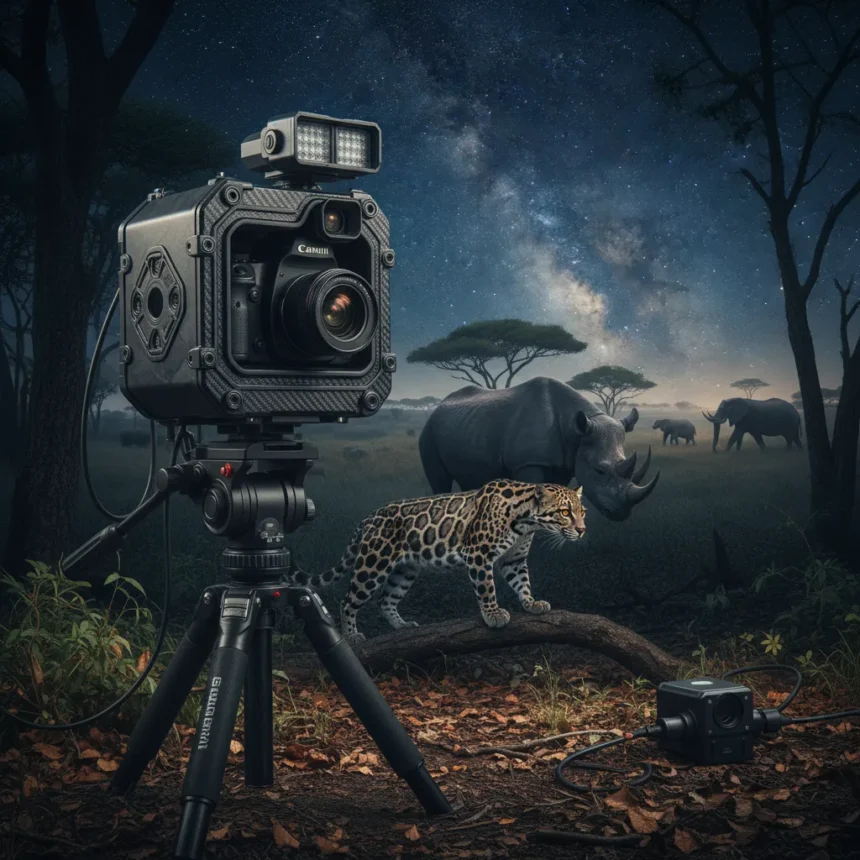
Sascha Fonseca, a German wildlife photographer and Sony World Photography Award 2026 Wildlife category winner, has pioneered camera trap wildlife photography techniques that transformed how researchers document elusive nocturnal creatures in Kenya’s Masai Mara. Working with old secondhand DSLRs converted into custom camera traps, Fonseca captured images of nocturnal animals that stunned park rangers and contributed directly to conservation efforts in one of Africa’s most critical ecosystems.
Key Takeaways
- Sascha Fonseca won the Sony World Photography Award 2026 for Wildlife using affordable secondhand DSLR camera traps.
- Custom camera trap techniques revealed nocturnal species in Kenya’s Masai Mara that surprised experienced rangers.
- Fonseca pioneered bait-free camera trap methods, collaborating with field biologists for ethical wildlife capture.
- His past work documented snow leopards in Ladakh over three years and Amur tigers across multiple continents.
- Camera trap wildlife photography offers accessible conservation tools compared to traditional expensive monitoring systems.
Who Is Sascha Fonseca and Why Camera Traps Matter
Sascha Fonseca is a German wildlife photographer known for using innovative camera trap techniques to document rare and endangered big cats across the globe. His approach differs fundamentally from conventional wildlife photography—rather than pursuing animals in daylight, Fonseca deploys custom-built camera traps that capture nocturnal creatures automatically, revealing behavior invisible to traditional field observation. This method proved especially valuable in the Masai Mara, where rangers discovered that Fonseca’s images documented species activity patterns previously unknown to the conservancy.
The significance of camera trap wildlife photography lies in its non-intrusive nature. By removing the human observer from the equation, these systems capture authentic animal behavior without disturbance. Fonseca’s bait-free approach eliminates another variable, ensuring that the animals documented are following natural movement patterns rather than responding to lures. This ethical methodology distinguishes his work from less scrupulous camera trap operators and aligns with conservation best practices that prioritize animal welfare alongside scientific discovery.
Camera Trap Wildlife Photography Breakthroughs in the Masai Mara
The Masai Mara Conservancy, situated near Tanzania’s Serengeti border, became the testing ground for Fonseca’s customized DSLR camera traps. His discoveries stunned the park’s experienced rangers, who had worked the reserve for decades. The nocturnal images revealed species activity and distribution patterns that conservation teams had not previously documented, directly informing habitat management and anti-poaching strategies across the conservancy. Rangers combating snares and poaching threats found that Fonseca’s data provided concrete evidence of which areas required intensified protection.

What makes Fonseca’s camera trap wildlife photography particularly impressive is the equipment choice. Rather than investing in expensive commercial trail cameras, he repurposed old secondhand DSLRs—affordable, reliable, and customizable. This approach democratizes conservation technology, proving that groundbreaking discoveries do not require latest gear. The customization involved converting these cameras into motion-triggered systems capable of operating continuously in harsh field conditions, a technical achievement that required both engineering skill and deep understanding of animal behavior patterns.
How Camera Trap Wildlife Photography Compares to Traditional Methods
Camera trap wildlife photography fundamentally differs from approaches like the Wildlife Photographer of the Year competitions, which often celebrate single decisive moments captured by photographers in the field. Fonseca’s method accumulates data over time, trading the dramatic single frame for comprehensive behavioral documentation. This distinction matters for conservation—rangers and biologists need sustained evidence of species presence and movement, not just beautiful imagery. Where traditional wildlife photography emphasizes artistic composition and timing, camera trap wildlife photography prioritizes ecological insight.



Fonseca’s bait-free methodology also contrasts with conventional camera trap operators who use attractants to increase capture rates. His collaboration with field biologists ensures that every image documents genuine, unmanipulated animal behavior. This ethical stance, combined with his technical expertise in DSLR customization, positions his work as a model for conservation-focused camera trap wildlife photography rather than purely commercial or entertainment-driven approaches.
Past Achievements and Global Impact
Before his Masai Mara breakthrough, Fonseca had already established himself as a leading figure in big cat documentation. His three-year snow leopard project in Ladakh, India demonstrated his commitment to long-term, ethically rigorous wildlife research. He has also documented Amur tigers across multiple continents, work that has been internationally published to raise awareness for endangered big cat species. These projects established the foundation for his camera trap wildlife photography innovations—years of field experience translated into technical solutions for capturing elusive nocturnal predators.
The Sony World Photography Award 2026 recognition validates not just the artistic quality of Fonseca’s images but the scientific rigor and conservation impact underlying his work. Unlike competitions focused purely on photographic aesthetics, Sony’s award acknowledges how camera trap wildlife photography serves conservation goals while advancing the medium itself. Fonseca’s win signals a broader shift in how the photography industry recognizes contributions to environmental protection.
Why Secondhand DSLRs Work for Camera Trap Wildlife Photography
The choice to use secondhand DSLRs rather than new equipment reflects both practical economics and technical pragmatism. Older DSLR models offer robust build quality, proven reliability, and extensive spare parts availability—crucial factors when deploying cameras in remote habitats where equipment failure means lost data. Customizing these cameras into camera trap wildlife photography systems requires minimal additional investment compared to purpose-built commercial units, making the approach scalable for under-resourced conservation organizations across Africa and Asia.



Fonseca’s technical customization transforms standard cameras into autonomous field researchers. Motion sensors, weatherproofing, and power management systems convert DSLRs into 24/7 monitoring tools capable of operating in the Masai Mara’s challenging environment—extreme temperature swings, dust, and occasional flooding. This engineering approach demonstrates that camera trap wildlife photography innovation need not come from major manufacturers; field-based photographers and conservationists can drive technological advancement through creative problem-solving and iterative improvement.
The Conservation Impact of Camera Trap Wildlife Photography
Rangers at the Masai Mara have leveraged Fonseca’s nocturnal imagery to refine anti-poaching patrols, targeting protection efforts where camera trap wildlife photography data indicates high animal concentration. The species discoveries have also informed habitat restoration priorities, ensuring that conservation resources focus on areas supporting the greatest biodiversity. This direct, measurable impact distinguishes Fonseca’s work from purely artistic endeavors—camera trap wildlife photography becomes a conservation tool, not merely a photography genre.
The broader implication extends beyond the Masai Mara. Fonseca’s success demonstrates that camera trap wildlife photography, executed ethically and scientifically, can unlock conservation insights that benefit entire ecosystems. As poaching pressures intensify across Africa and Asia, affordable, reliable monitoring systems become increasingly critical. His approach offers a scalable model that conservation organizations worldwide can adapt and implement, multiplying the impact of limited funding and personnel.
Can camera trap wildlife photography replace traditional ranger patrols?
Camera trap wildlife photography cannot replace human rangers—it complements them. Traps provide continuous data and evidence of species presence, but rangers interpret that data, conduct patrols, and confront poachers directly. Fonseca’s work strengthens ranger effectiveness by providing intelligence that guides where human effort concentrates most productively. The combination of technology and human expertise defines modern conservation in protected areas like the Masai Mara.
What makes Sascha Fonseca’s camera trap wildlife photography different from commercial systems?
Fonseca’s bait-free methodology and collaboration with field biologists distinguish his camera trap wildlife photography from commercial operators focused on maximizing image quantity. His approach prioritizes ecological authenticity and conservation relevance over entertainment value. The secondhand DSLR customization also demonstrates that camera trap wildlife photography innovation emerges from field experience and technical creativity, not necessarily from expensive commercial products.
How long does a camera trap wildlife photography project typically take?
Fonseca’s snow leopard project in Ladakh spanned three years, illustrating the patience required for meaningful camera trap wildlife photography research. Long-term deployment allows researchers to document seasonal behavior patterns, breeding cycles, and population dynamics that shorter projects miss. The Masai Mara discoveries required sustained effort and iterative refinement of trap placement and customization—camera trap wildlife photography rewards persistence and ecological knowledge.
Sascha Fonseca’s Sony World Photography Award 2026 victory affirms that camera trap wildlife photography, built on affordable equipment and ethical methodology, can deliver conservation breakthroughs that rival—and often exceed—traditional approaches. His work in the Masai Mara proves that innovation in wildlife documentation comes not from the newest gear but from field expertise, technical ingenuity, and unwavering commitment to understanding nocturnal creatures and protecting the ecosystems they inhabit. For conservation organizations worldwide, his example offers both inspiration and a practical blueprint for scaling camera trap wildlife photography efforts across Africa’s most critical reserves.
Edited by the All Things Geek team.
Source: TechRadar