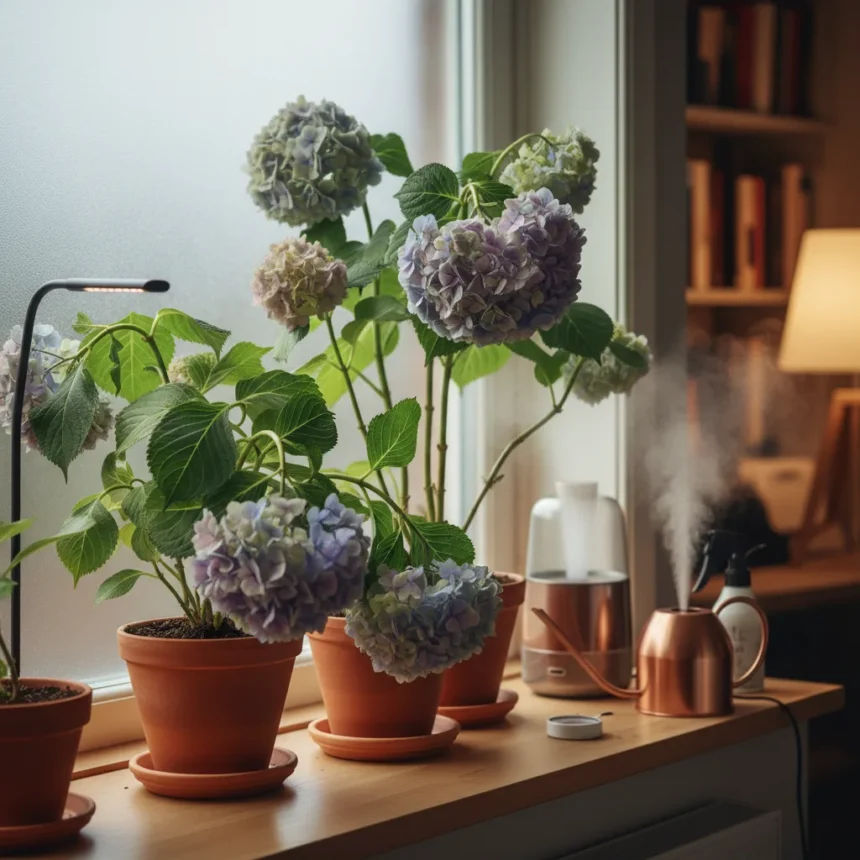
Indoor hydrangeas drooping in winter is not a death sentence—it is a distress signal. These flowering houseplants communicate their needs through their leaves and blooms, and drooping is their way of saying something is wrong. Winter creates the perfect storm for hydrangea stress: dry indoor air, inconsistent watering, poor lighting, and temperature swings all conspire to weaken these finicky plants. The good news is that most wilting reverses quickly once you identify the culprit and act fast.
Key Takeaways
- Drooping hydrangeas signal thirst, humidity loss, or lighting problems—not inevitable death.
- Underwatering is the most common cause; wilting usually reverses within hours of thorough watering.
- Low humidity browns blooms and weakens stems; raise it with a pebble-and-water tray or grouping plants together.
- Well-draining potting mix prevents root rot while allowing proper moisture absorption.
- Bright, indirect light is essential; weak stems often indicate insufficient light exposure.
Why Indoor Hydrangeas Droop in Winter
Indoor hydrangeas face a cascade of winter stressors that outdoor plants avoid. Central heating dries out both soil and air, indoor light is weaker than outdoor conditions, and many gardeners unconsciously underwater during cooler months because they assume plants need less moisture. Yellowing leaves suggest watering problems, weak stems can indicate lighting or overcrowding concerns, and drooping flowers signal thirst or humidity issues. The plant is telling you exactly what it lacks—you just have to listen.
The challenge is that winter stress compounds. A plant that is slightly underwatered and sitting in low humidity will decline faster than one facing just one problem. This is why reviving a drooping hydrangea requires addressing the most likely culprits in sequence, not guessing randomly.
Fix 1: Water Thoroughly and Watch the Recovery Timeline
Underwatering is the most common cause of drooping hydrangeas. Check whether the top inch or two of soil feels dry; if it does, your plant is thirsty. Pour water until it drains from the bottom of the pot, ensuring the entire root ball receives moisture. This is not a casual sprinkle—it is a deep watering that saturates the soil completely.


Here is the timeline: wilting from underwatering usually reverses within hours after watering. By the next morning, a properly rehydrated hydrangea should perk up noticeably. If the plant does not improve by the next day, another issue is at play and you should move to the next fix. This rapid feedback loop is useful because it tells you whether thirst was the problem or whether you need to address humidity, lighting, or drainage instead.
Fix 2: Raise Humidity to Stop Browning and Wilting
Low humidity is winter’s invisible killer. Hydrangeas need moisture in the air as much as in the soil. When humidity drops below what these plants prefer, blooms brown and stems weaken even if the soil is moist. The fix is simple: place the pot on a tray filled with pebbles and water, keeping the water level just below the pebbles so the pot does not touch the water directly. As water evaporates, it creates a humid microclimate around the plant without waterlogging the roots.



If browned blooms are already present, trim them off. Damaged flowers should be removed because they encourage the plant to focus energy on healthy growth rather than trying to save unsalvageable blooms. You can also group hydrangeas together with other houseplants to increase the humidity around all of them—a cluster of plants creates a more humid microenvironment than a single isolated pot.
Fix 3: Use Well-Draining Soil to Prevent Root Rot
Hydrangeas need moisture but will not tolerate waterlogged roots. The soil you use determines whether water nourishes the plant or suffocates it. Use well-draining potting mix designed specifically for indoor plants. If you have standard potting soil on hand, improve it by adding perlite to increase drainage and aeration. This prevents the root rot that can occur when water sits stagnant in dense soil, a common winter problem when evaporation slows and moisture lingers longer than the plant can tolerate.
The right soil balance is crucial: it should retain enough moisture to hydrate the plant between waterings but drain quickly enough that roots never sit in standing water. This is why general-purpose potting soil often fails for hydrangeas—it is too dense and holds water too long.
Fix 4: Provide Bright, Indirect Light
Weak stems and slow recovery often point to insufficient light. After watering, keep the hydrangea in bright, indirect light. During winter, when outdoor light is already weak, indoor plants suffer from a double blow: less daylight hours and lower light intensity. A south-facing window is ideal in the Northern Hemisphere; an east or west-facing window works if south-facing is unavailable. Avoid direct afternoon sun, which can scorch leaves, but do not hide the plant in a corner either. Weak light leads to weak stems and slower growth, making the plant more susceptible to stress and disease.



Why Your Hydrangea Is Still Drooping: Troubleshooting Beyond the Basics
If you have watered thoroughly, raised humidity, improved drainage, and provided good light and the plant is still drooping by day two or three, look deeper. Overcrowding can stress hydrangeas—if multiple plants are crammed into a small space competing for light and air circulation, individual plants suffer. Ensure each hydrangea has room to breathe. Temperature swings also matter; hydrangeas prefer stable conditions and react poorly to drafts from heating vents or cold windows. Move the plant away from direct heat sources and cold drafts if possible.
Can I Save a Severely Drooping Hydrangea?
Yes, but speed matters. The sooner you address the problem, the faster recovery happens. A plant that has drooped for only a day or two will bounce back quickly once you fix the underlying issue. A plant that has been neglected for weeks may take longer and could lose some blooms permanently. This is why catching the problem early—noticing the first signs of wilting before the plant fully collapses—makes a real difference in how quickly you can revive it.
What is the best way to water indoor hydrangeas in winter?
Water thoroughly when the top inch or two of soil feels dry, pouring until water drains from the bottom of the pot. This ensures the entire root ball gets moisture. Underwatering is the most common winter mistake because gardeners assume plants need less water when it is cold, but indoor heating dries out soil rapidly. Check soil moisture regularly rather than watering on a fixed schedule.
How long does it take for a drooping hydrangea to recover?
If underwatering is the cause, wilting usually reverses within hours of thorough watering. If the plant does not perk up by the next day, another issue—likely humidity, lighting, or drainage—is responsible and needs to be addressed separately. Do not assume the plant is dying if recovery takes a day or two; patience and consistent care will bring it back.
Winter stress on indoor hydrangeas is real, but it is also fixable. Most drooping plants recover quickly once you address the specific cause—whether thirst, humidity loss, poor drainage, or weak light. The key is to act fast, water thoroughly, and monitor progress over the next 24 hours. If your hydrangea still looks wilted after two days of proper care, you have identified a secondary problem and can tackle it with confidence.
Edited by the All Things Geek team.
Source: Tom's Guide