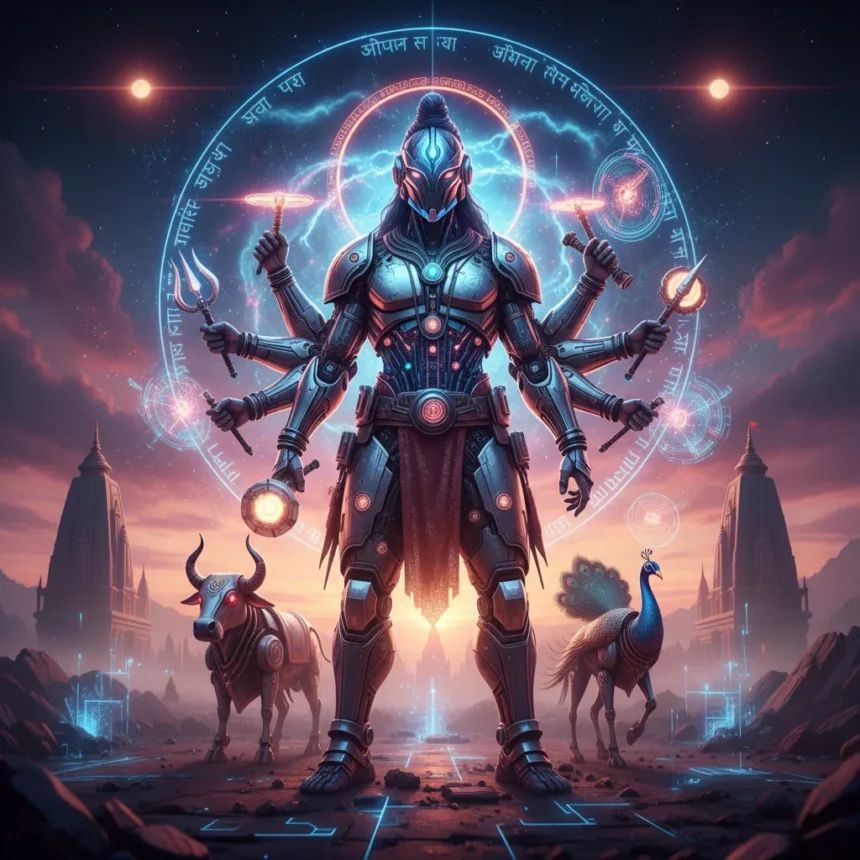
Mythology digital art is experiencing a renaissance as contemporary artists reimagine ancient cultural narratives through modern 3D and compositing tools. Devesh Pariyani, a digital artist, is at the forefront of this movement, leveraging Blender and Photoshop to transform Hindu iconography into visually striking works that marry timeless spiritual imagery with latest cinematic aesthetics.
Key Takeaways
- Devesh Pariyani reimagines Hindu iconography using Blender for 3D modeling and Photoshop for compositing
- Mythology digital art combines ancient cultural narratives with contemporary visual techniques
- The fusion of cinematic futurism and sacred imagery creates a distinctive artistic voice
- Blender and Photoshop enable artists to blend 3D environments with 2D illustration and effects
- This approach demonstrates how traditional cultural symbols can be reinterpreted for modern audiences
Why Mythology Digital Art Resonates Today
Mythology digital art has become increasingly relevant as audiences seek deeper connections between cultural heritage and contemporary visual language. By reimagining Hindu iconography through digital tools, artists like Pariyani create works that honor traditional narratives while speaking to modern sensibilities. This intersection appeals to viewers who appreciate both spiritual significance and technical artistry, making mythology digital art a compelling category for both fine art and commercial projects.
The trend reflects a broader shift in digital art toward worldbuilding and myth-based narratives. Rather than treating ancient imagery as static reference material, contemporary artists use 3D modeling, lighting, and compositing to breathe new life into these stories. The result is work that feels simultaneously reverent and innovative, grounded in cultural tradition yet visually futuristic.
The Blender and Photoshop Workflow
Pariyani’s process centers on the complementary strengths of Blender and Photoshop. Blender serves as the foundation for 3D modeling and environment creation, allowing precise control over form, lighting, and spatial composition. Photoshop then enters the pipeline for refinement, compositing multiple layers, adjusting color grading, and integrating hand-painted or illustrative elements that add warmth and humanity to the digital constructions.


This hybrid 2D-3D approach has become standard among artists seeking to blend mythology digital art with cinematic production values. Blender’s open-source accessibility and robust rendering capabilities make it ideal for creating complex mythological scenes, while Photoshop’s flexibility in layering and effects allows for the subtle, nuanced finishes that distinguish professional work from purely algorithmic output. The workflow demands technical proficiency in both tools but rewards artists with unparalleled creative control.
Reimagining Sacred Imagery for New Audiences
At its core, Pariyani’s work demonstrates how mythology digital art can serve as a bridge between traditional cultural knowledge and contemporary visual consumption. Hindu iconography carries centuries of symbolic meaning—color, gesture, proportion, and narrative context all carry weight. By translating these elements into immersive digital environments, the artist makes these narratives accessible to global audiences while maintaining their spiritual and cultural integrity.



The cinematic approach adds production value that captures attention in crowded digital spaces. Where a traditional illustration might be passed over in a social media feed, a fully rendered 3D scene with atmospheric lighting and dramatic composition commands engagement. This is not superficial enhancement—it is strategic translation. The mythology digital art gains new dimensions of storytelling through scale, environment, and visual drama, inviting viewers to experience sacred narratives as immersive worlds rather than flat images.
Technical Considerations for Artists
For artists considering mythology digital art as a practice, the technical barrier is lower than ever. Blender is free and community-supported, with abundant tutorials and resources. Photoshop remains the industry standard for compositing and digital painting, though alternatives exist. The real challenge lies not in tool access but in developing a coherent artistic voice—understanding how to balance historical accuracy with creative interpretation, how to use cinematic techniques without overwhelming cultural significance, and how to iterate efficiently across both 3D and 2D workflows.
Pariyani’s approach suggests that mastery requires sustained engagement with both the technical and conceptual sides of mythology digital art. Understanding the mythological source material as deeply as understanding the software is essential. This dual expertise separates work that feels respectfully grounded from work that treats cultural imagery as mere aesthetic material.
Is mythology digital art just a trend?
Mythology digital art reflects a sustained shift toward narrative-driven, culturally informed creative practice rather than a fleeting trend. As digital tools mature and audiences increasingly consume visual media, the demand for work that merges storytelling with technical sophistication continues to grow. Artists like Pariyani are establishing this category as a legitimate and respected discipline within digital art.



What makes Blender and Photoshop the right tools for this work?
Blender excels at creating complex 3D environments and lighting scenarios that ground mythological narratives in believable worlds. Photoshop provides the compositing flexibility and hand-finishing capabilities that add artistic personality to technically rendered scenes. Together, they enable the hybrid workflow that defines contemporary mythology digital art.
Can beginners create mythology digital art?
Yes, but with caveats. Beginners can learn Blender and Photoshop through free resources and create mythology digital art, but developing a distinctive artistic voice requires time, cultural research, and iterative practice. Starting with simpler compositions and gradually building complexity is a proven path.
Devesh Pariyani’s work exemplifies how mythology digital art can honor cultural heritage while pushing visual boundaries. By mastering Blender and Photoshop and committing to thoughtful interpretation of sacred narratives, artists can create work that resonates across cultures and generations—proof that ancient stories remain vital when told through contemporary tools.
Edited by the All Things Geek team.
Source: Creativebloq