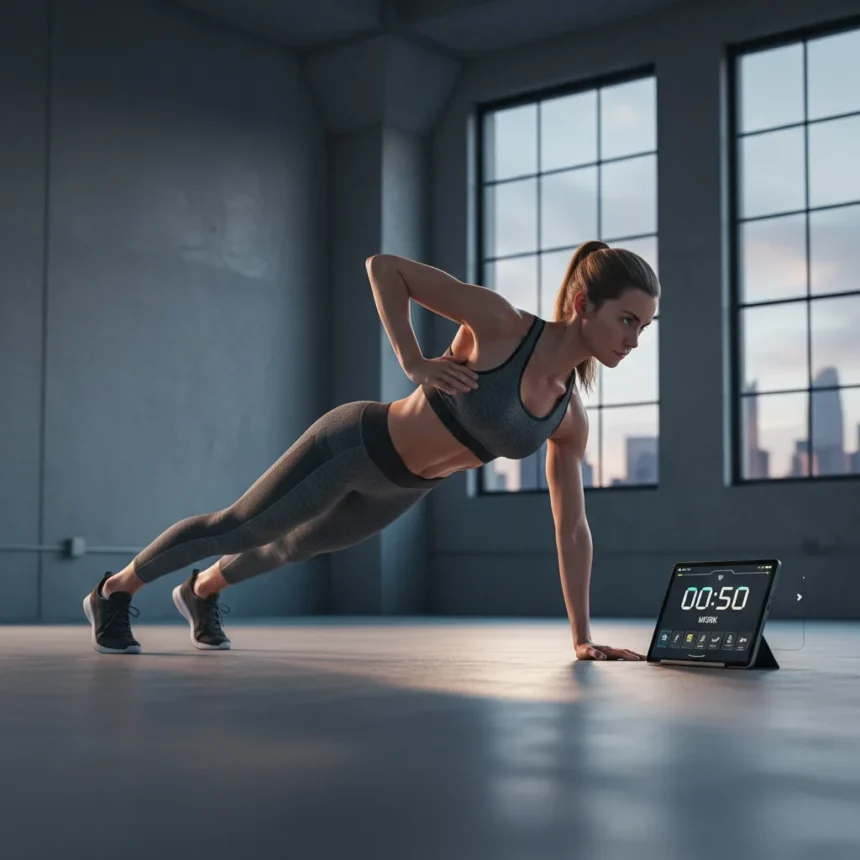
A 7-minute no-equipment core workout sculpts abs and obliques using seven distinct exercises performed back-to-back in a 50-second work, 10-second rest format with zero repeats. Created by physiotherapist and Pilates instructor Lilly Sabri, this routine proves that effective core training doesn’t require dumbbells, machines, or a gym membership—just bodyweight and seven minutes of focused intensity.
Key Takeaways
- Seven unique exercises, each 50 seconds work and 10 seconds rest, no repeats in the entire routine.
- Created by physiotherapist and Pilates instructor Lilly Sabri for targeted abs and oblique engagement.
- No equipment required; a yoga mat is optional for comfort but not necessary.
- Testers reported intense lower abs and core activation, with muscles still shaking after completion.
- Shorter alternative to 10-minute and 30-minute core routines, ideal for time-constrained schedules.
Why This 7-Minute No-Equipment Core Workout Stands Out
The structure of this 7-minute no-equipment core workout eliminates the mental fatigue of repeating the same movements. Seven different exercises mean your muscles don’t adapt to a single pattern, forcing continuous engagement across different angles and stabilization demands. One tester performed the routine post-run on a yoga mat and reported abs still shaking afterward, indicating the intensity targets lower abs and deep core stabilizers.
The 50-second work intervals are long enough to build serious muscle tension but short enough to maintain form without complete exhaustion. The 10-second rest periods allow minimal recovery—just enough to transition to the next exercise and reset your breathing. This format creates metabolic stress without requiring equipment or complex setup, making it accessible for hotel rooms, small apartments, or outdoor spaces.
How This 7-Minute No-Equipment Core Workout Compares to Longer Alternatives
A 10-minute no-equipment abs workout by Oliver Sjostrom includes 10 moves such as leg raises, sit-ups, and bicycle crunches for core strength and balance, with repeats built into the structure. That approach trades time efficiency for exercise variety. A 30-minute equipment-free core workout by Caroline Girvan mixes sit-ups, crunches, leg raises, and holds for upper and lower abs and obliques, with beginner modifications and longer time investment.

The 7-minute format sits in a practical sweet spot. It’s aggressive enough to trigger real muscle activation without requiring an hour of your day. If you’re juggling work, family, or training for another sport, seven minutes is a legitimate commitment you’ll actually repeat consistently. Longer routines often become weekend-only workouts; shorter ones become daily habits.
What You Need to Know About Results and Consistency
Visible abdominal sculpting depends on three factors: the workout itself, your diet, and your body composition. This 7-minute no-equipment core workout addresses the first factor—it activates and strengthens the rectus abdominis and obliques intensely. But sculpting visible abs requires consistent caloric balance and body fat reduction, which the workout alone cannot achieve. Think of it as one tool in a larger system.



The no-repeat structure also means you can perform this routine daily without overtraining a single movement pattern. Your core muscles recover faster than larger muscle groups, and the variety prevents repetitive strain. Many people add this to their existing training as a finisher after strength work or cardio, rather than as a standalone program.
Equipment and Space Requirements
A yoga mat is optional for comfort—it cushions your spine during floor-based exercises and provides grip for stability. Hardwood or tile floors work fine if you have a towel or cushion. That’s the entire equipment list. No dumbbells, resistance bands, medicine balls, or machines required. You need roughly six feet by three feet of clear space and enough ceiling height to move without restriction.
Is This 7-Minute No-Equipment Core Workout Suitable for Beginners?
The brief does not specify beginner modifications for this particular routine. If you’re new to core training, start with a lower-intensity alternative such as the 10-minute plank-free core workout by FitByMik, which includes 10 exercises in 50-second work and 10-second rest intervals. Once you’ve built baseline core strength over two to three weeks, the seven-exercise format becomes more manageable.
Can You Do This Workout Every Day?
Yes. The variety of seven unique exercises and the short duration make daily repetition sustainable. Your core muscles recover faster than larger muscle groups, so daily activation is safe for most people. However, if you experience sharp pain (not muscle burn), stop and consult a physiotherapist before continuing.



How Does This Compare to Sit-Up and Crunch-Heavy Routines?
Traditional sit-up and crunch routines focus primarily on the rectus abdominis, the front-facing ab muscle. This 7-minute no-equipment core workout targets both abs and obliques simultaneously, engaging the muscles along your sides that stabilize rotation and lateral flexion. That integrated approach produces more functional core strength and a more complete aesthetic result than isolation exercises alone.
The 7-minute no-equipment core workout delivers real results for people with limited time and no access to a gym. Seven unique exercises, zero repeats, and intense 50-second intervals create the metabolic stress your core needs to grow stronger. But remember: the workout is only the beginning. Pair it with consistent nutrition and patience, and you’ll see genuine changes in core strength and definition within four to six weeks of daily practice.
Edited by the All Things Geek team.
Source: Tom's Guide