Three simple at-home bodyweight exercises for seniors brain aging may offer measurable cognitive benefits, according to a personal trainer who specializes in older adults. The routine—squats, push-ups, and glute bridges—requires no equipment and can be performed in a home setting, making it accessible for people with mobility constraints or those who prefer not to visit a gym.
Key Takeaways
- Squats, push-ups, and glute bridges are three bodyweight exercises targeting brain health in seniors.
- These exercises require no equipment and can be done at home.
- The routine is designed specifically for older adults by a personal trainer.
- Physical activity may support cognitive function and reduce age-related decline.
- Bodyweight exercises offer a low-cost alternative to gym-based training.
Why Brain Health Matters for Older Adults
Physical exercise plays a significant role in maintaining cognitive function as we age. The connection between movement and brain health is well-established in fitness coaching for seniors. When muscles contract during resistance exercises, they send signals that support neural pathways and blood flow to the brain. This is why a personal trainer working with older populations emphasizes strength work alongside traditional cardio.
The claim that exercises for seniors brain aging could reduce brain aging by two years reflects the potential impact of consistent physical activity on cognitive markers. Seniors who maintain regular strength routines often report sharper memory, better focus, and improved mental clarity compared to sedentary peers. The three-exercise routine targets major muscle groups—legs, chest, and glutes—which are crucial for maintaining functional independence and supporting overall metabolic health.
The Three Exercises for Seniors Brain Aging
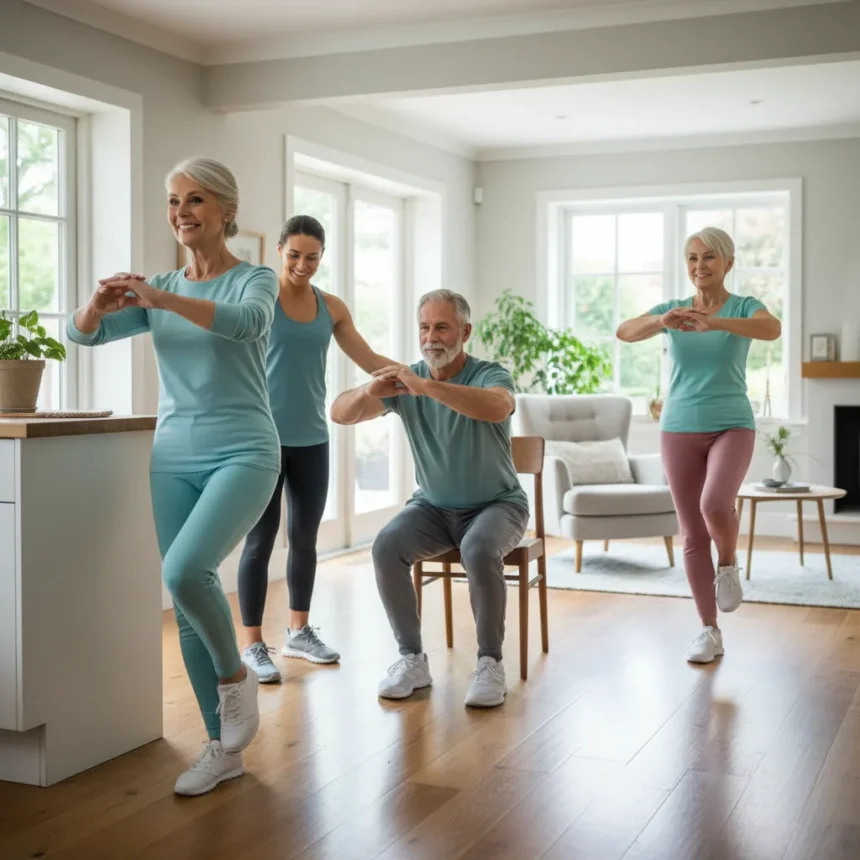
Squats form the foundation of this routine. This lower-body movement engages the quadriceps, hamstrings, and glutes, which are the largest muscle groups in the body. For seniors, squats improve leg strength and balance, both essential for preventing falls. Begin by standing with feet shoulder-width apart, lower your hips back and down as if sitting into a chair, then press through your heels to return to standing. Control the descent—do not drop quickly, as this strains the knees.

Push-ups come next, targeting the chest, shoulders, and triceps. Seniors who are new to push-ups or returning from injury can modify by performing them against a wall or on an elevated surface like a sturdy bench, which reduces the load on the upper body while building strength. Start with hands slightly wider than shoulder-width, lower your body until your chest nearly touches the surface, then press back up. Keep your core tight throughout the movement.
Glute bridges activate the posterior chain—the glutes, hamstrings, and lower back. This exercise is particularly valuable for seniors because it counteracts the effects of prolonged sitting and strengthens the muscles needed for standing, climbing stairs, and maintaining posture. Lie on your back with knees bent and feet flat on the floor, then drive through your heels to lift your hips toward the ceiling. Squeeze your glutes at the top, then lower with control. These three movements work synergistically to build functional strength while supporting the neurological benefits associated with resistance training.



How Bodyweight Training Compares to Other Senior Fitness Approaches
Bodyweight exercises offer distinct advantages over machine-based or equipment-dependent routines. Unlike resistance machines found in gyms, bodyweight movements engage stabilizer muscles and require the body to manage its own weight, which builds practical, real-world strength. A senior performing squats at home uses the same muscles needed to stand from a chair or climb stairs—a direct carryover to daily life that machines cannot replicate. Additionally, bodyweight training eliminates barriers to consistency: no gym membership, no travel time, no equipment purchases. This accessibility matters because adherence is the single greatest predictor of fitness success. A routine someone actually does at home beats a theoretically superior program gathering dust at a gym.
Safety Considerations for Seniors Starting This Routine
Before beginning any new exercise program, especially if you are a beginner, returning from injury, or managing a chronic condition, consult a qualified healthcare provider or certified fitness professional. This is particularly important for seniors with joint concerns, cardiovascular conditions, or balance issues. Form accuracy prevents injury—poor squat depth or rounded lower back during push-ups can cause pain or strain. Start with fewer repetitions and focus on controlled movement. If an exercise causes sharp pain, stop immediately and seek guidance. Modifications exist for every fitness level: wall push-ups, elevated glute bridges, and partial-range squats allow you to build strength safely while you progress toward full versions of each movement.
Frequently Asked Questions
How often should seniors do these exercises for brain aging benefits?
Consistency matters more than frequency. Most fitness professionals recommend strength training two to three times per week, with at least one rest day between sessions to allow muscles to recover. Starting with two sessions weekly and progressing to three is a sustainable approach for seniors. Even brief sessions—10 to 15 minutes—provide meaningful benefits when performed regularly over weeks and months.
Can seniors with limited mobility modify these exercises?
Yes. Wall push-ups reduce load on the upper body, partial-range squats (not lowering as deeply) decrease knee stress, and glute bridges can be performed with feet elevated on a low surface for easier execution. The goal is to move with control and build strength progressively. As mobility improves, you can increase range of motion and difficulty.



Do these exercises require any equipment?
No. Squats, push-ups, and glute bridges are pure bodyweight movements that require no equipment. You only need a clear floor space and, optionally, a sturdy chair or wall for modifications. This makes the routine genuinely accessible for at-home practice without any purchase or setup required.
The three-exercise routine—squats, push-ups, and glute bridges—represents a practical, evidence-informed approach to supporting brain health and functional fitness in older adults. No equipment, no gym membership, no excuses. Start slow, prioritize form, and commit to consistency. The brain benefits of regular strength training compound over time, making this simple routine a worthwhile addition to any senior’s weekly schedule.
Edited by the All Things Geek team.
Source: Tom's Guide