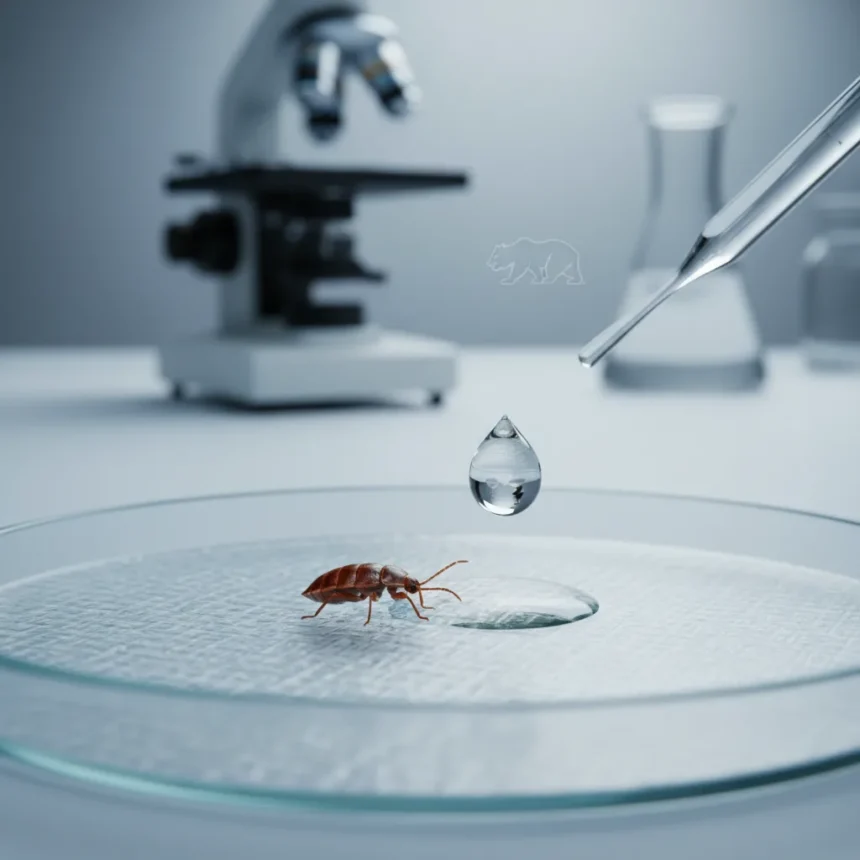
Bed bug water aversion has emerged as a surprising discovery from University of California, Riverside entomology research, but the implications for DIY pest control are far narrower than headlines suggest. A study titled “Water is bed bugs’ kryptonite” by UCR professor Dong-Hwan Choe, published in the Journal of Ethology, documents how bed bugs actively flee wet surfaces—a behavior rooted in their physiology, not a silver bullet for infestations.
Key Takeaways
- Bed bugs have extremely flat bodies with tiny respiratory openings called spiracles that water can block, causing suffocation.
- All tested bed bugs—males, females, young, and old—avoided wet surfaces faster than they approached them.
- The aversion was discovered accidentally during artificial feeding experiments when a membrane leak soaked the paper substrate.
- Water’s high surface tension and adhesive power trap bed bugs physically, not through toxicity.
- A bath can remove bed bugs from skin, but water alone cannot eradicate an infestation.
Why Bed Bugs Fear Water
Bed bugs are engineering marvels of desiccation—their flattened bodies and impermeable cuticles allow them to survive months without feeding and withstand extreme dehydration. But this same physiology makes them catastrophically vulnerable to water. “If a bed bug steps onto a wet surface, it risks getting stuck. Once stuck, the water can block its spiracles suffocating the insect,” Choe explained. The insects’ spiracles, located on their bellies or sides of their abdomens, are respiratory openings that water’s adhesive power can seal shut. What makes this discovery particularly striking is that bed bugs evolved extreme aversion to moisture despite their remarkable desiccation tolerance—they lose 30-40% of their body water before dying, yet they panic at the prospect of encountering a wet surface.
The accidental discovery happened during routine lab work. Choe’s team was using artificial membranes to feed bed bugs when a leak soaked the paper substrate. Rather than approaching the damp area to feed on blood, the bed bugs fled. Subsequent controlled tests with plain water confirmed the pattern: bed bugs performed rapid U-turns and retreated faster than they approached when encountering wet surfaces. This behavior held consistent across all tested specimens—males, females, nymphs, and adults—though younger bugs showed greater sensitivity than older ones. The finding challenges conventional wisdom about bed bug resilience and suggests their water aversion is a deeply embedded survival instinct, not a learned behavior.
What the Study Actually Proves About Bed Bug Water Aversion
The research establishes that bed bug water aversion is real and measurable, but it does not prove that water kills infestations. “Due to its strong adhesive power, water could be very dangerous from a bedbug’s perspective. So, it is not surprising to learn that they’re extremely averse to moisture,” Choe noted. The distinction matters enormously for pest control. A wet surface forces bed bugs to choose between contact and retreat—they choose retreat. But infestations live in mattress seams, baseboards, electrical outlets, and wall voids where water cannot reach. The study’s practical application is personal protection: “Take a bath. It’ll solve the problem,” Choe advised for removing bed bugs from your body. This addresses the immediate discomfort of active infestation on skin, not the infestation itself.

The research also reveals why bed bugs are so difficult to eradicate through conventional means. Their bodies have evolved multiple redundancies for water conservation: a net transpiration rate below 0.2% per hour, an impermeable cuticle that prevents water loss, and an inability to absorb water vapor from humid air. These adaptations mean bed bugs can survive in dry environments for extended periods—but they also mean they avoid moisture at all costs. This creates a paradox: the very physiology that makes them drought-resistant also makes them water-averse, yet neither property translates into an easy DIY control method.
Why Water Alone Won’t Solve Your Infestation
The gap between lab behavior and real-world infestation control is substantial. Bed bugs hide in locations where water cannot penetrate: deep within mattress layers, behind baseboards, inside electrical outlets, and within wall cavities. Pouring water into these spaces would damage your home and still miss most of the population. Additionally, bed bugs aggregate in tight clusters during the day and enter prolonged quiescence—a state of minimal activity—which further insulates them from surface-level interventions. Even if you soaked an entire mattress, eggs and sheltered adults in interior folds would survive. The water aversion behavior tells us something true about bed bug physiology but something misleading about pest control strategy.



Professional pest control typically relies on insecticides, heat treatments, or combined approaches because these methods reach bed bugs in their hiding places. The UCR study contributes to our understanding of bed bug vulnerability but does not replace these proven techniques. Taking a bath removes bed bugs from your skin. Washing bedding in hot water helps reduce populations in fabric. But neither action addresses the infestation in your walls, furniture, or mattress structure. The research is scientifically valuable—it reveals a genuine weakness in bed bug physiology—but translating that weakness into practical control requires methods that deliver water or other agents directly to where bed bugs hide.
What This Discovery Means for Pest Control Going Forward
The UCR research opens avenues for future innovation in bed bug control that the current study itself does not pursue. Understanding that bed bugs have extreme aversion to water might inform new delivery mechanisms, targeted moisture treatments, or environmental modifications that make spaces inhospitable to infestations. For now, the study’s primary value is educational: it explains why bed bugs behave as they do and validates a piece of their biology that had gone undocumented. It also corrects a widespread misconception that bed bugs are universally resilient—they are resilient to starvation and desiccation, but they are not resilient to water contact.
The accidental nature of the discovery underscores how much we still do not know about common household pests. Choe’s team stumbled upon bed bug water aversion during routine feeding experiments, not through targeted investigation. This suggests other behavioral or physiological vulnerabilities may exist, waiting for the right experimental setup to reveal them. Until then, bed bugs remain among the most difficult pests to eradicate, and the water aversion finding—while scientifically elegant—remains a curiosity rather than a practical solution for infested homes.
Does taking a bath really eliminate bed bugs from your body?
Yes. Bed bugs on your skin will flee from water due to their extreme aversion to moisture and the risk of getting stuck on wet surfaces. A bath removes active bed bugs from your body, though it does not address the infestation in your home. You should also wash your clothes and bedding in hot water to reduce populations in fabric.



Can I use water to treat my mattress for bed bugs?
Water alone cannot eradicate a mattress infestation because bed bugs hide deep within layers and seams where water cannot penetrate. While washing bedding in hot water helps reduce populations in fabric, professional heat treatments or insecticide applications are necessary to eliminate infestations in mattress structures and surrounding furniture.
Why are bed bugs so afraid of water if they can survive dehydration?
Bed bugs evolved extreme desiccation tolerance to survive months without feeding, but this same physiology makes them vulnerable to water’s adhesive power, which can block their spiracles and cause suffocation. Their water aversion is a separate survival instinct that protects them from a different threat—physical entrapment rather than drying out.
The UCR discovery of bed bug water aversion is a genuine scientific finding that advances our understanding of pest biology. But it should not be mistaken for a breakthrough in pest control. Water reveals a real vulnerability in bed bug physiology, yet practical infestation control still requires professional intervention or targeted heat and chemical treatments that reach bed bugs in their hiding places. The research is most valuable as a foundation for future innovation, not as a DIY solution for current infestations.
Where to Buy
30% OFFHarrisDiatomaceous Earth (5lb)$27.99$39.99shop now | 15% OFFLinenspaZippered Mattress Encasement (twin)$21.24$24.99shop now | 36% OFFFEPPOMattress Vacuum$69.99$109.99shop now | 51% OFFOrthoBed Bug Traps$9.28$18.99shop now
Edited by the All Things Geek team.
Source: Tom's Guide