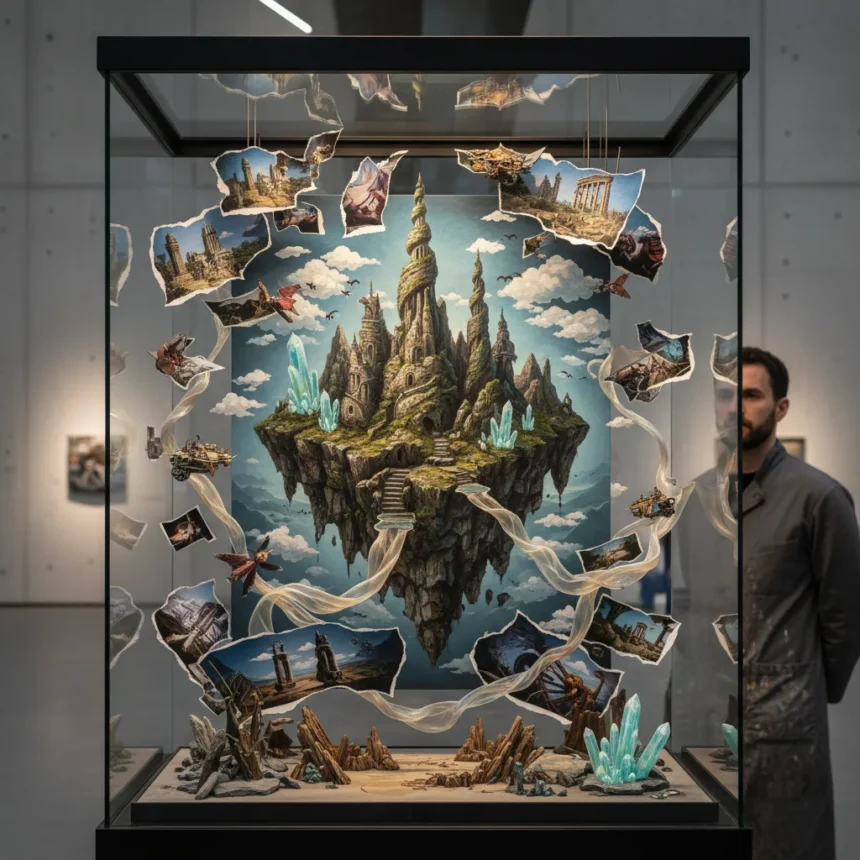
Daniel Katz creates oil painting fantasy scenes by merging traditional oil paints, photographs, and sculptural elements into a single cohesive vision. His approach challenges the boundaries between painting and photography, producing works that deceive the eye while satisfying the imagination. Rather than treating these mediums as separate disciplines, Katz treats them as collaborative tools in service of a singular artistic goal: making the impossible look utterly real.
Key Takeaways
- Daniel Katz combines oil paints, photos, and sculpture to produce realistic fantasy scenes that merge mediums smoothly.
- Artists using this blended approach spend months perfecting color matching and texture layering to achieve optical illusions.
- Oil painting fantasy scenes demand patience and technical skill, with some works requiring 3 to 10 months of focused work.
- The technique creates “real-life Photoshop” effects where everyday objects blend into skin or surroundings for maximum visual impact.
- This hybrid approach has resonated globally, with artists like Milly Bampini gaining viral attention for their optical illusion work.
How Oil Painting Fantasy Scenes Merge Reality and Imagination
The core appeal of oil painting fantasy scenes lies in their deceptive realism. Katz’s work demonstrates that when you layer oil paint with photographic source material and three-dimensional sculptural elements, the viewer’s brain struggles to categorize what it is seeing. Is it a painting? A photograph? A sculpture? The answer is yes to all three, and that ambiguity is precisely what makes the work compelling. The technique forces viewers to look twice, then three times, examining the surface for brushstrokes or seams that might reveal the artist’s hand.
This blending approach requires meticulous color and texture matching. Artists working in this style must understand how oil paint reflects light differently than photographic emulsion, and how a three-dimensional sculptural element casts shadows that a painting must replicate convincingly. The technical challenge is not simply copying what you see—it is making the impossible elements (a fantasy creature, an impossible landscape, an object merging into skin) look as photographically real as the mundane elements surrounding them. That contradiction is the magic.
The Time Investment Behind Oil Painting Fantasy Scenes
Creating oil painting fantasy scenes is not a quick process. Artists working at this level of detail and realism typically invest months in a single piece. The layering process alone—building up translucent glazes of oil paint, allowing each layer to cure, then adding the next—demands patience that digital artists rarely encounter. Unlike digital work, where undo is a keystroke away, oil painting requires confidence. Once a layer is down and has begun to set, major changes become difficult without compromising the work beneath.

The process is less a predetermined march toward a finished image and more an extended conversation between artist and material. One veteran painter described the approach as intuitive: “I’m an intuitive painter, with no real process, I usually invent things as I go along – every painting becomes one big experiment.” This philosophy extends to oil painting fantasy scenes, where the artist must respond to unexpected interactions between paint, photograph, and sculptural form. A color that looked right in isolation may shift when placed next to a photographic element. A sculptural detail may catch light in a way the artist did not anticipate, requiring adjustment to the surrounding painted areas.
Oil Painting Fantasy Scenes vs. Digital Fantasy Art
The comparison between oil painting fantasy scenes and digital fantasy work reveals why traditional media still captivates audiences. Digital artists can achieve photorealism through software, but the process feels algorithmic—the computer is doing the blending, the color correction, the final polish. With oil painting fantasy scenes, every optical illusion, every seamless transition, every moment where the eye cannot find the seam between mediums is the direct result of human skill and decision-making. That human touch, that evidence of intention and craft, resonates differently than a digital render.



Some artists have made the explicit choice to return to oil painting after decades in digital work. A veteran concept artist who spent five decades in digital illustration eventually shifted back to oil painting, recognizing that the tactile, unpredictable nature of the medium offered something digital tools could not replicate. For oil painting fantasy scenes specifically, this return to traditional materials has proven creatively generative. The friction between artist and medium—the resistance of paint, the waiting for layers to dry, the irreversibility of certain decisions—forces a different kind of creative problem-solving than digital workflows allow.
What Makes Oil Painting Fantasy Scenes Go Viral
The internet has embraced oil painting fantasy scenes with particular enthusiasm, especially when they employ optical illusions. Artists like Milly Bampini have built massive followings by creating “real-life Photoshop” effects—merging everyday objects like a bright orange pumpkin smoothly into skin, or making a cheese grater appear to emerge from human flesh. These works stop scrollers in their tracks because the brain cannot immediately process what it is seeing. The image looks photographically real, yet it depicts something impossible. That cognitive friction is exactly what social media algorithms reward.
The viral appeal also stems from the sheer technical audacity. Viewers understand, at some level, that creating such an illusion in oil paint is harder than creating it digitally. There is no AI upscaling, no procedural blending, no algorithmic color correction. Every pixel of seamless transition is the result of a human hand and human judgment. That knowledge—that this was made the hard way—adds an emotional dimension to the work that digital fantasy art, no matter how skillfully executed, cannot always match.
FAQ
How long does it take to create oil painting fantasy scenes?
Hyper-realistic oil paintings typically require 3 to 10 months of work, depending on complexity and scale. The extended timeline reflects the layering process, drying time between coats, and the meticulous detail work required to blend photographs and sculptural elements convincingly into painted surfaces.



What makes oil painting fantasy scenes different from digital fantasy art?
Oil painting fantasy scenes combine traditional paint with photographic and sculptural elements, creating a tactile, irreversible creative process. Digital fantasy art offers more flexibility and speed, but oil painting fantasy scenes carry the authority of human craft and the impossibility of undoing decisions, which many viewers find more compelling.
Can beginners create oil painting fantasy scenes?
The technique demands advanced oil painting skills, color theory knowledge, and the ability to match paint texture and light behavior to photographic sources. Beginners would benefit from mastering traditional oil painting fundamentals before attempting to blend these mediums into a cohesive fantasy image.
Oil painting fantasy scenes represent a deliberate rejection of the all-digital path that much contemporary art has taken. They insist that there is still magic in physical materials, in the resistance of paint, in the irreversibility of human decision-making. Daniel Katz and artists working in this hybrid space are proving that the most compelling fantasy is not the one that looks impossible—it is the one that looks absolutely real, yet depicts something your rational mind knows cannot exist. That tension between photographic truth and imaginative impossibility is where the real power of oil painting fantasy scenes lives.
Where to Buy
32% OFFWinsor & NewtonOil Colour Set$34.06$49.99shop now | 14% OFFNicproPaint Brush Set$23.99$27.99shop now | 10% OFFOhuhuOil Paint Set$17.99$19.99shop now | 19% OFFThe MastersPaint Brush Cleaner and Preserver$8.10$9.99shop now
Edited by the All Things Geek team.
Source: Creativebloq