





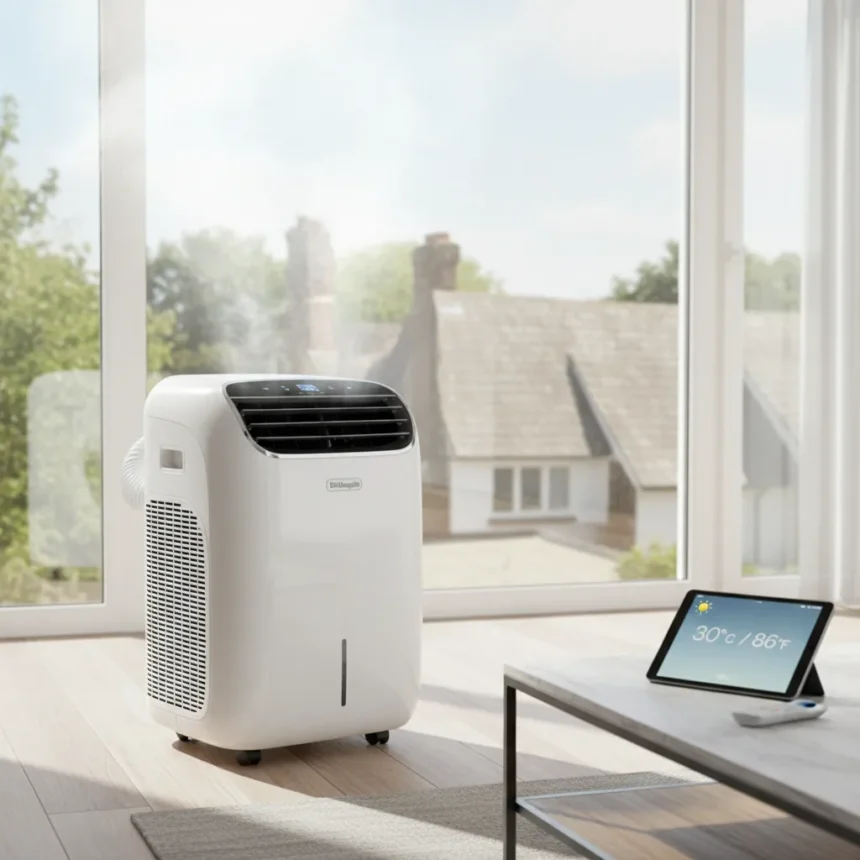
De’Longhi’s new Pinguino portable air conditioner has arrived in the UK market at precisely the moment when room cooling matters most. The unit delivers 13,300 BTU of cooling output, designed to handle temperature control across various room sizes without requiring permanent window installation or structural modification.
Key Takeaways
- De’Longhi’s new Pinguino portable air conditioner launches in the UK with 13,300 BTU cooling capacity
- The model prioritizes energy efficiency improvements over previous Pinguino generations
- Portable AC units avoid installation hassles that window units and split systems demand
- Timing aligns with early UK summer heat, making seasonal cooling accessible without commitment
- Room-based cooling offers flexibility for renters and those avoiding permanent alterations
Why Portable Air Conditioners Matter Right Now
The UK’s early summer heat has triggered renewed interest in portable cooling solutions. Unlike traditional air conditioning systems that require professional installation or window modifications, a portable air conditioner can be moved between rooms, making it ideal for renters, temporary arrangements, or those who want cooling flexibility without structural commitment. The De’Longhi Pinguino enters this market at a moment when demand peaks.
Portable units sit in a middle ground between fans and permanent AC systems. They deliver serious cooling power without the expense or permanence of split-system installation. For UK homes that rarely experience sustained heat waves, this approach makes financial and practical sense. The 13,300 BTU output suggests the Pinguino targets medium to larger rooms, moving beyond the underpowered units that struggle against genuine summer conditions.
Energy Efficiency as the Real Story
De’Longhi has emphasized improved energy efficiency as the defining feature of this new Pinguino model. This matters because portable air conditioners historically consume significant electricity, making them expensive to run during extended heat periods. Better efficiency means lower operating costs without sacrificing cooling performance—a balance that separates practical appliances from novelty gadgets that homeowners regret buying.

The emphasis on efficiency reflects a broader trend in the portable AC market. Consumers are increasingly skeptical of cooling solutions that require running up energy bills to maintain comfortable temperatures. A unit that delivers 13,300 BTU while consuming less power than competitors represents genuine product improvement, not just marketing repositioning. This efficiency gain justifies upgrading from older portable AC models gathering dust in storage.
Portable Air Conditioner vs. Window Units and Permanent Systems
The De’Longhi Pinguino occupies a distinct position within the cooling appliance landscape. Window-mounted air conditioners deliver more consistent cooling and higher efficiency but require permanent installation and block window views. Split-system air conditioning offers superior performance and aesthetics but demands professional installation and significant upfront investment. Portable units sacrifice some cooling consistency and efficiency compared to these alternatives but eliminate installation barriers entirely.



For UK homeowners, this flexibility matters. Rented properties prohibit permanent modifications. Homes with listed building status face restrictions on window units. Seasonal cooling needs do not justify the expense of permanent systems. The Pinguino addresses these constraints by delivering meaningful cooling capacity without installation complications or long-term commitment.
Room Coverage and Practical Expectations
The 13,300 BTU specification indicates the unit’s cooling capacity, though actual room coverage depends on factors like insulation, window exposure, and ambient temperature. This BTU level typically handles medium-sized rooms effectively. The Pinguino’s portability means it can be repositioned to wherever cooling is needed most—the bedroom during night hours, the living room during the day, a home office during work periods.
Portable AC units do generate noise during operation and require window venting for exhaust air, considerations that matter in quiet homes or open-plan living spaces. These are not failures of the design but inherent trade-offs of the portable format. Buyers need to accept these limitations to benefit from the installation simplicity and flexibility that portable cooling provides.
Timing and Market Positioning
De’Longhi’s launch timing is deliberate. Early summer heat creates urgency among buyers who have not yet invested in cooling solutions. Retailers stock up on portable AC units during this window. Online searches for cooling options spike. The Pinguino arrives when consumer attention is highest and purchasing intent is strongest. Missing this seasonal window means waiting until autumn when demand collapses and inventory clears.



The UK market for portable air conditioners remains smaller than in continental Europe or North America, where sustained heat waves drive adoption. However, climate patterns are shifting, and consecutive warm summers have normalized portable AC ownership among UK households. De’Longhi’s investment in this market segment reflects confidence that seasonal cooling is becoming a standard home appliance rather than a niche purchase.
Is a portable air conditioner worth buying for UK summers?
Portable air conditioners make sense if you need flexible, temporary cooling without installation costs or if your home cannot accommodate window units or split systems. They work best in well-insulated rooms with manageable window exposure. If you live in a rented property or want to avoid permanent modifications, the De’Longhi Pinguino’s 13,300 BTU output and efficiency improvements justify the investment for genuine summer relief.
How does the De’Longhi Pinguino compare to window-mounted units?
Window-mounted air conditioners deliver better efficiency and consistent cooling but require permanent installation and block natural light. The Pinguino sacrifices some performance for complete portability and zero installation hassle. Choose window units if you own your home and want permanent cooling; choose portable units if you rent, need flexibility, or want to avoid structural changes.
What makes the new Pinguino model different from previous versions?
De’Longhi has prioritized energy efficiency improvements in this new Pinguino generation, meaning lower operating costs without compromising the 13,300 BTU cooling capacity. If you own an older portable AC unit, the efficiency gains justify upgrading to reduce electricity consumption during extended heat periods.
The De’Longhi Pinguino’s arrival during the UK’s early summer heat represents smart market timing and genuine product improvement. For homeowners seeking flexible, installation-free cooling without the expense of permanent systems, this portable air conditioner delivers practical value. The emphasis on energy efficiency separates it from underpowered competitors that cost as much to run as they do to buy. If your home lacks adequate cooling and permanent solutions are not feasible, the Pinguino deserves serious consideration.
Where to Buy
Edited by the All Things Geek team.
Source: TechRadar




