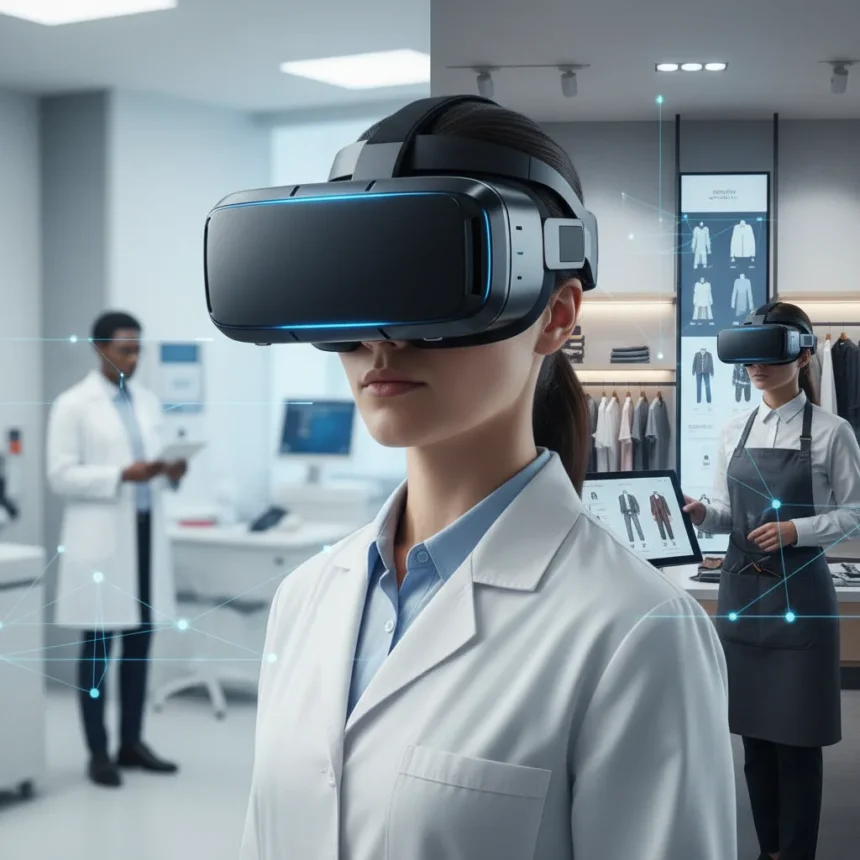
Galaxy XR Android Enterprise support has finally arrived, addressing a glaring omission that left Samsung’s spatial computing device dead on arrival for any organization serious about device management. When Samsung launched the Galaxy XR in October 2025, it shipped without Android Enterprise capabilities—a stunning oversight for a device positioned as the future of computing. Now, months later, that gap is closing.
Key Takeaways
- Galaxy XR Android Enterprise features were unavailable at launch but are now activating via software update.
- Work profiles, managed Google Play, and AMAPI policy enforcement are now supported.
- Healthcare and retail sectors gain device management tools previously absent from spatial computing.
- Enterprise adoption was impossible without these management APIs—the update removes that blocker entirely.
- Samsung and Google coordinated the rollout to align with enterprise deployment timelines.
Why Galaxy XR Needed Android Enterprise From Day One
The Galaxy XR Android Enterprise update addresses a fundamental requirement for any device entering healthcare or retail environments: centralized management, security policies, and compliance enforcement. Without these capabilities, organizations cannot deploy the headset at scale. Work profiles allow IT departments to separate personal and professional data on a single device. Managed Google Play restricts which apps employees can install. AMAPI policy enforcement ensures devices comply with organizational security standards. Without these tools, the Galaxy XR was essentially a consumer gadget wearing a business suit—visually appropriate but functionally useless for enterprise buyers.
Healthcare facilities managing patient data, retail chains deploying inventory systems, and logistics companies tracking shipments all require granular control over device behavior. A headset without Android Enterprise support cannot meet regulatory requirements in healthcare or prevent data leakage in retail environments. Samsung’s omission forced early adopters to wait or choose competing platforms entirely.
What Galaxy XR Android Enterprise Actually Enables
The update brings three critical management capabilities to the Galaxy XR. Work profiles create isolated containers for business apps and data, preventing accidental spillover into personal space. Managed Google Play replaces the standard Play Store with a curated catalog, ensuring only approved applications reach employee devices. AMAPI policy enforcement allows administrators to push security updates, enforce password rules, disable features, and wipe devices remotely. Together, these features transform Galaxy XR from a consumer device into a manageable enterprise asset.

For healthcare, this means patient data stays encrypted and auditable. For retail, loss prevention teams can lock down inventory apps and prevent unauthorized sideloading. For logistics, managers can enforce GPS tracking and restrict communication tools. The update does not introduce flashy new features—it introduces the foundational infrastructure that enterprise IT departments demand before spending budget.
Galaxy XR vs. Consumer VR: A Fundamental Divide
Consumer VR headsets like Meta Quest 3S prioritize ease of use and entertainment. Enterprise spatial computing demands something entirely different: auditability, security, and administrative control. The Galaxy XR Android Enterprise update finally closes that gap, but the delay cost Samsung momentum. Organizations that needed spatial computing solutions months ago have already committed to alternatives or decided to wait for second-generation hardware. A six-month gap between launch and enterprise readiness is not trivial in B2B procurement cycles.



That said, the Galaxy XR’s foundation—spatial computing hardware designed for professional use—remains stronger than consumer alternatives. Once Android Enterprise support is fully rolled out, the device becomes viable for deployments that demand both immersive capability and IT governance.
Healthcare and Retail Use Cases Now Possible
Healthcare providers can now deploy Galaxy XR for surgical training, patient education, and remote consultation—all while maintaining HIPAA-compliant data separation through work profiles. Retail chains can equip store associates with inventory management tools, customer service apps, and training systems, all locked down through managed Google Play. Neither use case was viable at launch. Now, with Android Enterprise support live, procurement conversations that stalled in late 2025 can finally move forward.
The update also signals Google and Samsung’s commitment to spatial computing as an enterprise platform, not just a consumer novelty. When two major platform vendors coordinate on management APIs, it sends a market signal: this is serious infrastructure, not a passing fad.
Is the Galaxy XR ready for enterprise deployment now?
Android Enterprise support is now activating, making the Galaxy XR technically viable for healthcare and retail use. However, organizations should verify that their specific management tools and compliance requirements work with the current implementation. Enterprise IT teams typically require several months of testing before rolling out new device categories.



What took so long for Android Enterprise support on Galaxy XR?
Spatial computing is new territory for Android Enterprise. Google and Samsung had to design management APIs for a device category that did not exist in their frameworks before. The October 2025 launch shipped without these features because the work was not complete—a choice that cost Samsung credibility but ensured the update would be stable when it arrived.
Does Galaxy XR Android Enterprise support work with existing MDM solutions?
Organizations using mobile device management (MDM) platforms should check vendor compatibility. Android Enterprise APIs are standardized, but MDM vendors need to update their platforms to recognize and manage spatial computing devices. Most major MDM providers are adding Galaxy XR support, but rollout varies by vendor and platform.
The Galaxy XR Android Enterprise update removes the single biggest barrier to enterprise adoption. Samsung’s spatial computing device is no longer a consumer product wearing enterprise branding—it is now a manageable, auditable platform for healthcare and retail. The delay was costly, but the foundation is finally solid. Organizations that shelved Galaxy XR pilots in late 2025 should revisit the device now that the management infrastructure is in place.
Edited by the All Things Geek team.
Source: Android Central