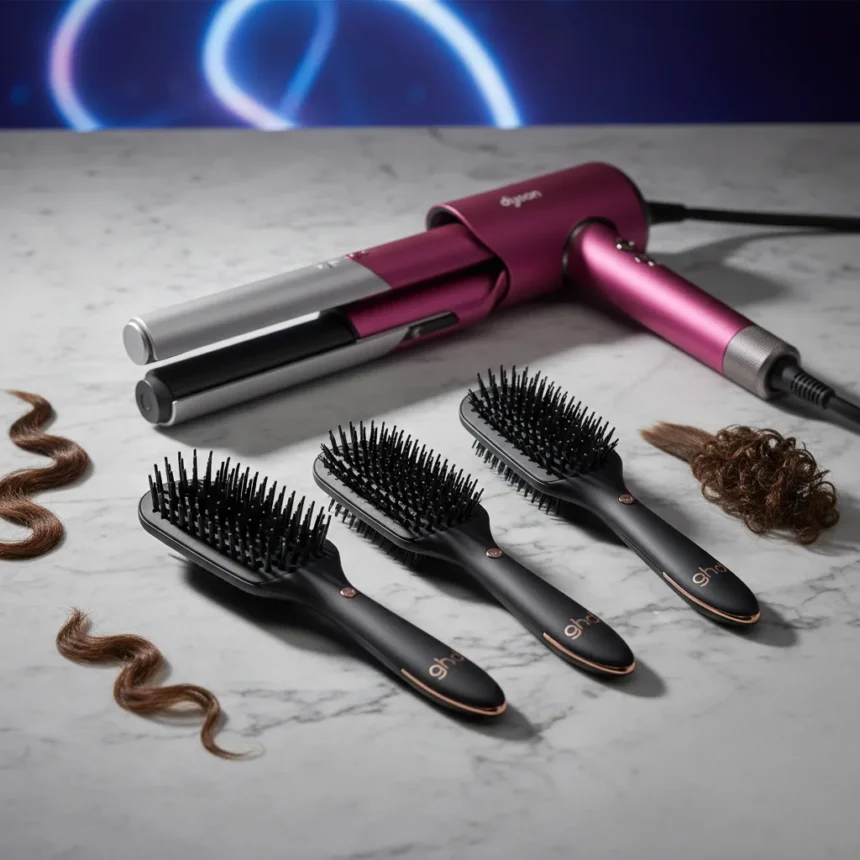
Ghd’s hot brushes for specific hair types represent the brand’s latest push into premium hair styling, directly challenging Dyson’s established position in the heated brush category. The new collection marks another evolution in Ghd’s popular hot hair styler lineup, engineered to address the distinct needs of different hair textures and types.
Key Takeaways
- Ghd launches new hot brushes tailored to specific hair types as a direct competitor to Dyson styling tools
- The collection builds on Ghd’s existing hot hair styler reputation with targeted hair-type customization
- Premium styling tools market sees intensifying competition between established brands
- Hair-type-specific design addresses limitations of one-size-fits-all styling approaches
- Ghd positions innovation in heated brush technology as key differentiator
Ghd’s New Hot Brushes for Specific Hair Types Explained
Ghd’s hot brushes for specific hair types arrive as a strategic response to the growing demand for customized hair care solutions. Rather than offering generic heated brushes, the brand has developed variants designed to work optimally with different hair textures—addressing a gap that many users found frustrating with traditional styling tools. This approach acknowledges a simple truth: fine, curly, coarse, and textured hair require different heat distribution, bristle configuration, and styling mechanics to achieve results without damage.
The emphasis on hair-type specificity reflects broader trends in the beauty tech space, where personalization increasingly drives product development. By engineering distinct models for different hair needs, Ghd positions itself as understanding the nuanced challenges that different users face when styling at home. This contrasts with competitors offering single-model solutions that claim to work universally—a claim most users find overstated.
How Ghd’s Approach Compares to Dyson’s Styling Strategy
Dyson has long dominated the premium heated brush market with its Airwrap and Supersonic products, leveraging brand recognition and marketing muscle to maintain leadership. Dyson’s tools emphasize advanced technology—air-based styling, intelligent heat control, and proprietary engineering—but typically operate as universal devices designed to handle multiple hair types with a single tool. Ghd’s strategy diverges here: rather than packing every feature into one device, the brand offers specialized brushes for different hair types, potentially delivering more targeted performance at each price point.

This differentiation matters for consumers who recognize that their specific hair needs might not align with a universal tool’s design priorities. Where Dyson bets on technological sophistication and versatility, Ghd bets on segmentation and specialization. Neither approach is objectively superior—they reflect different philosophies about how to solve the same problem. For users with specific hair challenges, however, Ghd’s targeted approach may prove more practical than buying a universal tool and accepting compromises.
Why Hair-Type-Specific Design Matters in Styling Tools
The styling tools market has historically treated hair as a monolith, offering devices with adjustable heat settings and assuming users can dial in the right combination themselves. This puts the burden on consumers to experiment, often resulting in damage, frizz, or poor results. Hair-type-specific brushes remove that guesswork by pre-engineering solutions for particular needs. Fine hair requires lower temperatures and gentler bristles to avoid breakage. Curly and textured hair benefits from specific bristle patterns that enhance natural curl definition rather than fighting it. Coarse hair can handle higher heat and benefits from tools that provide deep styling control.



By building these considerations into distinct product variants, Ghd acknowledges that one-size-fits-all thinking underserves most users. This philosophy extends beyond mere marketing—it reflects genuine product engineering differences that should meaningfully affect performance and results for each hair type.
What This Launch Means for the Premium Styling Market
Ghd’s new hot brushes for specific hair types signal that the premium styling tools category is maturing beyond pure technological spectacle. Brands increasingly recognize that consumers want solutions tailored to their actual needs, not just the most advanced gadget. This shift creates space for competitors to challenge Dyson’s dominance by offering more focused, targeted alternatives rather than trying to out-engineer the market leader.
For consumers, intensifying competition between Ghd and Dyson should translate to more choices, better specialization, and potentially more competitive pricing as brands fight for market share. The era of premium styling tools being defined by a single dominant player appears to be ending, replaced by a more diverse landscape where different brands win different segments.
Should you buy Ghd’s new hot brushes for specific hair types?
If your hair type matches one of Ghd’s targeted designs and you’ve struggled with universal styling tools, these brushes are worth investigating. The hair-type-specific approach addresses real limitations in one-size-fits-all products. However, if you already own a Dyson tool and are happy with results, switching requires confidence that Ghd’s specialization will deliver meaningfully better outcomes—a decision best made by comparing features directly.



How do Ghd’s new hot brushes differ from their previous styling tools?
The key difference lies in segmentation: Ghd’s new collection offers distinct models for specific hair types rather than universal devices. This allows each variant to optimize heat distribution, bristle design, and styling mechanics for particular needs rather than compromising to serve everyone equally.
What makes hair-type-specific styling tools more effective?
Different hair textures respond differently to heat, bristle patterns, and styling pressure. Tools engineered specifically for your hair type can deliver better results with less risk of damage because they’re designed around your hair’s actual characteristics rather than asking you to adapt your hair to a generic tool’s capabilities.
Ghd’s new hot brushes for specific hair types represent a meaningful shift in how premium styling tools approach market segmentation. Rather than competing solely on technological features or brand prestige, Ghd is betting that consumers will value specialization over universality—a bet that reflects genuine understanding of why many users struggle with existing premium options. Whether this strategy successfully challenges Dyson’s market position depends on execution and real-world performance, but the approach itself signals a maturing market where different brands can win by serving different customer needs rather than all chasing the same universal solution.
Where to Buy
Edited by the All Things Geek team.
Source: T3