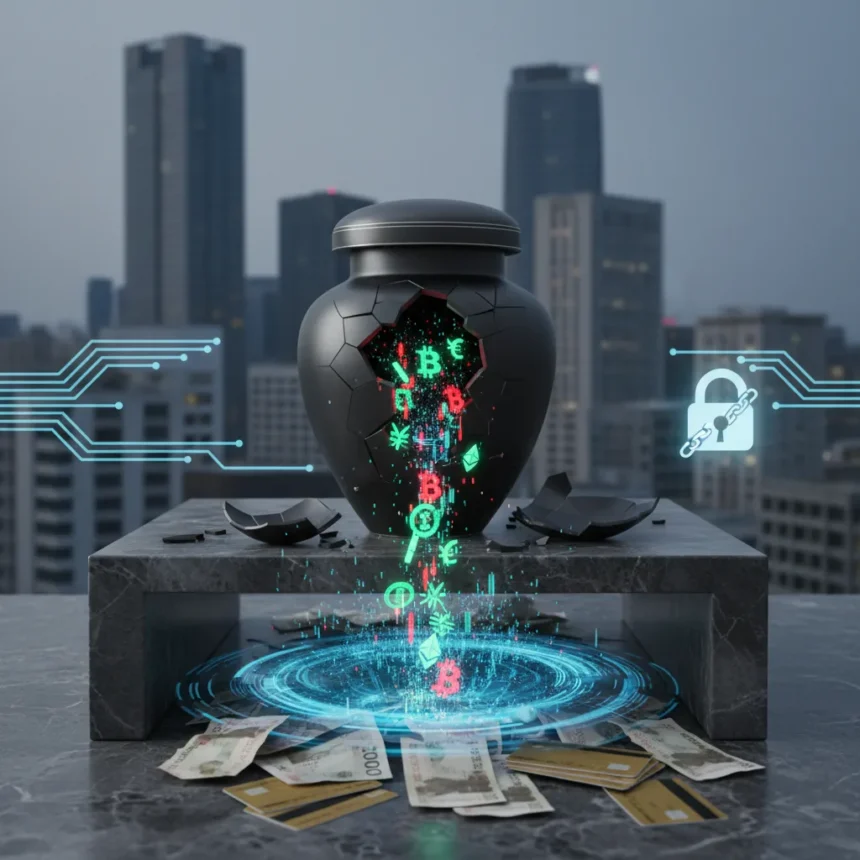
A South Korean funeral services company named Bumo Sarang lost approximately $33 million of customer prepaid funeral funds after secretly investing the money in a leveraged cryptocurrency ETF, exposing how funeral prepayment crypto losses can devastate a traditionally conservative industry with minimal oversight.
Key Takeaways
- Bumo Sarang invested nearly $40 million in customer prepaid funds into a 2x leveraged crypto ETF tied to BitMine Immersion Technologies.
- The unrealized loss reached $33 million by the end of 2025, reducing the position’s value from $40 million to $6.8 million.
- South Korea’s funeral prepayment sector is regulated by the Fair Trade Commission, not financial regulators, allowing high-risk investments with minimal oversight.
- A Korea Economic Daily review found 43% of funeral prepayment firms held fewer assets than customer prepayments owed.
- Six bills pending in South Korea’s National Assembly seek to ban speculative investments in the funeral prepayment sector.
How a Funeral Company Bet Customer Money on Crypto
Bumo Sarang, a South Korean funeral services provider, routed approximately 59.5 billion won—nearly $40 million—into the T-REX 2X Long BMNR Daily Target ETF, a leveraged product designed to track twice the daily returns of BitMine Immersion Technologies. The company collected this money as prepayments from customers planning their funerals, a common practice in South Korea where families lock in funeral service costs years in advance. Instead of holding these funds conservatively, Bumo Sarang made an aggressive bet on a niche cryptocurrency-linked asset. By the end of 2025, the position’s book value had collapsed to 10.2 billion won, approximately $6.8 million—a loss of 49.3 billion won, or roughly $33 million.
What makes this case especially damaging is that the investment was not disclosed to customers. The company kept the crypto exposure hidden until it filed its 2025 audit with South Korea’s Fair Trade Commission. Bumo Sarang later claimed the shortfall was temporary and that it could absorb the loss from its financial buffer—a claim that raises immediate questions about whether other customer funds were used to cover the gap.
Funeral Prepayment Crypto Losses Expose Regulatory Gaps
The core problem is that funeral prepayment services in South Korea are regulated by the Fair Trade Commission as prepaid installment businesses, not by financial regulators. This creates a regulatory blind spot. The only binding rule cited is that firms must hold at least 50% of customer prepayments in reserve. The remaining half can reportedly be invested in almost anything, including high-risk securities and leveraged crypto ETFs. That loophole transformed customer funeral money into speculative capital.

A Korea Economic Daily review of 75 funeral prepayment providers found that 43% held fewer assets than the prepayments owed to customers. Another count identified 32 of 75 firms, or 42.7%, with assets below customer deposits. These figures suggest the Bumo Sarang case is not an isolated incident but a symptom of systemic underfunding across the industry. When a firm invests customer prepayments in leveraged crypto products, the entire business model becomes a high-risk bet disguised as a conservative service.
What Happens to Customers Now?
The funeral prepayment crypto losses at Bumo Sarang raise urgent questions about customer recourse. The company has not signaled any plan to unwind its position in the leveraged ETF, meaning the unrealized loss could grow or shrink depending on BitMine’s price movements. If the position remains underwater, customers who prepaid for funeral services may find the company unable to deliver them at the promised cost, or unable to deliver them at all.



South Korea’s National Assembly is responding with legislative action. Six bills are reportedly pending that would ban speculative investments and related-party lending in the funeral prepayment sector. These proposals aim to close the loopholes that allowed Bumo Sarang to gamble with customer money in the first place. Until they pass, however, other funeral prepayment companies can continue investing customer funds in leveraged crypto ETFs, structured products, or other high-risk securities with no disclosure requirement.
Why Leveraged Crypto ETFs Are Particularly Dangerous for Prepaid Funds
The T-REX 2X Long BMNR Daily Target ETF is designed to deliver twice the daily return of its underlying asset. This means it amplifies both gains and losses. If BitMine declines 10% in a day, the ETF can lose 20%. Over time, leveraged products decay—especially in volatile markets—because they reset daily. A customer’s funeral money should never be exposed to this kind of volatility. Bumo Sarang’s choice to invest in a 2x leveraged product suggests either reckless risk management or a deliberate bet that crypto would surge. Neither scenario is acceptable for a company holding customer prepayments.
Is this a sign of broader problems in South Korea’s funeral industry?
Yes. The Korea Economic Daily’s review of 75 providers found that nearly 43% held fewer assets than customer prepayments owed, suggesting widespread underfunding. The Bumo Sarang case demonstrates how loose regulations enable companies to mask underfunding by investing customer money in volatile assets rather than holding it safely.
What are the pending bills in South Korea’s National Assembly trying to do?
Six bills are reportedly pending that would ban speculative investments and related-party lending in the funeral prepayment sector. These proposals would restrict how funeral companies can invest customer funds and prevent them from lending customer money to affiliated entities or major shareholders—another common practice that has drained customer protections.



Could customers lose their prepayments entirely?
The risk exists. If Bumo Sarang’s unrealized loss becomes realized and the company lacks sufficient reserves to cover it, customers may not receive the funeral services they prepaid for, or the company may collapse entirely. The Fair Trade Commission’s 50% reserve requirement provides some protection, but only if firms actually comply with it and do not use reserves to cover other losses.
The Bumo Sarang case is a wake-up call for South Korea’s funeral prepayment sector and a warning to any customer prepaying for services in an industry with minimal financial oversight. Funeral money should be held in safe, liquid assets—not in leveraged crypto ETFs. Until South Korea passes stronger regulations, customers in this sector face unnecessary risk.
Edited by the All Things Geek team.
Source: Tom's Hardware