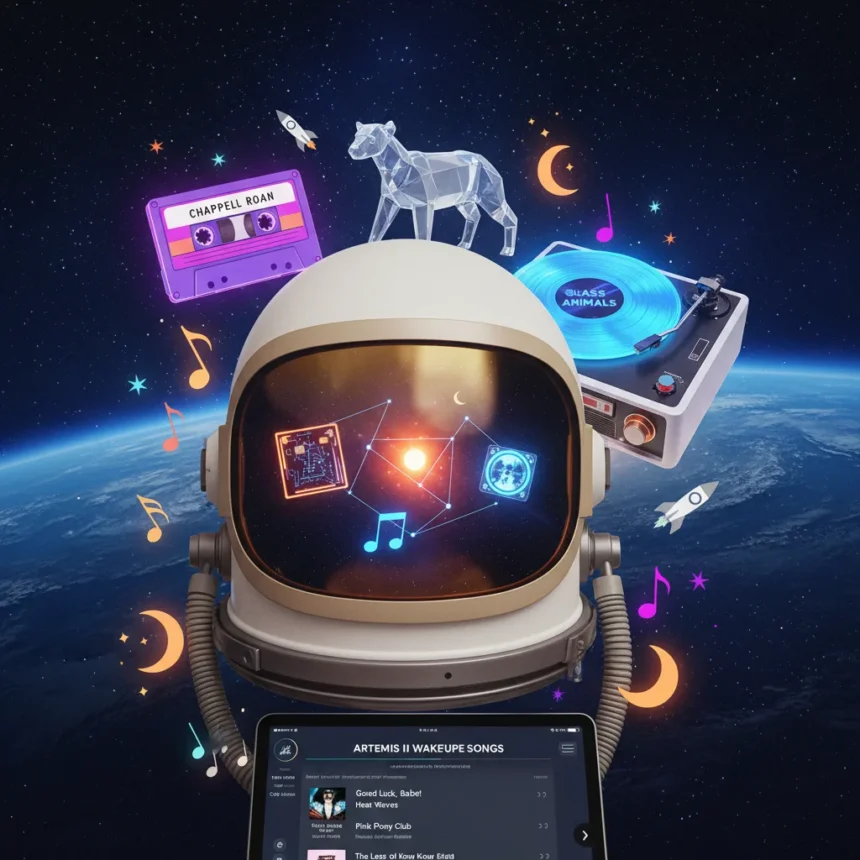
NASA’s wakeup songs tradition has always been an oddly charming part of spaceflight. Every morning, Mission Control broadcasts a short song snippet over the radio to the crew, a small gesture meant to lift spirits during months in orbit or days traveling to the moon. The NASA wakeup songs tradition on Artemis II continues this practice with a playlist that would not feel out of place on a modern streaming service.
Key Takeaways
- NASA plays daily wakeup song snippets via Mission Control radio, a tradition dating to the Apollo era.
- Artemis II crew heard tracks from Chappell Roan, Glass Animals, CeeLo Green, and Denzel Curry across Flight Days 1-7.
- The wakeup songs tradition began with Apollo 10 (Frank Sinatra) and continued through Space Shuttle missions.
- A Spotify playlist compiles the Artemis II wakeup songs for public listening.
- Song selection combines personal crew connections and mission-appropriate themes.
How NASA’s Wakeup Songs Tradition Started
The practice of broadcasting music to astronauts stretches back decades. During Apollo 10 in 1969, Mission Control played “It’s Nice to Go Trav’ling” by Frank Sinatra as a wakeup call—a choice that set the tone for a tradition that would outlast the Apollo program itself. By Apollo 15, NASA had moved to grander selections: the theme from “2001: A Space Odyssey,” a fitting choice for a mission aimed at the moon.
The Space Shuttle era modernized the practice. On STS-134 in 2011, the second-to-last shuttle mission, pilot Greg Johnson’s son selected “Drops of Jupiter,” a personal connection that Johnson acknowledged with warmth: “I love that song, and I love being in space,” he said, before joking about missing his son’s birthday. Mission specialist Roberto Vittori heard “Il Mio Pensiero” by Italian artist Ligabue, a nod to his heritage. These choices reveal that NASA wakeup songs are not arbitrary—they are personal, meaningful selections tied to crew members and mission themes.
Artemis II Wakeup Songs Show Modern Music Taste
The Artemis II crew’s wakeup songs span seven flight days of contemporary pop, hip-hop, and indie tracks that would surprise anyone who assumes NASA’s music taste lags behind popular culture. Flight Day 1 opened with “Sleepyhead” by Young & Sick, a cover of Passion Pit’s original. Flight Day 2 brought John Legend’s “Green Light” featuring André 3000, followed by Freddy Jones Band’s “In a Daydream” on Flight Day 3.

By Flight Day 4, the playlist reached peak cultural currency: Chappell Roan’s “Pink Pony Club,” a track that dominated streaming charts and became an anthem for LGBTQ+ audiences. Flight Day 5 shifted to CeeLo Green’s “Working Class Heroes (Work),” a motivational choice for astronauts engaged in humanity’s most ambitious project. Flight Day 6 paired Mandisa and TobyMac’s “Good Morning” with Flight Day 7’s “Tokyo Drifting” by Denzel Curry and Glass Animals, a genre-blending collaboration that feels both energetic and introspective.
This selection demonstrates that NASA’s music curators understand contemporary taste. The playlist avoids the safe, corporate-approved selections you might expect. Instead, it embraces artists with genuine cultural relevance and emotional depth. Chappell Roan is not a safe choice—she is a bold, unapologetically queer pop artist. Glass Animals brings art-rock sensibilities. CeeLo Green carries hip-hop credibility. These are not songs picked by an algorithm designed to offend no one; they are selections made by people who actually listen to music.



Why Wakeup Songs Matter More Than You’d Think
A wakeup song might seem like a small gesture in a mission involving billions of dollars and years of preparation. But for astronauts spending weeks in microgravity or days traveling to lunar orbit, these brief radio broadcasts serve a psychological function that mission planners take seriously. They anchor crew members to Earth, to family, to the cultural moment they left behind. The tradition persists precisely because it works.
The Artemis II mission also includes other morale-boosting elements. The crew carries a “Rise” moon toy as a zero-gravity indicator, and this toy contains a microchip embedded with the names of space fans from around the world—another connection between the mission and the people watching from home. These details matter. Long-duration spaceflight is isolating. Music and mementos bridge that gap.
How to Find the Artemis II Wakeup Songs Playlist
NASA has made the Artemis II wakeup songs accessible to the public. A Spotify playlist titled “Artemis II Crew Wakeup Songs” compiled by ERK aggregates the tracks, allowing anyone to experience the same music the crew hears each morning. The playlist serves as both a cultural artifact and a practical resource for people curious about the mission’s human side.
Did NASA wakeup songs influence crew morale on previous missions?
Yes. Astronauts have consistently cited wakeup songs as meaningful morale boosters during long missions. The personal selections—like Greg Johnson’s “Drops of Jupiter”—demonstrate that crew input shapes the tradition, making it more than just a corporate broadcast.



Can anyone listen to the Artemis II wakeup songs?
Absolutely. The Spotify playlist “Artemis II Crew Wakeup Songs” is publicly available, so anyone with streaming access can listen to the same tracks the astronauts hear each morning.
What makes Artemis II wakeup songs different from Apollo-era selections?
Artemis II embraces contemporary artists and genres, while Apollo missions often featured classic standards and orchestral themes. The shift reflects changing crew preferences and modern music culture, though the underlying purpose—lifting spirits during spaceflight—remains unchanged.
NASA’s wakeup songs tradition reveals something unexpected: space agencies care about the human experience, not just the technical execution. By pairing Chappell Roan with mission control protocols and Glass Animals with lunar trajectory calculations, NASA reminds us that exploration is ultimately a human endeavor. The next time you hear about Artemis II, remember that somewhere above Earth, astronauts are waking up to surprisingly good music.
Edited by the All Things Geek team.
Source: TechRadar