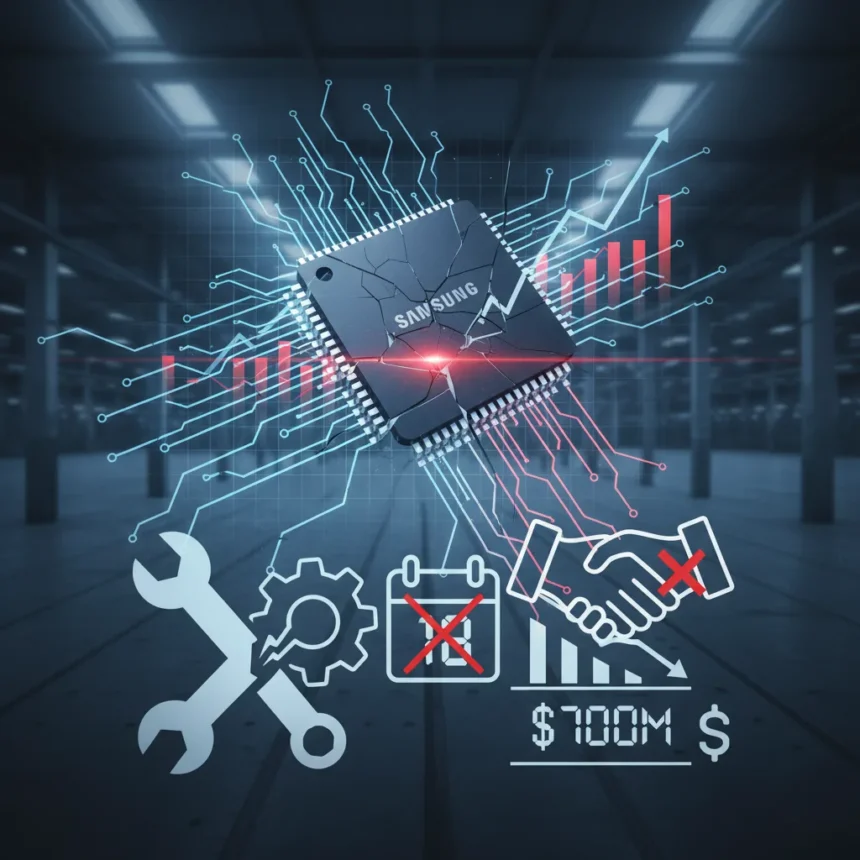
Samsung’s chip factory strike represents an unprecedented threat to global semiconductor production. The Samsung chip factory strike is scheduled to begin May 21, 2026, and run through June 7 — an 18-day walkout that could cost the company approximately $700 million per day. On May 13, 2026, negotiations between Samsung Electronics and the National Samsung Electronics Union (NSEU) collapsed after government-mediated talks failed to produce a pay agreement, leaving just eight days before industrial action begins.
Key Takeaways
- Samsung chip factory strike begins May 21, 2026, lasting 18 days through June 7.
- Negotiations collapsed May 13 with no deal reached on wage and bonus demands.
- Daily losses projected at $700 million; full strike could compress quarterly profits by 12%.
- Strike threatens Pyeongtaek complex, the world’s largest semiconductor manufacturing facility.
- South Korea’s Prime Minister called emergency ministerial meeting to prevent walkout.
Why the Samsung Chip Factory Strike Threatens Global Supply Chains
The Samsung chip factory strike puts at risk the world’s biggest memory chip operation. Samsung’s Pyeongtaek semiconductor complex south of Seoul produces roughly half of the company’s chip output, and Samsung and SK Hynix together manufacture two-thirds of the world’s memory chips. A full 18-day walkout would disrupt production of memory chips critical to AI infrastructure at a time when global demand for semiconductors remains elevated. JPMorgan analysts estimate a full strike could compress Samsung Electronics’ quarterly profits by as much as 12 percent.
The strike’s timing amplifies its impact. Global AI development depends heavily on high-bandwidth memory (HBM) chips, and Samsung is a primary supplier. Any disruption ripples across data centers, cloud computing infrastructure, and AI hardware manufacturers worldwide. Unlike previous labor actions at semiconductor firms, this strike targets the world’s largest chipmaker during peak demand cycles.
The Negotiation Breakdown and Union Demands
The core dispute centers on compensation, not employment security. The union demands that Samsung uncap performance payouts and set them at 15 percent of operating profit, provide a 7 percent base wage increase, remove the existing 50 percent cap on performance bonuses, and ensure transparency in bonus distribution criteria. Samsung’s counteroffer — a profit share equal to roughly 13 percent of the chip division’s operating profit — fell short of union expectations, prompting the rejection.

This represents escalation from Samsung’s first-ever strike in 2024. Union membership has grown from symbolic walkout scale to approximately 73,000 enrolled members, with estimates suggesting 30,000 to 40,000 workers will participate in the full 18-day action. The union has moved from three-day symbolic protests to an 18-day general strike backed by legal threats against Samsung’s injunction request. South Korea’s Labor Minister Kim Young-hoon stated that “the solution may already be close,” but as of May 13, no agreement had materialized.
Government Intervention and Economic Alarm
South Korea’s government escalated its involvement on May 13 when Prime Minister Kim Min-seok called an emergency meeting of related ministers. The Prime Minister’s office instructed the government to “closely manage the situation considering the gravity of the impact on the national economy” and urged “proactive support to ensure dialogue between the union and management can continue so this doesn’t lead to a strike under any circumstances”. This signals unprecedented government concern about the strike’s impact on national economic security.



Financial projections underscore the stakes. Various estimates project losses ranging from KRW 4 trillion (approximately $3 billion USD) in sales to KRW 40 trillion (roughly $31 billion USD) in broader economic losses over the 18-day period. These are not guaranteed outcomes but scenarios dependent on the strike lasting the full duration without settlement. Samsung has filed an injunction request seeking to block or limit the strike; a Korean court is expected to rule before May 21.
What Separates Samsung’s Strike from Previous Labor Actions
Samsung’s situation differs fundamentally from typical manufacturing labor disputes. The company produces chips essential to AI infrastructure, not consumer goods with alternative suppliers. SK Hynix operates as the only meaningful competitor, but both firms face capacity constraints during high-demand periods. A strike at one supplier cannot be offset by increased orders to the other without months of lead time.
The 18-day duration also distinguishes this action. Previous semiconductor strikes lasted days or weeks; an 18-day full shutdown at the world’s largest chip manufacturer has no recent precedent in the industry. The union’s willingness to sustain action for this length signals confidence in membership commitment and suggests prior negotiations have exhausted compromise territory.
The Court Ruling and Remaining Timeline
Samsung’s injunction request introduces legal uncertainty into the countdown. A Korean court must rule before May 21 on whether to block or limit the strike, potentially forcing the union into a confrontation with judicial authority. If the court blocks the strike, the union faces a choice between compliance or defiance. If it permits the action, Samsung must decide whether to accept the strike or escalate through other means.



Eight days remain for negotiation, legal proceedings, or government mediation before May 21. The Labor Minister’s statement that “the solution may already be close” suggests last-minute breakthroughs remain possible, but the May 13 collapse signals deep disagreement on compensation structure rather than isolated issues amenable to quick fixes.
Does Samsung have any leverage to prevent the strike?
Samsung can pursue three paths: reach a negotiated settlement by May 21, secure a court injunction blocking the strike, or accept the walkout and manage production losses. The company’s injunction request suggests management believes legal intervention offers better odds than further negotiation, given the May 13 collapse.
How would a full Samsung chip factory strike affect consumers?
Consumers would face delayed PC, smartphone, and server availability within weeks as inventory depletes. Memory chip shortages would raise prices across devices using DRAM and NAND flash storage. AI hardware and data center equipment would experience extended lead times, potentially slowing AI service deployments.
What makes this Samsung chip factory strike different from 2024’s action?
The 2024 strike lasted three days and served as a symbolic action. The 2026 strike spans 18 days with participation estimates of 30,000 to 40,000 workers, representing union confidence in sustained membership commitment and willingness to inflict significant economic damage to secure compensation gains.
The Samsung chip factory strike represents a collision between labor’s growing power in semiconductor manufacturing and management’s resistance to uncapped profit-sharing formulas. Neither side appears positioned for compromise by May 21, leaving government mediation, court intervention, or economic pressure as the remaining variables. For global chip supply chains already stressed by demand, this strike arrives at the worst possible moment.
Edited by the All Things Geek team.
Source: Tom's Hardware